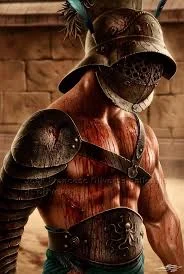
When most people imagine Roman gladiators, they picture blood-soaked arenas, roaring crowds, and brutal combat to the death. While violence was undeniably part of the spectacle, this image is incomplete. In reality, many gladiators were not anonymous fighters doomed to perish in obscurity. They were celebrities—recognizable faces whose fame extended far beyond the arena walls. Their images appeared on everyday objects, their names were chanted by fans, children played with clay figurines modeled after them, and their personal “brands” were commercially valuable. Most astonishing of all, gladiators’ sweat was collected, sold, and mixed into cosmetics, believed to enhance beauty and sexual appeal. Far from being disposable fighters, elite gladiators occupied a strange cultural space in Roman society: despised and adored, enslaved and idolized, brutalized and monetized. Their lives reveal that celebrity culture, product endorsement, and fandom are far older than modern media would suggest.
Gladiators as Superstars in the Roman World
By the height of the Roman Empire, gladiators had become some of the most recognizable public figures in urban life. Their bouts were not spontaneous street fights but carefully staged events sponsored by wealthy elites, politicians, and emperors. These games could last for days and draw tens of thousands of spectators. Attendance crossed class boundaries: senators, merchants, slaves, women, and children all filled the stands. In a society without mass media, the arena functioned as a powerful engine of fame.
Successful gladiators were known by name, fighting style, and reputation. Graffiti found in Pompeii preserves fan messages praising individual fighters, sometimes even begging for their survival. Some inscriptions read like ancient fan mail, declaring love, admiration, or obsession. Others list wins, losses, and rivalries, resembling early sports statistics. Gladiators developed followings similar to modern athletes, with fans supporting specific fighters and debating outcomes.
This fame had economic value. Gladiators who survived long enough could earn prize money, gifts, and even freedom. Skilled fighters were valuable investments for their owners, who carefully protected them. Contrary to popular belief, most gladiatorial bouts did not end in death. Trained gladiators were expensive, and killing them too frequently made little financial sense. Instead, their continued survival allowed their fame—and profitability—to grow.
Gladiators were marketed visually as well. Their likenesses appeared in mosaics, frescoes, oil lamps, drinking cups, and wall paintings. These images were instantly recognizable, functioning much like modern celebrity photos. A household item bearing a famous gladiator’s image signaled taste, excitement, and cultural engagement.
In short, gladiators were not just fighters. They were performers, public figures, and commercial assets. Their celebrity status laid the foundation for some of the earliest known examples of endorsement culture and mass fandom.
Endorsements, Branding, and Gladiator Merchandising
Roman commerce was remarkably sophisticated, and it did not take long for entrepreneurs to realize that gladiator fame could sell products. Popular fighters effectively became brands. Their names and images were used to promote goods ranging from food items to household wares. While formal advertising contracts did not exist as they do today, the association between a product and a famous gladiator carried undeniable marketing power.
Archaeological evidence shows that pottery, oil lamps, and small household objects were often decorated with images of specific gladiators, sometimes labeled with their names and victories. These items functioned much like collectible merchandise. Owning them allowed fans to display loyalty and admiration while participating in the shared cultural phenomenon of the games.
Some scholars believe that gladiators themselves occasionally endorsed products—either voluntarily or through their owners. Wine shops, for example, might display images of popular fighters to attract customers, implicitly suggesting strength, virility, or excitement. Food vendors near arenas used gladiator imagery to draw crowds, creating a feedback loop between entertainment and consumption.
This form of branding extended to public spaces. Walls near amphitheaters were covered in promotional graffiti announcing upcoming fights and highlighting star gladiators. These announcements often emphasized physical traits, previous victories, and dramatic rivalries—essentially ancient hype campaigns. The more famous the fighter, the larger the crowd, and the greater the profit for everyone involved.
While gladiators themselves rarely controlled their image—many were enslaved—their fame still generated economic activity. Owners benefited from higher appearance fees. Cities benefited from increased commerce during games. Craftspeople profited by producing themed goods. Gladiator celebrity was thus woven directly into the Roman economy.
In this sense, the Roman world anticipated modern celebrity capitalism. Fame was leveraged, images were reproduced, and admiration was converted into money. The arena was not just a site of violence—it was a marketplace of attention.
Children, Toys, and Gladiator Action Figures
One of the clearest indicators of gladiators’ cultural reach is the presence of gladiator toys. Archaeologists have uncovered small clay figurines depicting gladiators in fighting poses, complete with helmets, shields, and weapons. These objects, often found in domestic settings, are widely interpreted as children’s toys—ancient equivalents of action figures.
These figurines were inexpensive and widely available, suggesting mass production. They were made from clay or terracotta and often painted in bright colors. Some depict specific fighting styles, such as murmillo or retiarius, allowing children to reenact arena battles at home. Others appear generic but still clearly reference gladiatorial combat.
The existence of these toys reveals how deeply gladiators permeated everyday life. Children did not merely watch the games; they internalized them through play. Gladiators became role models of strength, bravery, and endurance, even though they occupied a morally ambiguous position in Roman society. This paradox—condemned as violent yet celebrated as heroic—was absorbed early in life.
Playing with gladiator figurines also reinforced Roman values. The games symbolized discipline, hierarchy, and the spectacle of controlled violence. Through play, children learned who held power, who entertained, and how glory could be earned through endurance and skill. The arena became a cultural classroom.
Parents likely viewed such toys as acceptable, even educational. Violence was normalized in Roman culture, and the games were seen as legitimate public entertainment. Gladiator toys thus reflect a society comfortable integrating spectacle into childhood experience.
In this way, gladiator fame extended across generations. From arena to household, from public performance to private play, gladiators were embedded in Roman identity. Their influence was not limited to the moment of combat—it lived on in imagination and imitation.
The Cult of the Gladiator Body
Central to gladiator celebrity was the body itself. Gladiators trained rigorously, followed strict diets, and maintained physiques that fascinated spectators. Unlike modern athletes, whose bodies are associated with health and longevity, gladiator bodies symbolized controlled suffering and endurance. This gave them a powerful erotic and symbolic charge.
Women, in particular, were noted by ancient writers as avid fans. Roman authors such as Juvenal and Pliny the Elder remarked—often critically—on women’s obsession with gladiators. They described women collecting gladiator memorabilia, swooning at appearances, and expressing desire for men who were otherwise socially marginalized.
This fascination was not limited to fantasy. Gladiators’ physical presence, scarred and muscular, represented a raw masculinity that contrasted sharply with the refined restraint expected of elite Roman men. In a rigidly stratified society, gladiators embodied transgression: they were slaves who commanded attention, fighters who inspired desire, and performers who controlled crowds.
The body thus became both a spectacle and a commodity. Gladiators’ sweat, blood, and physical traces were believed to carry symbolic power—strength, virility, and fertility. This belief directly fueled one of the most bizarre practices of Roman celebrity culture.
Gladiator Sweat as a Beauty Product
Perhaps the most startling aspect of gladiator fandom was the collection and sale of gladiator sweat. After fights or training sessions, gladiators scraped their skin with a curved metal tool called a strigil, removing sweat, oil, and dirt. This mixture—known as gladiator ungentum—was collected and sold.
Roman women believed this substance had cosmetic and aphrodisiac properties. It was mixed into facial creams and skin treatments, thought to improve complexion, enhance attractiveness, and increase sexual appeal. Pliny the Elder explicitly mentions this practice, though he does so with a tone of disbelief and mild disgust.
From a modern perspective, the idea is unsettling. Yet in Roman medical theory, bodily substances were thought to carry essence and power. Sweat from a famed gladiator, forged in combat and admired by thousands, was believed to transfer some of that vitality to the user. It was a form of embodied celebrity consumption.
This practice underscores how deeply fame penetrated Roman culture. Gladiators were not only watched and remembered—they were literally consumed. Their physical byproducts became luxury items, purchased by admirers seeking beauty or desire through association.
The trade also highlights the commodification of gladiators’ bodies. Even their sweat belonged not to themselves, but to owners, trainers, and merchants. It was harvested, packaged, and sold like any other valuable resource.
In many ways, this phenomenon parallels modern celebrity beauty endorsements, where products promise transformation through association with famous bodies. The difference is that Romans took the idea quite literally.
Moral Anxiety and Elite Criticism
Despite gladiators’ popularity, not everyone approved. Roman elites often expressed anxiety about gladiator fandom, especially when it crossed gender or class boundaries. Writers mocked women who admired gladiators, portraying them as irrational or morally corrupt. Philosophers criticized the games as degrading spectacles that glorified violence.
This tension reveals an important contradiction. Gladiators were simultaneously central to Roman entertainment and deeply stigmatized. They were admired for their skill but despised for their social status. Their celebrity challenged traditional hierarchies, allowing enslaved or marginalized men to command admiration from elites.
Elite discomfort often focused on loss of control. When women admired gladiators, when children idolized them, when crowds demanded mercy or death, authority appeared threatened. The arena gave voice to popular emotion, and gladiators stood at its center.
Yet this criticism did little to diminish their fame. If anything, it heightened it. Controversy reinforced fascination. Gladiators became symbols of both attraction and anxiety—powerful precisely because they defied neat categorization.
This dynamic is strikingly modern. Celebrity culture today also generates moral panic, criticism, and fascination in equal measure. The Roman experience reminds us that these patterns are not new; they are deeply human.
The Enduring Legacy of Gladiator Celebrity
Even after gladiatorial games declined and were eventually abolished, the image of the gladiator endured. Medieval artists, Renaissance scholars, and modern filmmakers all returned to the figure as a symbol of strength, suffering, and spectacle. Yet the Roman reality—of endorsements, toys, cosmetics, and fandom—is often overlooked.
Gladiators were among the first true mass celebrities. Their fame crossed social boundaries, generated merchandise, influenced childhood play, and reshaped ideas of desire and masculinity. They existed within a commercial ecosystem that transformed violence into entertainment and bodies into brands.
Understanding gladiators as celebrities rather than merely fighters allows us to see Roman society more clearly. It was not only a world of conquest and law, but of marketing, fandom, and cultural obsession. The arena was not just a place of death—it was a stage where fame was made.
Ancient Celebrity in a Brutal World
Roman gladiators lived dangerous lives, but they also lived famous ones. They were cheered, collected, imitated, and consumed. Children played with their likenesses. Merchants sold their images. Admirers scraped their sweat into jars. Long before modern sports stars and influencers, gladiators demonstrated how fame could transform individuals into cultural phenomena.
Their story reminds us that celebrity culture is not a modern invention. It is a recurring feature of societies that gather, watch, and admire. The Romans understood this instinctively. In their arenas, they created not just entertainment, but icons.
Behind the helmets and scars were men whose bodies became symbols—and whose fame outlived the games themselves.
Research and further reading
For readers who want to verify details or continue researching this subject, these external reference collections provide useful starting points: