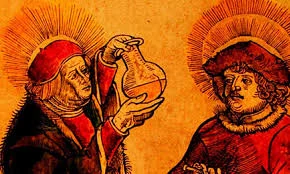
Urine certainly had practical uses in the Roman world, especially in textile cleaning because aged urine produces ammonia. The popular claim that “Romans used urine as mouthwash,” however, needs tighter wording. The clearest literary evidence comes from the poet Catullus, who mocks a Celtiberian named Egnatius for rubbing his teeth and gums with urine. That passage shows that the practice was known to a Roman writer; it does not prove that ordinary Romans broadly used stale urine as a standard mouthwash.
This practice did not emerge from ignorance or superstition alone. Roman society was highly pragmatic, deeply experimental, and surprisingly systematic in its approach to chemistry and sanitation. Without access to modern science, Romans relied on observation and experience. Over time, they learned that urine, once allowed to ferment, produced ammonia, a compound remarkably effective at breaking down grime and stains. As a result, urine became a commodity, traded, taxed, and integrated into multiple industries. Understanding why Romans used urine as mouthwash requires stepping into a world where ideas of cleanliness, medicine, and economics differed sharply from our own.
Roman ideas of cleanliness and oral hygiene
Cleanliness held significant social importance in ancient Roman culture, though it did not always align with modern notions of hygiene. Romans placed great emphasis on appearance, especially among the elite, where clean teeth and a pleasant smile were markers of status and refinement. Literary sources from the period suggest that white teeth were admired and associated with health, youth, and moral virtue. As a result, people actively sought methods to maintain oral cleanliness, even if those methods appear unsettling by today’s standards.
The Romans lacked toothbrushes, fluoride toothpaste, or a clear understanding of bacteria. Instead, oral care relied on abrasive powders, herbal mixtures, and liquids believed to cleanse and freshen the mouth. Crushed bones, shells, charcoal, and plant ashes were commonly used to scrub teeth. In this context, urine did not stand out as particularly strange. It was one option among many substances drawn from the natural world, each evaluated for its observable effects rather than its symbolic purity.
Importantly, the urine used for mouthwashing was not fresh. Romans specifically valued stale or aged urine, which had been allowed to ferment. This fermentation process increased the concentration of ammonia, making the liquid more effective at removing stains. Teeth whitened by such rinses were likely the result of enamel abrasion and chemical bleaching. While harmful by modern dental standards, the visible results reinforced the belief that urine was an effective cleaning agent, further entrenching its use in personal hygiene.
The chemistry behind urine and ammonia
At the heart of urine’s usefulness was ammonia, a compound produced when urea breaks down over time. Ancient Romans did not know ammonia by name, but they clearly understood its effects. Through trial and error, they observed that aged urine cleaned surfaces more effectively than fresh urine. This insight reflects a surprisingly empirical approach to chemistry, grounded in observation rather than theory.
Ammonia is alkaline, meaning it can dissolve grease, break down organic material, and remove stains. These properties make it a powerful cleaning agent, which is why ammonia-based solutions are still used in modern household cleaners. When applied to teeth, ammonia could remove discoloration caused by food and drink, giving the appearance of improved oral hygiene. Of course, repeated exposure would also damage enamel and irritate gums, but such long-term consequences were not well understood at the time.
What is striking is how accurately Roman practices align with modern chemical principles, despite the absence of formal science. The deliberate collection and aging of urine show that Romans recognized the importance of chemical transformation. This knowledge was not limited to dentistry. The same ammonia-rich urine was used to clean fabrics, treat leather, and even process wool. In this sense, urine was less a waste product and more a versatile resource, valued for its chemical potential.
Urine as a traded commodity in Roman society
Urine’s usefulness extended far beyond personal hygiene, transforming it into a valuable economic resource. One of its most important applications was in the textile industry, where it was used to clean and soften woolen garments. Fullers, who were responsible for washing and treating cloth, relied heavily on urine to remove oils and dirt. Large vats of urine were standard features of fulleries throughout Roman cities.
Because demand was high, urine collection became an organized activity. Public urinals were strategically placed to collect urine from passersby, not solely for sanitation but for commercial use. The liquid was then sold to fullers and other tradespeople. This practice illustrates the Roman tendency to extract value from every available resource, even those considered unpleasant. Waste, in the Roman mindset, was simply material waiting to be repurposed.
The economic importance of urine became so significant that it attracted the attention of the state. During the reign of Emperor Vespasian, a tax was imposed on urine collected from public urinals. This levy, often cited in historical anecdotes, underscores how normalized the trade had become. Urine was not merely tolerated; it was regulated and monetized. The famous remark attributed to Vespasian, that money does not smell, captures the pragmatic Roman attitude toward revenue, regardless of its source.
Social attitudes toward bodily substances
To understand why Romans accepted urine-based practices, it is necessary to examine their broader attitudes toward the human body and its byproducts. Roman culture did not draw the same sharp moral boundaries between cleanliness and impurity that later societies would develop. Bodily substances were viewed primarily in terms of their utility rather than their symbolic meaning. Blood, sweat, saliva, and urine all appeared in medical recipes and domestic practices.
This outlook was shaped in part by Roman medicine, which was influenced by Greek theories of bodily humors. Health was believed to depend on balance, and bodily fluids were seen as indicators of internal conditions rather than contaminants. Urine, in particular, was used diagnostically; physicians examined its color and consistency to assess illness. In such a context, using urine externally was not inherently shocking.
Social class also played a role. While elites might have preferred imported or refined substances, the use of urine was widespread across social strata. For ordinary Romans, practicality often outweighed discomfort. If a substance worked and was readily available, it was used. Over time, familiarity reduced revulsion, reinforcing a cultural environment in which urine could be both a household cleaner and a dental rinse without contradiction.
Health risks and unintended consequences
From a modern medical perspective, the use of urine as mouthwash raises obvious concerns. Ammonia is corrosive, and prolonged exposure can damage soft tissues. Regular rinsing with ammonia-rich liquids would likely have led to irritated gums, enamel erosion, and increased vulnerability to dental disease. However, these effects would have been gradual and difficult to link directly to the practice, especially in an era without systematic medical records.
It is also important to note that ancient Romans generally experienced poorer dental health than people today. Tooth decay, gum disease, and tooth loss were common, even among the wealthy. In this context, urine-based mouthwash may have appeared beneficial by comparison, offering visible whitening and a sense of cleanliness, even if it caused long-term harm. Immediate results often carry more weight than invisible future risks, a pattern that recurs throughout medical history.
Despite these risks, there is little evidence of widespread opposition to the practice. This suggests that either the negative effects were not severe enough to provoke concern or that they were attributed to other causes. Without an understanding of microbiology or chemical toxicity, Romans evaluated health practices primarily through short-term observation. If teeth looked cleaner and breath seemed fresher, the method was deemed successful.
Literary references and cultural memory
Roman writers occasionally commented on hygiene practices, providing valuable insight into contemporary attitudes. Satirical poets and commentators sometimes mocked excessive concern with appearance, including the use of unusual substances for grooming. References to urine-based tooth whitening appear in literature as both factual observations and comedic exaggerations, suggesting that the practice was well known to audiences.
These literary mentions also reveal a degree of self-awareness. Romans were not entirely oblivious to how strange their customs might appear. Humor often served as a way to acknowledge discomfort while maintaining tradition. By joking about urine mouthwash, writers normalized it, framing it as an accepted eccentricity rather than a scandal.
Over time, as Roman culture declined and new social and religious values emerged, many of these practices faded from memory. Medieval and later societies developed stronger taboos around bodily waste, reshaping ideas of cleanliness and propriety. As a result, Roman uses of urine came to be viewed as curiosities or oddities, stripped of their original context. Modern retellings often emphasize shock value, overlooking the practical logic that once made such practices reasonable.
Reassessing Roman pragmatism
The Roman use of urine as mouthwash offers a revealing window into how societies adapt to their technological limits. Without synthetic chemicals or industrial cleaners, Romans relied on what nature provided. Their willingness to experiment, observe, and standardize effective substances speaks to a culture that valued results over sentiment. In many ways, this pragmatism laid the groundwork for later scientific inquiry, even if it operated without formal theory.
It also challenges modern assumptions about progress. While contemporary hygiene is undoubtedly safer and more pleasant, it is easy to dismiss ancient practices as backward or foolish. Doing so overlooks the ingenuity required to maintain cleanliness in a pre-industrial world. Romans did not use urine because they enjoyed it; they used it because it worked, according to the knowledge available at the time.
By examining these practices with historical empathy, we gain a deeper appreciation for the complexity of ancient daily life. The story of urine mouthwash is not just a bizarre footnote but a reminder that human problem-solving has always involved creativity, compromise, and a willingness to challenge discomfort in pursuit of improvement.
All in all
The ancient Roman practice of using stale urine as mouthwash may initially seem grotesque, but within its historical context, it reveals a culture driven by practicality and observation. Urine’s ammonia content made it an effective cleaning agent, leading to its widespread use in personal hygiene, textiles, and industry. Its value was so widely recognized that it became a taxable commodity, integrated into the Roman economy and regulated by the state.
Rather than judging the practice by modern standards alone, understanding it on its own terms allows for a richer view of Roman life. These customs reflect a society unafraid to experiment and adapt, even when doing so challenged modern notions of comfort and cleanliness. In exploring such practices, we are reminded that history is not merely a record of progress but a tapestry of human ingenuity shaped by circumstance.
Key sources used for this review
Research and further reading
For readers who want to verify details or continue researching this subject, these external reference collections provide useful starting points: