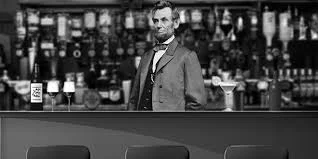
Most Americans know Abraham Lincoln as the towering statesman who led the nation through the Civil War, preserved the Union, and delivered some of the most memorable speeches in U.S. history. What many people don’t know, however, is that Lincoln was also an accomplished athlete—specifically, an exceptional wrestler who earned a near-mythic reputation long before he entered politics. Standing at an impressive 6 feet 4 inches tall, Lincoln cut a striking figure in 19th-century America, where the average male height was significantly shorter. His long limbs, wiry strength, and pioneer upbringing made him a natural at the rough-and-tumble style of frontier wrestling practiced throughout rural communities. It is estimated that he participated in around 300 contests during his youth and early adulthood, losing only once. His prowess was so respected that he was eventually honored by the National Wrestling Hall of Fame, an extraordinary distinction for a man more often associated with speeches and statesmanship than physical combat. The story of Lincoln’s wrestling career offers a side of him that many have never encountered—a fierce competitor, a respected fighter, and a man whose physical abilities matched his intellectual strengths.
Lincoln’s Frontier Upbringing and the Role of Wrestling in Early America
To understand how Abraham Lincoln developed into such a formidable wrestler, it is necessary to look at the environment in which he grew up. Born in a one-room log cabin in rural Kentucky and raised on frontier farms in Indiana and Illinois, Lincoln belonged to a generation of Americans for whom physical labor and bodily strength were essential for survival. Clearing land, chopping wood, hunting, building cabins, and performing endless chores required stamina and resilience. Communities were small and scattered, and entertainment in many rural areas took the form of competitive physical games such as foot races, jumping contests, and, most commonly, wrestling. On the frontier, wrestling was more than a pastime—it was a way for men to establish dominance, earn respect, and bond with neighbors.
The style of wrestling practiced in the early 1800s was rugged and unregulated compared to modern forms. Known as “catch-as-catch-can,” it allowed for holds, grappling, and sometimes rough tactics that tested not only strength but determination. In such an environment, Lincoln’s tall frame and long arms provided natural advantages. His physical development was shaped by years of labor, giving him what contemporaries described as a surprising blend of strength, agility, and endurance. His reputation as a wrestler did not emerge from formal training but from practical experience—hours spent working, hauling, lifting, and competing informally with other young men of the region.
Wrestling also served a social purpose. In small frontier towns, fights, matches, and bouts were ways of resolving disputes or establishing social hierarchy without escalating into more dangerous violence. Men who excelled in wrestling gained reputations as leaders or protectors within their communities. For Lincoln, who was known for his generally peaceful temperament, wrestling provided an outlet for competitive energy without compromising his character. Unlike some contemporaries who used their strength for intimidation, Lincoln typically approached matches with humor and fairness, earning admiration rather than fear. His early wrestling experiences in Indiana and Illinois helped shape his emerging identity—physically capable, confident, and accustomed to the camaraderie of frontier life. These qualities would later serve him well as he moved from manual labor into law, politics, and eventually the presidency.
Lincoln’s Reputation in New Salem: Stories, Legends, and His Famous One Loss
When Lincoln moved to New Salem, Illinois, in the early 1830s, he was a young man still searching for direction. It was here, however, that his wrestling reputation truly crystallized. New Salem was a small but lively settlement, full of ambitious young men, rival groups, and occasional troublemakers. Among these groups was a rough-and-tumble gang known as the Clary’s Grove Boys, who prided themselves on their strength and fighting abilities. They dominated local contests and enjoyed challenging newcomers to prove themselves. When Lincoln arrived, tall, lanky, and confident, they took immediate interest.
The most famous story from this period involves Lincoln’s match with Jack Armstrong, the leader of the Clary’s Grove Boys. Armstrong was known for his strength and cunning as a wrestler, and the match between the two quickly became a local spectacle. Different versions of the story exist, as frontier lore often blends fact with exaggeration, but all accounts agree that Lincoln held his own impressively. Some say he threw Armstrong to the ground; others claim the match ended in a draw due to interference from Armstrong’s friends. What is clear is that Armstrong was impressed. Instead of continuing the fight, he stopped his men from ganging up on Lincoln and declared him “the best fellow that ever broke into the settlement.” From that moment, Lincoln gained not only respect but the loyalty of a group that had once challenged him.
This wasn’t Lincoln’s only notable wrestling moment. In many rural towns, he developed a reputation as someone not to be trifled with—physically imposing yet fair-minded. His only recorded wrestling loss came later, though details vary. Some historians suggest it occurred against a man named Hank Thompson; others place it earlier in Lincoln’s youth. Regardless of the specifics, the important point is that this single defeat was unusual. In the approximately 300 matches attributed to him, he emerged victorious or at least undefeated the overwhelming majority of the time.
These stories circulated long after Lincoln left New Salem, shaping his legend as a young man of strength and integrity. Frontier storytellers loved recounting his feats—lifting heavy beams, stopping fights, or tossing opponents in friendly contests. Though not all accounts are verifiable, the consistency of their themes paints a compelling picture: Lincoln’s wrestling ability was widely recognized, genuinely impressive, and central to his early reputation. While later generations would focus primarily on his political achievements, people who knew him in his youth would always remember the tall, strong, good-humored young man who seemed unbeatable on the wrestling field.
Wrestling as a Window Into Lincoln’s Character: Discipline, Humor, and Strength
Lincoln’s wrestling career is important not simply because it demonstrates physical strength but because it reveals key aspects of his personality that continued throughout his life. Many people assume that athletic prowess and intellectual brilliance rarely coexist, but Lincoln embodied both. His ability to dominate in wrestling while also developing a deep love for reading, debate, and law highlights his extraordinary versatility. More importantly, his approach to wrestling reflected the same qualities that later defined him as a political leader—calm confidence, fairness, and an underlying desire to avoid unnecessary conflict.
Accounts from New Salem describe Lincoln as someone who rarely initiated fights but never backed down when challenged. Rather than using his strength to intimidate others, he used it to maintain order, break up disputes, or prevent violence. His physical dominance gave him authority, but his restraint earned him respect. Just as he exercised moral leadership during national crises, he exercised ethical judgment during physical contests. He never used illegal holds, discouraged unfair play, and often refused to continue matches once he had clearly established his superiority. Even Armstrong—his would-be rival—became one of his closest friends, demonstrating Lincoln’s ability to turn confrontation into mutual respect.
His reputation for strength extended beyond formal wrestling matches. Neighbors remembered him lifting heavy logs, swinging axes with astonishing power, and performing feats of endurance that few could match. This physical capability shaped his self-confidence and contributed to the natural charisma he displayed throughout his political career. Lincoln’s tall stature became iconic, but it was more than symbolic—his strength was real and respected. Even in Congress and during his presidency, political opponents occasionally referenced his early wrestling days as part of his rough, honest image.
At the same time, Lincoln possessed an exceptional sense of humor, which often emerged in wrestling contexts. He enjoyed storytelling, joking with opponents, and teasing friends after friendly matches. His wit and charm made him approachable, helping him build relationships across different social groups. Wrestling also gave him insights into human behavior, competition, and leadership—skills he later applied to political negotiations and military strategy. Though the arenas were vastly different, the confidence and clarity he developed in physical confrontations translated into strength of character when facing national turmoil. Understanding Lincoln as a wrestler therefore deepens our understanding of Lincoln as a person—someone whose mental and moral strength was supported, and perhaps shaped, by his physical capabilities.
Lincoln’s Induction into the Wrestling Hall of Fame and His Enduring Myth
In recognition of his extraordinary wrestling record, Abraham Lincoln was posthumously inducted into the National Wrestling Hall of Fame in 1992 as an “Outstanding American”—an honor reserved for individuals who have achieved greatness both within and beyond the wrestling world. This induction reflects not only Lincoln’s impressive athletic abilities but also the symbolic importance wrestling played in shaping his image and legacy. Although Lincoln never wrestled professionally or competed in formal tournaments, his frontier accomplishments and near-undefeated record place him among the most successful amateur wrestlers in American history.
The Hall of Fame’s acknowledgment solidified Lincoln’s status as an iconic figure whose legacy extends far beyond politics. He stands alongside modern Olympic champions and collegiate wrestling legends, yet his contribution is unique. Lincoln did not pursue wrestling as a sport; he lived it as part of daily life in a rugged, developing nation. His induction symbolizes the values wrestling communities admire—strength, discipline, humility, fairness, and resilience—all of which Lincoln embodied both physically and morally.
The mythology surrounding Lincoln’s wrestling career has also endured in American culture. Popular history books, museum exhibits, and documentaries frequently highlight his athletic feats, sometimes embellishing them but often remaining grounded in reliable accounts. His reputation has become part of folklore, blending authenticity with frontier legend. For many Americans, the idea of Lincoln as a fierce yet good-humored wrestler humanizes him, balancing the solemnity of his political achievements with a relatable, down-to-earth dimension.
Today, Lincoln’s wrestling legacy inspires athletes, historians, and admirers alike. It serves as a reminder that leaders can be multidimensional—that physical strength and intellectual depth are not mutually exclusive. Lincoln’s life demonstrates that resilience comes in many forms. His wrestling background did not directly prepare him for the presidency, but it helped shape the qualities that made him a great leader: confidence without arrogance, strength without cruelty, and the ability to stand firm even when facing overwhelming challenges.
A President of Unmatched Strength—On and Off the Mat
Abraham Lincoln’s induction into the Wrestling Hall of Fame may come as a surprise, but it reflects a truth long known to those who studied his early life: long before he saved the Union, Lincoln was a champion in his own right. His near-undefeated wrestling record, commanding presence, and frontier upbringing reveal a man whose physical strength matched his intellectual power. Understanding Lincoln as a wrestler enriches our understanding of Lincoln as a president, offering a fuller picture of his character and capacity for leadership. His ability to face down opponents—whether in a ring or in the halls of government—demonstrates remarkable courage and confidence. Ultimately, Lincoln’s wrestling career stands as a fascinating reminder that even the greatest leaders often have unexpected talents. In Lincoln’s case, those talents helped build a foundation of strength that sustained him through some of the most difficult years in American history.
Leave a Reply