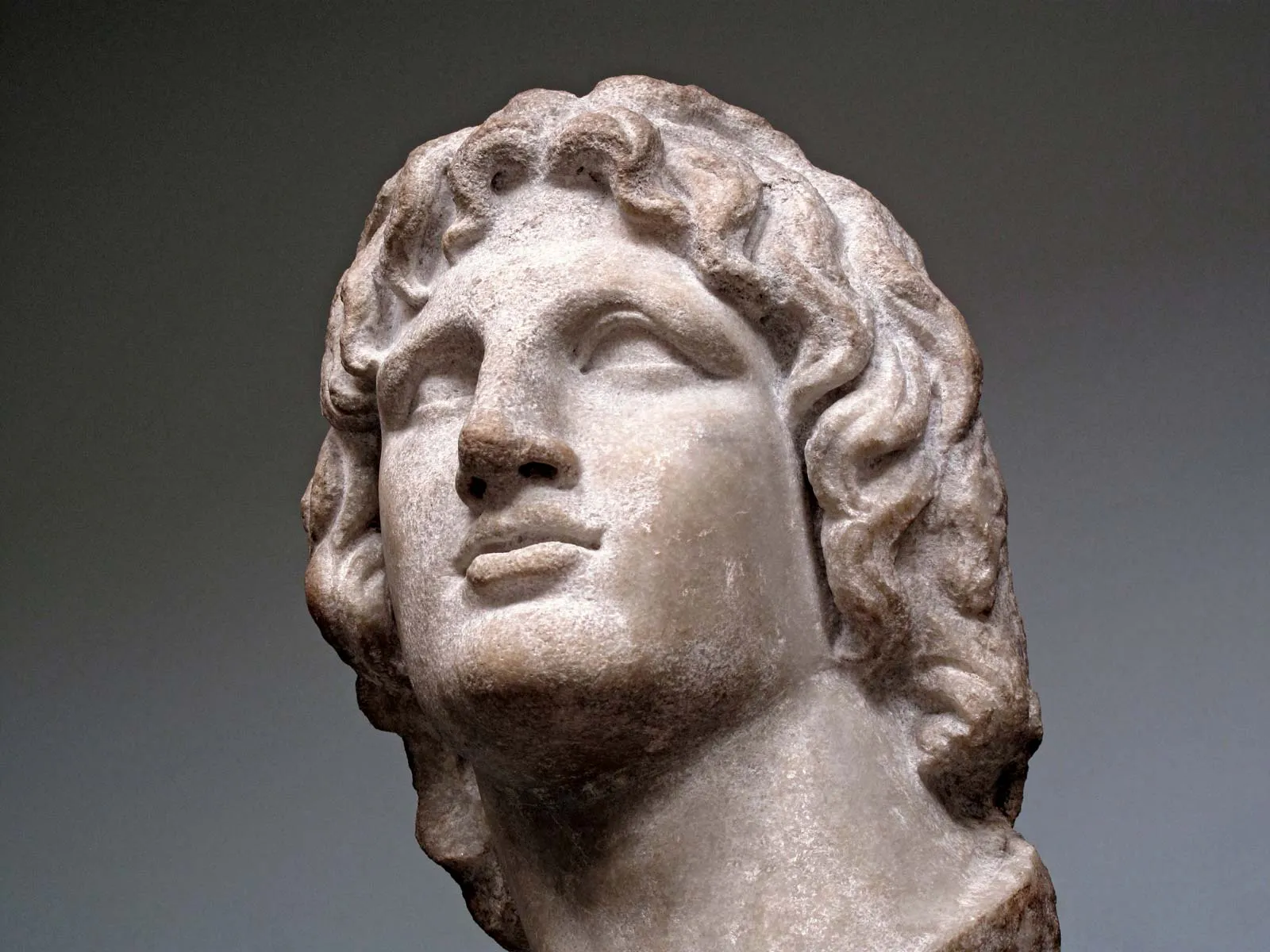
For centuries, the death of Alexander the Great has remained one of history’s most captivating mysteries, an event surrounded by speculation, conflicting accounts, and theories that challenge traditional understandings of ancient medicine. Among the most intriguing theories proposed by modern scientists is the idea that Alexander may not have died when his physicians declared him dead. Instead, some researchers believe that he suffered from a rare neurological disorder known as Guillain-Barré Syndrome, a condition that can lead to extreme paralysis while leaving cognitive function completely intact. This has led to an astonishing possibility: Alexander the Great, the legendary conqueror whose empire stretched from Greece to India, may have been buried while he was still alive—paralyzed, unable to move or speak, yet mentally aware of everything happening around him. While ancient sources do not provide enough evidence for absolute certainty, the hypothesis offers a compelling reinterpretation of one of history’s most pivotal deaths and invites us to reconsider how ancient medicine understood life, death, and disease.
Reexamining the Mysterious Final Days of Alexander the Great
The final days of Alexander the Great were marked by confusion, rapid deterioration, and contradictory accounts recorded by his contemporaries and later historians. What is known with reasonable certainty is that Alexander fell ill after a banquet in Babylon in 323 BCE. Over the course of several days, he experienced increasing weakness, high fever, and difficulty speaking. Some sources describe acute abdominal pain, others note progressive paralysis; nearly all accounts agree that his condition worsened steadily until he was no longer able to move or communicate. Yet something about the timeline of his death has long puzzled scholars. Ancient writers noted that Alexander’s body showed no sign of decomposition for several days after his apparent death—an unusual occurrence in the heat of Mesopotamia, where decay typically set in rapidly. To many at the time, this was seen as proof of Alexander’s divinity. To modern scientists, however, this detail stands out as an important clue pointing toward Guillain-Barré Syndrome.
Guillain-Barré Syndrome, or GBS, is an autoimmune disorder in which the body’s immune system attacks the peripheral nerves, leading to ascending paralysis that spreads upward from the legs. In severe cases, patients can lose the ability to move, breathe independently, or speak, yet they remain fully conscious. The disease can also slow bodily processes, including heart rate and respiration, to such an extent that a living patient may appear clinically dead by ancient standards. This is where Alexander’s case becomes compelling. Ancient physicians did not have access to modern tools for measuring vital signs, relying instead on observing breath, movement, and responsiveness—signs that a patient with severe GBS might not be able to exhibit. If Alexander had entered a state of near-total paralysis, with shallow breathing and minimal visible signs of life, it is entirely conceivable that his attendants concluded he had died even though his mind remained fully awake. The accounts of his men visiting him during his supposed final moments—when he reportedly could only blink or move his eyes—take on new meaning under this theory. Rather than drifting in and out of consciousness, he may have been trapped in his own body, aware of his surroundings but unable to communicate, a tragic and haunting end for a man whose entire life had been defined by decisive action and unrelenting ambition.
Understanding Guillain-Barré Syndrome and How It Fits the Historical Evidence
To understand why Guillain-Barré Syndrome provides such a plausible explanation for Alexander’s death, it is important to consider how the disease progresses and how its symptoms align with the ancient descriptions. GBS typically begins with muscle weakness that starts in the legs before gradually moving upward through the body. Within days, patients can lose the ability to walk, raise their arms, or speak clearly. In the most severe cases, the paralysis can impact the respiratory muscles, leading to extremely shallow breathing. Without modern respiratory support, this stage can be fatal, not because the brain ceases to function but because the body can no longer sustain the mechanical process of breathing. Another key aspect of GBS is that, unlike many infectious diseases that cause fever and dramatic physiological changes, GBS does not generally cause rapid decomposition after death. This detail aligns closely with the ancient claim that Alexander’s body remained unusually well-preserved for days, leading his followers to believe that he was more than human.
The absence of decomposition is particularly important because it suggests that Alexander’s metabolic processes may have slowed dramatically during a paralyzing state rather than coming to a complete stop. Ancient writers described how Alexander’s attendants continued to observe him long after they believed he had died. In fact, sources such as the “Royal Diaries” tradition note that his body remained warm and lifelike. Although these sources must be approached with caution, they are consistent with contemporary medical knowledge about the disease. The possibility that he lay paralyzed yet alive while preparations for his burial were underway is not only medically feasible but chillingly realistic.
What makes the GBS theory so compelling is its ability to reconcile the wide range of symptoms attributed to Alexander’s final illness. Fever, progressive paralysis, inability to speak, and the peculiar preservation of the body are all symptoms that align with the syndrome. Moreover, the theory explains another longstanding historical puzzle: the lack of a clear cause of death. Alexander was a relatively young man—just 32 years old—at the height of his strength and military power. Theories of poisoning have been largely dismissed by modern historians, as no known poison of the time could have produced such a slow progression of symptoms over nearly two weeks. Infectious disease is possible, but most infections that could cause paralysis would also be accompanied by rapid decomposition or additional symptoms not described in ancient sources. GBS, however, fits the sequence almost perfectly, making it one of the strongest modern hypotheses for Alexander’s death.
Was Alexander Buried Alive? Exploring the Historical and Cultural Implications
The idea that Alexander may have been buried alive is deeply unsettling, yet it becomes a legitimate possibility when examined through the lens of ancient funerary practices and the medical limitations of the era. In ancient Macedonia and throughout much of the known world, the boundary between life and death was measured not by instruments but by observation. If a patient did not move, respond, or appear to breathe, death was presumed. In Alexander’s case, his attendants were likely terrified by the rapid decline of their king and eager to complete the complex rituals required after the death of such a monumental figure. His body needed to be prepared for embalming, public mourning, and eventual transport. In the chaos following his presumed death, it is entirely possible that subtle signs of life were overlooked or misunderstood.
Historians also recognize that Alexander’s death created a power vacuum of unprecedented scale. With no clear heir and an empire stretching across continents, there was immense pressure to transition quickly into the period of succession. His generals—later known as the Diadochi—were already maneuvering for control, and the political tension surrounding his death may have contributed to the haste with which the funeral preparations were initiated. If Alexander was still alive but fully paralyzed and incapable of communicating, he would have been powerless to signal his awareness or object to the unfolding events. The psychological horror of such a scenario is profound: the world’s most celebrated conqueror, a man accustomed to commanding armies and shaping empires, potentially trapped within his body as those around him declared him dead.
The embalming process itself raises additional questions. Ancient sources suggest his body was not immediately embalmed, possibly because it appeared so lifelike that the attendants hesitated. If he was still alive during those early days, his slowed breathing and heartbeat may have masked vital signs. Only after several days would genuine biological death have occurred, and by then, the absence of decomposition would have seemed miraculous to those present. This perceived miracle reinforced the belief that Alexander was semi-divine, a figure whose physical form defied the normal processes of mortality. Politically, this belief served the ambitions of his successors, who used his supposed divinity to legitimize their own claims to power. Thus, the possibility that he was buried alive is more than a medical hypothesis—it is a historical lens that reshapes our understanding of the transition from Alexander’s empire to the fractured world of the Hellenistic kingdoms.
A Modern Reinterpretation: What This Theory Reveals About Science, Myth, and Legacy
The theory that Alexander the Great may have been buried alive because of Guillain-Barré Syndrome does more than provide a medical explanation for his mysterious death—it reframes the narrative of his final moments and forces us to confront the intersection of science and myth. Throughout history, Alexander has been portrayed as larger than life: a military genius, a visionary leader, and a figure who inspired legends long before his death. His life was well documented, yet his death left enough uncertainty to become fertile ground for speculation. The GBS hypothesis shifts the focus from myth to medicine, offering a rational explanation that bridges ancient observation with modern science. It invites us to reconsider how historical narratives evolve and how ancient interpretations—such as the belief in his body’s divine preservation—may have roots in misunderstood physiological phenomena.
The idea that Alexander was mentally aware but physically incapable of communication at the moment he was declared dead adds layers of depth to his legacy. It humanizes him in a way that few other stories do, presenting him not as an invincible hero but as a vulnerable individual subject to the limitations of the human body. At the same time, it highlights the limitations of ancient medical knowledge and the ways in which societies interpret extraordinary events through the lens of belief, ritual, and political necessity. Rather than diminishing his legend, this reinterpretation enriches it, adding complexity to a figure often depicted in extremes.
Modern medical historians appreciate the GBS theory because it exemplifies how interdisciplinary research—combining ancient texts, clinical knowledge, and cultural context—can illuminate mysteries that have persisted for millennia. Whether or not the theory is ultimately provable, it reflects a shift in how we analyze historical figures, emphasizing empathy, nuance, and scientific inquiry. Alexander’s death, once viewed solely as a moment of tragic decline, becomes part of a larger conversation about how myths are constructed and how science can breathe new life into ancient narratives. His story continues to evolve, shaped by the tools and perspectives of each new generation, reminding us that history is not static but a living discipline that grows richer with every question we ask.
Leave a Reply