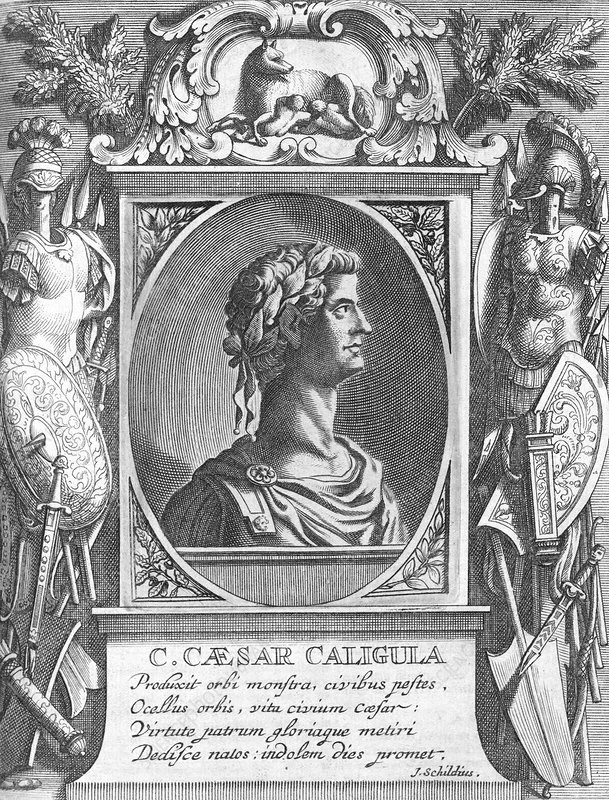
Caligula is remembered as one of the most controversial figures in Roman history. His short reign left behind stories so extreme that historians still debate where truth ends and exaggeration begins. Among the most famous—and most shocking—claims is the assertion that he made his favorite horse a senator and intended to elevate the animal to the rank of consul, one of the highest offices in the Roman state. The horse, named Incitatus, allegedly lived better than most Roman citizens, enjoying luxuries that symbolized wealth, power, and political mockery all at once.
At first glance, the idea sounds absurd, almost cartoonish. A horse in the Roman Senate seems like the invention of later satire rather than historical fact. Yet this story appears in multiple ancient sources and has endured for nearly two millennia. Whether literal, symbolic, or deliberately exaggerated, it reveals something essential about the nature of Caligula’s rule, the fragility of Roman political institutions, and the dangerous intersection of absolute power and personal whim. To understand why this tale mattered—and still does—we must examine the man, the political climate of Rome, and the deeper meaning behind elevating a horse above the ruling elite of the empire.
Who Was Caligula Before He Became Emperor?
Before he became emperor, Gaius Julius Caesar Germanicus was known simply as “Caligula,” a nickname meaning “little boots.” It was given to him as a child when he accompanied his father, the popular general Germanicus, on military campaigns. Roman soldiers reportedly dressed the young boy in miniature armor, endearing him to the troops and creating an image of innocence that would later contrast sharply with his reputation as a tyrant.
Caligula’s early life was marked by trauma and political danger. After the death of his father, his family fell out of favor with Emperor Tiberius. Several of Caligula’s relatives were executed or exiled, and he spent years living under constant threat. This atmosphere of fear likely shaped his personality, fostering deep mistrust and resentment toward Rome’s aristocracy. When Tiberius died in AD 37, Caligula ascended to the throne at just 24 years old, welcomed enthusiastically by the public.
At first, his reign appeared promising. He granted bonuses to soldiers, staged lavish games, and reversed some of Tiberius’s harsh policies. However, within months, Caligula fell seriously ill. Ancient writers claim that after this illness, his behavior changed dramatically. He became increasingly erratic, cruel, and obsessed with displays of absolute authority. Whether this transformation was due to physical illness, psychological trauma, or political calculation remains debated, but the shift set the stage for actions that shocked even the hardened Roman elite.
Incitatus: The Horse Who Lived Like a Noble
Incitatus was no ordinary animal by Roman standards. According to ancient historians, Caligula lavished extraordinary attention on his horse, elevating him far above the status of a prized racing animal. Incitatus allegedly had a marble stall, an ivory manger, and a jeweled collar—luxuries typically reserved for the highest ranks of Roman society. These details were not subtle; they were deliberate symbols of wealth and privilege, instantly recognizable to any Roman observer.
Beyond material extravagance, Caligula reportedly granted Incitatus servants and even a house. The horse was invited to dine with the emperor, sometimes consuming oats mixed with gold flakes. Such acts went beyond affection for an animal and crossed into the realm of political theater. In Roman culture, where hierarchy and status were rigidly enforced, these gestures were provocative. They suggested that Caligula could bestow honor arbitrarily, without regard for tradition, merit, or even species.
The most infamous claim is that Caligula made Incitatus a senator—or at least announced his intention to do so. Some sources go further, stating that the emperor planned to appoint the horse as consul. Whether these plans were ever formally enacted is unclear, but the mere suggestion carried immense symbolic weight. The Senate was the heart of Roman political life, an institution that traced its origins back centuries. To place a horse within its ranks was either a sign of madness or a calculated insult.
Was the Horse Really a Senator, or Was It Political Mockery?
Modern historians are divided on how literally to interpret the story of Incitatus as a senator. Ancient sources such as Suetonius and Cassius Dio describe the episode, but they wrote decades after Caligula’s death and were often hostile to his memory. Roman historical writing frequently blended fact, rumor, and moral judgment, especially when portraying unpopular emperors.
One interpretation suggests that Caligula never formally appointed Incitatus to the Senate but used the threat as a form of humiliation. By suggesting that even a horse could hold office, he mocked senators whom he viewed as corrupt, incompetent, or disloyal. This reading aligns with Caligula’s broader pattern of behavior. He routinely insulted senators, forced them to run beside his chariot, and treated them as servants rather than statesmen.
In this context, Incitatus becomes a symbol rather than a literal officeholder. The message was clear: the emperor’s favor mattered more than tradition, lineage, or ability. If Caligula wished, he could elevate an animal above Rome’s most powerful men. Whether or not the horse ever sat in the Senate chamber is almost irrelevant; the threat alone undermined the dignity of the institution.
This interpretation also helps explain why the story persisted. It captured the essence of Caligula’s relationship with the Senate—one defined by contempt and domination. By turning governance into spectacle, Caligula exposed the fragility of Roman republican ideals under imperial rule.
Power, Performance, and Absolute Authority in Imperial Rome
Caligula’s treatment of Incitatus must be understood within the broader framework of imperial power. By the first century AD, the Roman Republic had effectively ended, but its institutions remained as ceremonial remnants. The Senate still existed, but real authority rested with the emperor. Caligula’s actions highlighted this imbalance in dramatic fashion.
Roman emperors often used spectacle to assert control, staging games, triumphs, and rituals that reinforced their dominance. Caligula took this to an extreme, blurring the line between governance and performance. Elevating a horse was not merely an eccentric act; it was a declaration that power flowed solely from the emperor’s will. Tradition mattered only insofar as it served him.
This approach terrified Rome’s elite. Senators were accustomed to influence and prestige, even under autocratic rule. Caligula’s behavior suggested that their status was conditional and revocable at any moment. By favoring Incitatus, an animal incapable of ambition or betrayal, Caligula demonstrated his preference for loyalty without agency—a chilling message to those around him.
Such displays may also reflect Caligula’s psychological state. Absolute power, combined with personal insecurity and trauma, can produce behavior that appears irrational but serves a clear internal logic. Whether mocking, testing, or punishing the Senate, Caligula used Incitatus as a tool to reshape the political landscape in his image.
Ancient Sources and the Problem of Historical Truth
Much of what we know about Caligula comes from writers who despised him. Suetonius, one of the primary sources for the Incitatus story, delighted in scandal and moral judgment. His biographies often emphasized sexual excess, cruelty, and absurdity, shaping how later generations perceived Roman emperors. Cassius Dio, another key source, wrote from a senatorial perspective and shared many of the same biases.
This raises an important question: how much of the Incitatus story is factual, and how much is rhetorical exaggeration? Ancient historians often used extreme anecdotes to illustrate character flaws. A horse made senator was a perfect symbol of tyranny, arrogance, and insanity. Even if the event never happened exactly as described, it conveyed a truth about how Caligula was experienced by his contemporaries.
Modern scholarship tends to view the story as partially symbolic but grounded in real actions. Caligula undeniably lavished extraordinary luxuries on Incitatus, and he openly threatened the Senate with humiliation. Whether the formal appointment occurred matters less than the political reality it represented. History, especially ancient history, is not only about what happened but about what people believed and feared.
The Assassination of Caligula and the Fate of Incitatus
Caligula’s reign ended abruptly in AD 41 when he was assassinated by members of his own Praetorian Guard, aided by senators who feared for their lives and influence. His death was swift and violent, bringing an end to four years of escalating tension. In the aftermath, many of his policies and actions were reversed or erased in an effort to restore stability.
Little is known about what happened to Incitatus after Caligula’s death. The horse disappears from the historical record, likely returned to obscurity or quietly disposed of. With the emperor gone, the symbolic power of the animal vanished as well. The Senate moved quickly to reassert its dignity, and Caligula’s excesses were held up as warnings against unchecked authority.
Yet the story of Incitatus survived, passed down through generations as shorthand for political absurdity. Even today, references to Caligula’s horse appear in discussions about incompetent leadership and the misuse of power. The tale has outlived the empire that produced it, becoming a cultural metaphor as much as a historical anecdote.
Why the Story Still Matters Today
The fascination with Caligula and Incitatus is not merely about shock value. It speaks to enduring questions about leadership, legitimacy, and the nature of authority. When power is concentrated in a single individual, institutions become vulnerable to ridicule and erosion. Caligula’s actions demonstrate how easily tradition can be hollowed out when it no longer constrains those at the top.
The story also reminds us to approach historical sources critically. Ancient historians were storytellers as much as record-keepers, and their accounts reflect cultural values and political agendas. Understanding this helps us separate literal truth from symbolic meaning, enriching our understanding rather than diminishing it.
Ultimately, whether Incitatus truly became a senator matters less than what the story reveals. It captures a moment when Rome’s political system was exposed as fragile, dependent on the temperament of one man. In that sense, the horse in the Senate is not just a curiosity of the past but a cautionary symbol that continues to resonate.