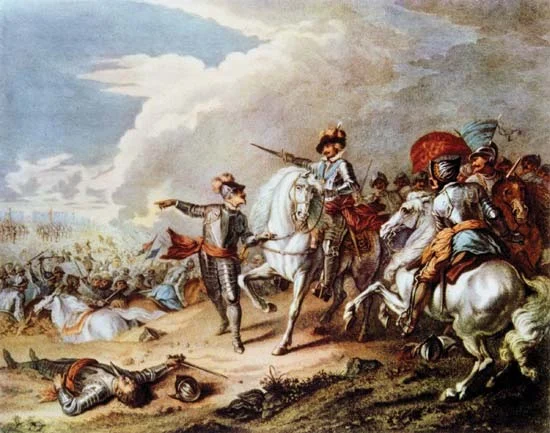
In the middle of the seventeenth century, England experienced one of the most turbulent and ideologically charged periods in its history. Civil war, regicide, religious experimentation, and radical social reform all collided in a nation struggling to redefine itself. Amid the sweeping political changes and fierce moral debates, even the most ordinary aspects of daily life came under scrutiny. Food, festivities, and leisure were no longer neutral pleasures but symbols of deeper spiritual and cultural conflict. It is within this charged atmosphere that the often-repeated story emerges: that pie, a humble yet beloved staple of English cuisine, was condemned as a sinful indulgence and effectively pushed into the shadows. The idea that a government would seek to regulate something as domestic and comforting as pie seems almost absurd today, yet it reveals how profoundly politics and belief could penetrate everyday existence during this era. Understanding what really happened requires stepping beyond the myth and into the complex world shaped by Oliver Cromwell and the revolutionary regime he led.
England in Crisis: Politics, Faith, and Everyday Life in the 1640s
By the 1640s, England was a nation fractured by deep political and religious divisions. The conflict between King Charles I and Parliament escalated into the English Civil War, a brutal struggle that reshaped the country’s governance and social fabric. When Parliamentarian forces emerged victorious, the execution of the king in 1649 shocked Europe and marked a radical break with centuries of monarchy. In the vacuum that followed, England was declared a Commonwealth, and power gradually consolidated around military and political leaders who believed they were building a godly nation. Among them, Oliver Cromwell rose as the most dominant figure, eventually becoming Lord Protector. This was not merely a change in rulers; it was an attempt to remake society according to strict moral and religious principles.
The prevailing religious influence during this time was Puritanism, a movement that sought to purify the Church of England from practices seen as remnants of Catholic excess. Puritans emphasized sobriety, discipline, and constant vigilance against sin. Their worldview left little room for exuberant celebration or indulgence, especially when those pleasures were associated with traditional festivals. Public entertainments, theatrical performances, and holiday customs came under intense suspicion. The government closed theatres, discouraged popular sports, and targeted festivities like Christmas, which were viewed as promoting idleness and moral laxity.
Food, surprisingly, was drawn into this moral reordering. Certain dishes were associated with feast days and communal celebrations that Puritans believed distracted people from spiritual seriousness. Mince pies, in particular, were linked to Christmas traditions and thus symbolized everything the new regime opposed. While bread and simple fare aligned with ideals of modest living, elaborate pastries suggested luxury and pleasure for their own sake. In this context, the notion of banning pie was less about the food itself and more about what it represented. Pie became a cultural marker in a broader struggle to redefine English identity, morality, and religious expression during a period of revolutionary upheaval.
Oliver Cromwell, Puritan Morality, and the Myth of the Pie Ban
The claim that Oliver Cromwell personally banned the eating of pie has circulated widely in popular history, often repeated as an example of Puritan excess. The truth, however, is more nuanced and revealing. There is no surviving decree in which Cromwell explicitly outlaws pie as a food. Instead, the restrictions emerged from a series of parliamentary ordinances and local enforcement practices aimed at suppressing what were considered pagan or superstitious celebrations. Cromwell, as the leading figure of the Commonwealth, became the symbolic face of these measures, even when they were collectively enacted by Parliament.
Puritan ideology viewed pleasure with suspicion, especially when it appeared ritualistic or traditional rather than spiritually purposeful. Foods associated with religious festivals fell under this scrutiny. Mince pies, often spiced and richly filled, were strongly associated with Christmas, a holiday that Parliament officially abolished in 1647. Shops were ordered to remain open on Christmas Day, and public celebrations were discouraged or punished. In such an environment, making or selling festive foods could attract fines or social condemnation. Over time, this enforcement fostered the impression that pie itself was forbidden.
Cromwell’s personal beliefs undoubtedly influenced the tone of governance. He believed England had been chosen by God for a special purpose and that moral reform was essential to securing divine favor. Yet he was also a pragmatist, often willing to compromise when strict enforcement threatened stability. The image of Cromwell as a joyless tyrant banning all pleasures oversimplifies a far more complex figure. Nonetheless, for many ordinary people, the experience of the Commonwealth felt oppressive. Traditional customs disappeared from public life, and familiar comforts became symbols of resistance.
Thus, the “pie ban” should be understood as a cultural shorthand rather than a literal law. Pie became emblematic of suppressed traditions, a casualty of a broader campaign against festive excess. Over time, the story hardened into legend, with Cromwell cast as the villain who declared war on pastry. This myth persists because it captures, in a single vivid image, the tension between authority and everyday joy in seventeenth-century England.
Life Under the Commonwealth: Food, Surveillance, and Quiet Resistance
For ordinary English families, the years of the Commonwealth were marked by adjustment, caution, and subtle defiance. Food habits changed not because people suddenly lost their taste for rich dishes, but because social pressure and local enforcement made certain practices risky. Markets were monitored, and local officials were empowered to punish behaviors deemed immoral or subversive. This environment encouraged conformity in public spaces, even as private life retained traces of older traditions.
Cooking, especially baking, moved indoors and out of sight. Families who cherished festive dishes adapted recipes, prepared them discreetly, or reserved them for moments of privacy. Pies, whether filled with meat, fruit, or spices, did not vanish from England, but they lost their public visibility. The communal sharing of food during holidays gave way to quieter, more restrained observances. In this sense, pie eating went “underground” not as an organized movement, but as a collection of personal choices shaped by caution and memory.
These small acts of resistance mattered. They preserved cultural continuity during a time of enforced change. Food carried emotional weight, connecting people to their past and to one another. A pie baked in secret could evoke family traditions, seasonal rhythms, and a sense of normalcy in an unstable world. Such acts were rarely overtly political, yet they quietly challenged the notion that the state could fully control private life.
The Commonwealth’s emphasis on moral discipline also created divisions within communities. Not everyone embraced Puritan ideals with equal enthusiasm. Some supported reform, believing it would lead to a more righteous society, while others resented the intrusion into personal habits. These tensions played out in churches, marketplaces, and households. Over time, fatigue set in. The strictness that once felt revolutionary began to feel burdensome. When Cromwell died in 1658, the regime lacked his authority and cohesion. The moral experiment that had reshaped daily life, including attitudes toward food, was nearing its end.
The Restoration of 1660 and the Return of Public Pleasure
The Restoration of the monarchy in 1660 marked a dramatic shift in England’s political and cultural landscape. With the return of Charles II, the nation signaled its exhaustion with radical moral governance and its desire for stability and enjoyment. The new king embodied a different ethos from the Puritan leaders who preceded him. His court was known for its liveliness, tolerance, and renewed appreciation for art, theater, and festivity. This change at the top quickly filtered down into everyday life.
Old customs resurfaced with enthusiasm. Public celebrations returned, churches reinstated traditional holidays, and markets once again displayed foods associated with communal joy. Pies, long linked with feasts and gatherings, reclaimed their place at the center of English tables. The lifting of restrictions was not framed as a specific repeal of a “pie ban,” but as a broader relaxation of moral controls that had governed public behavior. What had been suppressed was now openly embraced.
The revival of festive food symbolized more than culinary preference. It represented a reclaiming of identity and continuity after years of upheaval. Baking and sharing pies became acts of normalcy and relief, reminders that the era of surveillance and restraint had ended. The Restoration did not erase the divisions left by the Civil War, but it allowed society to breathe again, culturally and socially.
In retrospect, the contrast between the Commonwealth and the Restoration sharpened memories of deprivation. Stories of banned pleasures, including pie, took on a nostalgic and sometimes exaggerated tone. Over time, these stories crystallized into the popular narrative that Cromwell had outlawed pie for sixteen years. While historically imprecise, the story captured a real emotional truth: that ordinary pleasures had been curtailed in the name of ideology, and that their return felt like liberation.
Pie, Memory, and the Making of a Historical Myth
The endurance of the pie ban story reveals how history is shaped not only by documents, but by memory and symbolism. Pie, as a familiar and comforting food, offers a tangible way to understand abstract concepts like moral regulation and cultural resistance. When people recount that Cromwell banned pie as a pagan pleasure, they are expressing a broader judgment on the Puritan experiment and its impact on daily life.
Such myths persist because they simplify complex realities into relatable images. It is easier to imagine a government banning pie than to grasp the intricate web of laws, sermons, and social pressures that defined the Commonwealth. Yet, beneath the simplification lies a valuable insight. The story reminds us that political power can reach into the most intimate corners of life, shaping what people eat, celebrate, and remember.
For historians, separating fact from folklore is essential, but so is understanding why certain stories endure. The pie ban myth survives because it resonates emotionally and culturally. It connects the grand narratives of revolution and restoration to the sensory world of taste and tradition. In doing so, it keeps the past alive in everyday conversation.
Ultimately, the episode belongs to the early modern period, a time when Europe grappled with religious reform, state power, and emerging modern identities. England’s brief experiment with radical moral governance left lasting impressions, not least in the stories passed down through generations. Whether or not pie was ever officially banned, its symbolic “underground” years tell us much about the anxieties, hopes, and human resilience of seventeenth-century England.