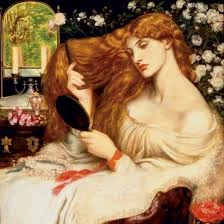
To modern ears, the idea sounds almost like dark fantasy: in ancient Greece, people believed that red-haired individuals were more likely to become vampires after death. Yet beneath this startling claim lies a revealing window into how the ancient world interpreted physical difference, disease, death, and the unseen forces they believed governed existence. In a Mediterranean society dominated by olive skin, dark hair, and dark eyes, red hair stood out as something rare, foreign, and unsettling. Combined with pale skin and sensitivity to intense sunlight, redheads appeared to defy the expected visual norms of Greek identity. Over time, these visible differences became entangled with supernatural fears—especially fears surrounding restless dead, corrupted bodies, and the dangerous border between life and death. Though the exact word “vampire” belongs to later eras, the ancient Greek imagination already contained the psychological framework that would eventually give rise to such creatures. Redheads, in this worldview, were marked by nature itself as beings who did not fully belong to the natural order—either in life or in death.
How Physical Difference Became Supernatural Suspicion in Ancient Greece
Ancient Greek society placed immense cultural importance on harmony, balance, and visual order. These ideals shaped everything from sculpture and architecture to philosophy and medicine. The human body itself was understood as a reflection of cosmic balance, governed by internal mixtures of heat, cold, moisture, and dryness. When a person’s physical appearance fell outside familiar norms, it was not merely considered unusual—it was often interpreted as a sign of inner imbalance.
In the Mediterranean region, the vast majority of people had dark hair, dark eyes, and olive-toned skin. These features were so dominant that they became embedded in Greek identity itself. In contrast, red hair was genuinely rare. Most naturally red-haired individuals encountered by Greeks likely came from northern regions—Thrace, Scythia, or Celtic territories—areas associated with warlike cultures, magic, chaos, and the unknown. As a result, red hair did not simply register as a color variation. It became symbolically loaded with ideas of danger and foreignness.
Greek medical theory further intensified this suspicion. According to humoral medicine, which dominated Greek thought for centuries, hair color reflected the internal balance of bodily fluids. Black hair signified balance and stability. Red hair, by contrast, was associated with excess heat and dryness—qualities linked to anger, violence, and uncontrolled passion. A red-haired person was thus believed to possess not only an unusual appearance, but also a volatile inner nature.
This blending of physical and moral interpretation created fertile ground for supernatural fear. If red-haired individuals were naturally more hot-tempered, unstable, and fiery in life, it was an easy leap for ancient imaginations to assume they would also be dangerous in death. The body that already defied visual norms might also defy the boundary between the living and the dead.
In this way, physical difference was slowly transformed into metaphysical threat. What began as rarity became suspicion. What began as suspicion slowly hardened into myth.
Sensitivity to Sunlight and the Fear of Unnatural Bodies
One of the most striking physical contrasts between red-haired individuals and Mediterranean Greeks was skin tone. Many redheads possess very pale skin that burns easily and reacts strongly to intense sunlight. In the blinding brightness of southern Greece, this sensitivity would have been immediately visible. While most Greeks tanned easily and darkened under the sun, redheads often reddened painfully, blistered, or avoided prolonged exposure.
To an ancient culture that viewed the sun as a life-giving force—closely associated with the god Helios—avoidance or vulnerability to sunlight could be interpreted as unnatural. Sunlight symbolized vitality, clarity, and divine order. Those who suffered under it appeared to reject that order physically.
This discomfort with sunlight fed directly into later vampiric imagery. Long before the word “vampire” existed, Greek folklore already contained fear of beings that avoided daylight, moved at night, and returned from the dead with corrupted bodies. Pale skin, aversion to the sun, and unusual physical traits all aligned closely with how ancient Greeks imagined restless spirits and reanimated corpses.
In death, the human body was supposed to decay according to nature’s design. When decomposition appeared delayed or abnormal—often due to environmental conditions—people assumed something supernatural was at work. If the person in life had already displayed “unnatural” traits, such as red hair and sun sensitivity, it reinforced the suspicion that their corpse might also resist the natural laws of decay.
Thus, red hair and pale skin did not merely provoke social curiosity. They played into a broader visual language of death, corruption, and defiance of cosmic order. The living body already appeared halfway outside normal human boundaries. The dead body, then, was feared as fully outside them.
This visual logic—sunlight versus pallor, warmth versus coolness, olive tones versus ghostly skin—helped cement red-haired individuals as prime candidates for supernatural transformation after death in the ancient imagination.
Ancient Greek Restless Dead and the Roots of “Vampire” Beliefs
Although the modern concept of the vampire developed many centuries later in Eastern Europe, ancient Greece already possessed an extensive tradition of restless-dead mythology. These early beliefs formed the psychological skeleton upon which later vampire legends would be built.
Greek folklore spoke of beings such as the lamiae, once human women transformed into child-destroying night predators. There were also the empusae, shape-shifting female spirits that seduced men and drained their vitality. More broadly, Greeks feared ordinary dead who returned improperly—those who had not received correct burial rites, those who died violently, or those believed to have led morally corrupt lives.
The later Greek concept of the vrykolakas—a revenant-like being that rose from the grave to harm the living—emerged more clearly in Byzantine and post-Byzantine periods. However, its conceptual roots lie firmly in ancient ideas about polluted corpses and incomplete separation between soul and body. Anything that disrupted the “clean” transition from life to death could create a monster.
Red-haired individuals became associated with these fears precisely because they disrupted visual expectations even in life. If most people looked one way in death, but redheads retained a striking, unfamiliar contrast, the corpse itself could appear unsettling and “wrong” to those who handled it. This visual shock created fertile ground for rumors: the dead are not at rest; something unnatural is unfolding.
Furthermore, ancient Greeks believed that the soul’s unrest could physically manifest in the corpse. Bodies that appeared bloated, twisted, or oddly preserved were interpreted as proof of supernatural activity. In this system, suspicion often targeted those already viewed as liminal or different in life—including foreigners, the socially isolated, and the physically unusual.
Red hair, extreme pallor, and light sensitivity placed individuals directly in this liminal category. They were not fully aligned with the visual language of the community. After death, they were therefore imagined as not fully aligned with the laws of the grave either.
Foreignness, Northern Peoples, and the Demonization of Red Hair
To fully understand the fear surrounding red hair, one must also understand the Greek worldview regarding geography and identity. The ancient Greeks sharply divided the world between themselves and those they called barbaroi—foreign peoples whose languages sounded unintelligible and whose customs appeared dangerous or irrational.
Many red-haired individuals encountered by Greeks came from northern regions such as Thrace, Scythia, and Celtic territories. These regions were stereotyped as violent, wild, magical, and spiritually unstable. Northern warriors fought with ferocity unfamiliar to Greek military traditions. Their strange rituals, unfamiliar clothing, and different physical features reinforced the idea that they existed outside civilized order.
Red hair thus became visually linked to geographic danger. It was not merely a color—it became a flag of the unknown north, of lands of cold, shadow, and hidden power. Greek mythology repeatedly placed monsters, witches, and supernatural beings at the edges of the known world. To look physically like someone from those edges was to invite mythic suspicion.
This geographic symbolism blended effortlessly with undead folklore. If northern lands were already imagined as spiritually unstable, then red-haired bodies from those regions were presumed unstable even after death. The road from geographical otherness to supernatural otherness was short and easy to travel in the ancient imagination.
Even red-haired Greeks born within the polis could be subjected to this unconscious association. Appearance alone could override birthplace. The body itself became proof of alien influence, divine interference, or inherited corruption.
Thus, red hair became a living reminder of the dangerous margins of the known world. When that body died, the fear did not disappear—it intensified.
Medicine, Blood, and the Fear of Uncontrolled Vital Force
Blood held enormous symbolic weight in ancient Greek thought. It was not merely a physical substance—it represented life force, lineage, and divine ancestry. From Homeric epics to medical treatises, blood was described as the seat of vitality itself.
Red hair, strongly associated with blood color and heat, became symbolically linked to excessive life force. In humoral medicine, red-haired individuals were believed to possess excess “hot” blood. This made them passionate, volatile, aggressive, and difficult to control. While this could be admired in warriors, it also inspired fear in everyday social life.
After death, what happened to this excess life force? That question haunted ancient medicine and folklore alike. If someone carried “too much” heat and vitality in life, could that vitality truly extinguish at death? Or might it linger dangerously within the corpse?
This is where vampiric logic emerges—not as a literal blood-drinking creature in the modern sense, but as a fear of animated vitality after death. A body that retained force instead of surrendering it to the grave was terrifying. It blurred the fundamental line between life and death.
Red-haired individuals, associated with surplus blood and heat, easily became candidates for this fear. Their supposed inner excess made them unsuitable for quiet rest. Their blood was imagined as too “alive” to remain still.
This symbolic association of blood, redness, and post-mortem danger helped transform redheads into spiritual threats long before vampire folklore took its later European form.
Burial Customs, Anti-Vampire Precautions, and Redheads
Ancient Greeks took burial rituals extremely seriously. Proper funeral rites ensured that the soul passed fully into the afterlife. Improper burial was believed to produce wandering spirits, angry shades, or reanimated dead. Fear of the improperly buried corpse ran deep in Greek culture.
In later Greek and Byzantine traditions, certain precautions were taken against those suspected of becoming revenants: stones placed on graves, bodies weighted down, or mouths sealed. While not all of these practices existed in classical antiquity in fully developed form, the underlying fear was already present.
Red-haired individuals, already burdened with supernatural suspicion, were likely treated with extra caution in death. Archaeological evidence suggests that some burials in ancient Greece included unusual restraints, weighted stones, or altered positioning—often interpreted as measures taken against suspected restless dead.
While it is impossible to prove that these individuals were targeted specifically because of hair color, ancient literary sources confirm that physical “abnormalities” often triggered supernatural fear. Red hair, extreme pallor, and light sensitivity would have placed individuals firmly within that category.
Death did not erase suspicion—it magnified it. Where the living redhead was unusual, the dead redhead could become dangerous. The same logic would later be used across Europe to identify suspected vampires by their physical appearance in the grave.
Thus, the ancient Greek worldview already contained the full psychological architecture required to fear that certain people—especially visibly different ones—might cross the boundary of death improperly and return.
How Red Hair Became a Mark of the Undead
The belief that red-haired individuals could become vampires after death did not emerge from fantasy alone. It grew from a complex web of ancient Greek ideas about physical difference, medical imbalance, geographic otherness, blood symbolism, and restless dead. In a world that prized visual harmony and cosmic balance, red hair disrupted expectations on every level—physically, culturally, and spiritually.
Pale skin and sunlight sensitivity reinforced the idea of unnatural vulnerability. Humoral medicine framed red hair as a symptom of dangerous inner excess. Foreign associations tied the trait to shadowy northern lands. All these strands merged after death into a single terrifying conclusion: some bodies were not meant to rest.
While the modern vampire is a later invention, its psychological DNA was already present in ancient Greece. The fear of the dead who do not decay, the soul that does not depart, and the body that refuses to obey nature’s laws all existed long before medieval folklore.
Redheads did not truly become vampires in ancient Greek belief—but they were imagined as dangerously close to that boundary. They lived at the edge of what felt human to their neighbors. And in a world where difference invited myth, that edge was a dangerous place to exist.
Leave a Reply