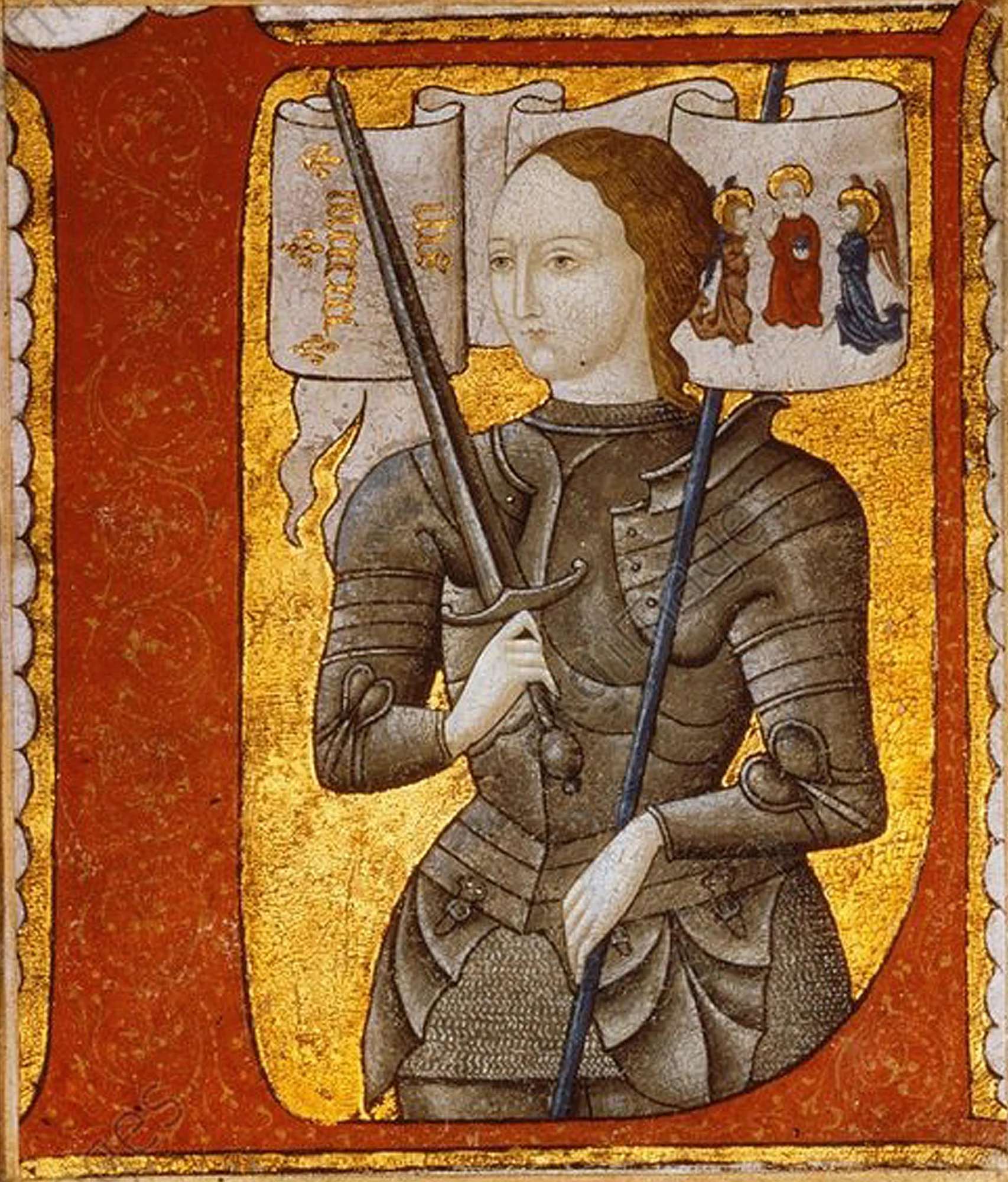
In the long sweep of history, few lives feel as compressed, intense, and astonishing as that of Joan of Arc. In just two short years, a teenage peasant girl with no formal education, no military training, and no political standing altered the course of a major European war, inspired a demoralized nation, and became one of the most enduring figures in world history. Her story contains elements that seem almost unbelievable: divine voices, battlefield triumphs, miraculous survival, betrayal, and a brutal execution carried out by those who feared her influence. Yet these events are not legend alone. They are recorded in trial transcripts, royal correspondence, and eyewitness accounts that reveal a young woman of extraordinary conviction and courage.
What makes Joan’s life even more remarkable is the narrow window in which it all occurred. Between the ages of 17 and 19, she persuaded a skeptical prince to trust her with an army, broke a siege that seasoned commanders had failed to lift, survived a dramatic leap from a tower, and endured a trial designed to destroy her credibility and faith. Her voices—heard only by her—were both the source of her strength and the justification for her condemnation. To understand Joan of Arc is to confront the tension between faith and power, gender and authority, belief and fear in medieval Europe. Her brief life illuminates how one individual, driven by unshakable purpose, can disrupt the course of history.
A Kingdom in Despair and a Girl from Domrémy
France in the early fifteenth century was a nation on the brink of collapse. The long-running conflict known as the Hundred Years’ War had devastated the countryside, fractured loyalties, and left much of northern France under English control. The French monarchy was weak, divided by internal factions and discredited in the eyes of many of its own people. English forces, allied with Burgundian supporters, appeared poised to dominate the kingdom permanently. It was in this atmosphere of despair that Joan of Arc emerged from the obscurity of rural life.
Joan was born around 1412 in Domrémy, a small village on the eastern edge of France. Her family were peasants, neither wealthy nor influential, and her upbringing was typical for a rural girl of the time. She could not read or write, had no exposure to court life, and showed no early signs of military ambition. What set her apart, according to her own testimony, were the voices she began hearing around the age of thirteen. She believed these voices belonged to saints—most notably St. Michael, St. Catherine, and St. Margaret—who instructed her to save France and ensure the coronation of the rightful king.
At a time when women were excluded from political and military leadership, Joan’s claims were extraordinary. Yet they were also framed in the religious language of her era, which gave them a certain legitimacy. Medieval society accepted the possibility of divine visions, even if it treated them cautiously. Joan’s unwavering confidence and moral clarity impressed those who encountered her. She was not reckless or wild-eyed; witnesses consistently described her as calm, devout, and resolute.
The desperation of France created space for the improbable. With traditional leadership failing, the idea that God might intervene through an unlikely messenger became strangely plausible. Joan’s journey from village girl to national figure began not with weapons, but with faith and persistence. She believed absolutely in her mission, and that belief would soon carry her into the center of one of Europe’s most consequential conflicts.
Convincing Charles VII and Defying Every Expectation
Joan’s first great challenge was not the English army, but skepticism within her own country. To fulfill her mission, she needed access to the man she believed was France’s rightful king: Charles VII. At the time, Charles was a contested claimant, derided by enemies as weak and illegitimate. He resided at Chinon, surrounded by advisors who were deeply suspicious of a teenage girl claiming divine guidance. Joan’s insistence that she could lead armies despite having no military experience seemed, on the surface, absurd.
Yet Joan possessed an unusual combination of humility and authority. She did not present herself as a general in the traditional sense, but as an instrument of God’s will. According to accounts, when she finally met Charles, she recognized him despite his attempt to disguise himself among courtiers. This moment, whether embellished or not, strengthened her credibility. More importantly, she spoke with absolute certainty about France’s salvation and Charles’s destiny. Her confidence, rooted in faith rather than strategy, unsettled and intrigued the court.
Charles subjected Joan to extensive examination by theologians and clerics, seeking to determine whether her visions were heretical or demonic. Remarkably, she passed these inquiries without condemnation. In a deeply religious society, this mattered more than military credentials. Joan was granted armor, a banner, and a small force, not because she fit established norms, but because she inspired hope where none remained.
Her presence transformed morale. Soldiers who had resigned themselves to defeat now believed divine favor was on their side. Joan did not command through tactics alone; she led through symbolism, urging troops to confession and prayer, and insisting on discipline. She carried a banner rather than a sword, emphasizing her role as a spiritual leader. Against all expectations, Charles allowed her to accompany the army sent to relieve the besieged city of Orléans. It was a gamble born of desperation—and it would change the course of the war.
Victory, Survival, and the Shock of the Battlefield
The siege of Orléans was a turning point not only in the Hundred Years’ War, but in Joan of Arc’s life. The city had been under English control pressure for months, and its fall would have opened the path to complete domination of southern France. When Joan arrived in 1429, seasoned commanders doubted her usefulness. Yet within days, her impact was undeniable. She urged immediate action, rejected cautious delays, and insisted that the English could be defeated.
What followed astonished allies and enemies alike. French forces, emboldened by Joan’s presence, launched aggressive assaults that broke the siege in just nine days. Joan herself was wounded by an arrow but returned to the field, refusing to retreat. Her courage under fire reinforced her image as divinely protected. Soldiers reported fighting with renewed ferocity, convinced that God favored their cause. The English, who had considered the siege secure, were driven out in disarray.
Joan’s reputation soared. She was no longer merely a visionary; she was a symbol of French resurgence. In the months that followed, she participated in additional victories that cleared the path for Charles’s coronation at Reims, a critical act of legitimacy. Joan stood beside him as he was crowned, fulfilling what she believed was her primary mission.
Amid these triumphs occurred one of the most dramatic episodes of her life. During a later military setback, Joan was captured and imprisoned in a tower. Facing the threat of being handed over to her enemies, she leapt from a height of approximately sixty feet in an attempt to escape. Astonishingly, she survived the fall without serious injury. To supporters, this survival appeared miraculous, reinforcing belief in divine protection. To her enemies, it deepened fear and suspicion.
These battlefield successes and near-supernatural survivals elevated Joan beyond a mere commander. She became a living challenge to established power structures, a young woman whose authority came not from lineage or training, but from conviction. That very uniqueness would soon place her in grave danger.
Capture, Trial, and the Machinery of Condemnation
Joan’s capture in 1430 marked the beginning of her rapid downfall. Seized by Burgundian forces and eventually sold to the English, she was removed from the battlefield and placed in the hands of those who feared her symbolic power more than her military skill. The English understood that as long as Joan lived, she represented a divine challenge to their claim over France. Killing her in battle would have made her a martyr; destroying her reputation was far more effective.
Her trial for heresy, held in Rouen, was deeply flawed by modern standards and even questionable by medieval ones. Joan was denied proper legal counsel, interrogated repeatedly, and judged by a court aligned with her enemies. The central charge revolved around her voices. Were they truly saints, or were they demons? Joan never wavered in her answers. She insisted that her guidance came from God and refused to deny her experiences, even under threat of death.
The trial also targeted her appearance. Joan’s decision to wear men’s clothing, initially for practicality and later for protection in prison, was framed as a violation of divine order. This charge resonated strongly in a society with rigid gender expectations. By attacking her clothing, the court attacked her identity and credibility. Joan defended herself with remarkable intelligence, often outmaneuvering her interrogators despite her lack of formal education.
Ultimately, the verdict was predetermined. Joan was found guilty of heresy and sentenced to death. At just nineteen years old, she was burned at the stake in 1431. Witnesses reported that she called out the name of Jesus as she died, maintaining her faith to the end. The execution shocked many, even among those who opposed her. Years later, a retrial authorized by the French crown would declare her innocent, acknowledging that her condemnation had been unjust.
Legacy, Faith, and the Power of a Short Life
Joan of Arc’s life was astonishingly brief, yet her impact has endured for centuries. In the immediate aftermath of her death, France continued to rally, eventually driving out the English and securing Charles VII’s rule. Joan did not live to see this outcome, but her role in reversing France’s fortunes was undeniable. Over time, her story evolved from tragic execution to national legend.
What makes Joan so compelling is the combination of vulnerability and strength. She was young, untrained, and ultimately powerless against institutional authority, yet she reshaped history through belief and action. Her voices, which only she could hear, remain the most controversial aspect of her story. To some, they suggest divine inspiration; to others, psychological phenomena. Yet regardless of interpretation, those voices gave Joan a clarity of purpose that overcame fear and doubt.
In 1920, centuries after her death, Joan was canonized as a saint by the Catholic Church. By then, she had already become a symbol of French identity, resistance, and courage. Artists, writers, and historians continue to reinterpret her life, finding new meaning in her choices and sacrifices. She stands at the intersection of faith, politics, and gender, challenging assumptions about who can lead and why.
Joan of Arc’s story belongs firmly to the medieval period, shaped by religious belief, feudal warfare, and rigid social hierarchies. Yet her appeal feels timeless. In just two years, between the ages of seventeen and nineteen, she demonstrated how conviction can disrupt even the most entrenched systems of power. Her life reminds us that history is not only made by those who rule, but also by those who dare to believe—against all reason—that they are called to change the world.