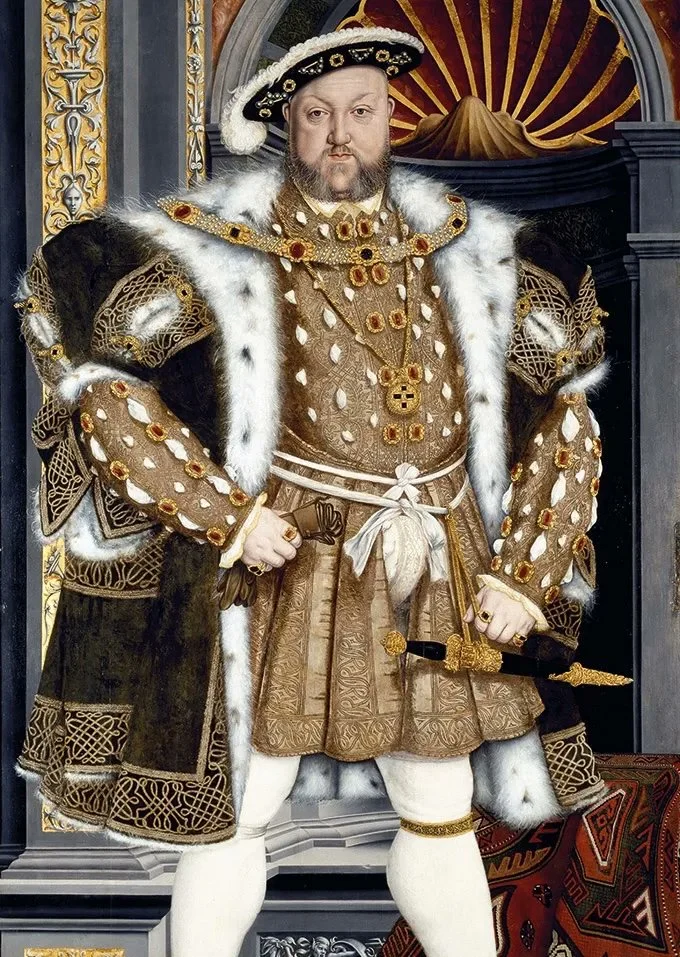
Few monarchs loom as large in popular imagination as King Henry VIII of England. He is remembered for his six marriages, his break with the Catholic Church, and his outsized personality that dominated Tudor politics for nearly a quarter of a century. Yet beyond the grand drama of royal marriages and religious upheaval lay a world of intensely private routines, rigid court hierarchy, and intimate service that modern audiences often find astonishing. Among the most curious—and revealing—positions in Henry VIII’s court was that of the Groom of the Stool, a servant whose primary responsibility was to assist the king with his most personal bodily functions, including wiping his bottom after using the toilet. Far from being a humiliating role, the Groom of the Stool was one of the most powerful and trusted positions in the Tudor court. During his reign, Henry VIII went so far as to knight four of the men who held this office, demonstrating just how closely intimacy, trust, and political influence were intertwined in early modern monarchy.
What the Groom of the Stool Actually Did
The title “Groom of the Stool” sounds comical to modern ears, but in the Tudor period it denoted a position of immense importance. The “stool” in question referred not to furniture, but to the king’s close stool—a portable toilet used in royal chambers. The Groom of the Stool’s core responsibility was to attend the king during toileting, assisting with hygiene, clothing, and comfort. This included the task that history remembers most vividly: wiping the king after he relieved himself.
However, reducing the role to this single function obscures its true significance. The Groom of the Stool was responsible for managing the king’s personal hygiene, laundering his undergarments, overseeing his private chambers, and ensuring that his daily routine proceeded smoothly. These duties required constant proximity to the monarch, often in moments when the king was unguarded and relaxed.
This level of access made the Groom of the Stool uniquely powerful. He was present when few others were allowed, overheard private conversations, and could speak to the king without intermediaries. In a court where access equaled influence, such intimacy translated directly into political power. Courtiers seeking royal favor often attempted to curry favor with the Groom, knowing that a whispered word at the right moment could shape policy or appointments.
The role also required discretion, loyalty, and emotional intelligence. The king’s health, moods, and vulnerabilities were laid bare during private moments. Henry VIII, particularly later in life, suffered from chronic pain, obesity, and leg ulcers that made movement difficult. The Groom of the Stool became not only a servant but a caretaker and confidant.
Thus, while the physical task may seem degrading by modern standards, within the context of Tudor court culture, it was an honor bestowed only upon men of noble birth and impeccable loyalty. The Groom of the Stool was not a low servant; he was one of the king’s closest companions.
Why Intimacy Meant Power in the Tudor Court
To understand why a man who wiped the king’s bottom could wield enormous influence, one must grasp how power functioned in the Tudor court. Authority did not flow through bureaucratic institutions as it does today. Instead, it flowed through personal relationships with the monarch. The closer one was to the king physically and emotionally, the greater one’s ability to influence decisions.
Henry VIII ruled in an era before modern privacy norms. The king’s body was not merely personal—it was political. His health affected succession, stability, and national security. Those who attended to his body were entrusted with safeguarding the state itself. The Groom of the Stool, by managing the king’s daily routine, played a role in maintaining royal order.
This intimacy created a unique form of soft power. The Groom could speak to the king at moments when others could not—while dressing, resting, or attending to bodily needs. These moments allowed for candid conversation without the performative pressures of court ceremony. Advice offered in such settings carried unusual weight.
Courtiers were acutely aware of this dynamic. Historical records show that nobles sought alliances with Grooms of the Stool, offering gifts or favors in hopes of gaining indirect access to the king. In some cases, the Groom acted as a gatekeeper, deciding which petitions reached royal ears.
Henry VIII himself valued loyalty above all else. Betrayal haunted his reign, from failed ministers to treacherous wives. The Groom of the Stool, who handled the king’s most vulnerable moments, had to be beyond suspicion. This trust, once earned, was rewarded lavishly.
The role thus exemplifies how power in early modern monarchies was deeply personal. Authority was not abstract; it lived in proximity, trust, and daily ritual. The Groom of the Stool embodied this reality more than almost any other court position.
The Men Who Served Henry VIII as Grooms of the Stool
Henry VIII had several Grooms of the Stool throughout his reign, each carefully selected from the ranks of the nobility. These were not anonymous servants but well-connected gentlemen whose careers flourished through royal favor. Among the most notable were Sir William Compton, Sir Henry Norris, Sir Thomas Heneage, and Sir Anthony Denny.
Sir William Compton was one of Henry’s closest childhood companions and served as Groom of the Stool early in the reign. His friendship with the king granted him enormous influence, land, and wealth. Compton’s rise illustrates how personal loyalty could elevate a man’s fortunes dramatically.
Sir Henry Norris succeeded Compton and held the position for several years. Norris enjoyed immense trust until his abrupt fall during the political turmoil surrounding Anne Boleyn. Accused—likely falsely—of adultery with the queen, Norris was executed in 1536. His fate underscores the danger of intimacy at court: proximity to power brought privilege, but also peril.
Sir Thomas Heneage and Sir Anthony Denny served later in Henry’s reign, particularly as the king’s health declined. Denny, in particular, became indispensable during Henry’s final years. He managed access to the ailing monarch and played a role in shaping the succession by ensuring Henry’s last will was carried out.
Each of these men held responsibilities far beyond hygiene. They oversaw royal finances, distributed patronage, and influenced policy. Their knighthood was not ceremonial flattery—it was recognition of their central role in governance.
The fact that Henry VIII knighted four of his Grooms of the Stool reflects how highly he valued their service. Knighthood elevated them socially and politically, signaling to the court that these men spoke with the king’s authority.
Knighthood and Royal Favor: Why Henry VIII Rewarded His Grooms
Knighthood in Tudor England was a mark of distinction, signaling royal approval and elevated status. Henry VIII was not sparing with honors, but he reserved knighthood for those who demonstrated exceptional loyalty or service. The decision to knight multiple Grooms of the Stool was a powerful statement about the nature of trust in his court.
By knighting his Grooms, Henry publicly affirmed their importance. This served several purposes. First, it rewarded personal loyalty. Second, it strengthened the Groom’s authority within the court hierarchy. Third, it discouraged rivals from undermining men who enjoyed such clear royal favor.
Knighthood also formalized the Groom’s role as more than a servant. It acknowledged that the work of managing the king’s private life was integral to the functioning of the monarchy. In effect, Henry elevated intimacy itself into a form of service worthy of honor.
These honors also reflected Henry’s evolving needs. As he aged, suffered injuries, and grew increasingly isolated, the king relied more heavily on a small inner circle. The Groom of the Stool became part of that circle, providing stability amid political turbulence.
In a court rife with intrigue, knighting a Groom sent a clear message: this man is untouchable—for now. It also reinforced the idea that closeness to the king, even in the most unglamorous contexts, was the surest path to power.
Hygiene, Health, and the King’s Body
Modern reactions to the Groom of the Stool often focus on discomfort or humor, but in the 16th century, hygiene was a serious matter. Medical knowledge was limited, and infections could be deadly. The king’s health was a matter of national importance, and careful attention to bodily functions was considered essential.
Henry VIII’s later years were marked by severe health problems. A jousting accident in 1536 left him with chronic leg wounds that never healed properly. He gained significant weight, suffered from mobility issues, and experienced episodes of intense pain. Managing these conditions required constant care.
The Groom of the Stool played a key role in this care. He monitored the king’s physical condition, assisted with movement, and ensured cleanliness to prevent infection. In many ways, he functioned as a personal nurse long before such roles were formalized.
This medical dimension adds another layer of respect to the position. The Groom’s work was not merely servile; it was essential to the king’s survival. His attentiveness could mean the difference between comfort and agony, health and decline.
Understanding this context helps explain why Henry valued his Grooms so highly. They were not only loyal servants, but guardians of the royal body—a responsibility that justified both honor and reward.
Changing Attitudes Toward Privacy and Service
The concept of a Groom of the Stool shocks modern sensibilities largely because attitudes toward privacy and bodily functions have changed dramatically. Today, personal hygiene is considered deeply private, and servants performing such tasks would be unthinkable in most contexts.
In Tudor England, however, the boundaries between public and private were far more fluid. Royal life unfolded in shared spaces, and the king was rarely alone. Service was not degrading; it was honorable, particularly when performed for the monarch.
Over time, as notions of privacy evolved and bureaucratic governance replaced personal rule, such intimate positions disappeared. The Groom of the Stool became a historical curiosity, remembered more for its oddity than its importance.
Yet examining the role on its own terms reveals much about how power, trust, and the human body were understood in early modern Europe.
Conclusion: Power in the Most Unexpected Places
The story of Henry VIII’s Grooms of the Stool challenges modern assumptions about dignity, service, and authority. These men wiped the king’s bottom—but they also shaped policy, managed access, and held the monarch’s trust in moments of vulnerability. Far from being humiliating, the role was one of the most powerful in the Tudor court.
That Henry VIII knighted four of his Grooms underscores how deeply he valued loyalty and intimacy. In a world where power flowed through personal connection, even the most private duties could elevate a man to greatness.
The Groom of the Stool reminds us that history is often stranger—and more revealing—than legend. Behind the pageantry of crowns and thrones lay the realities of the human body, tended by men whose influence reached far beyond the chamber pot.
Leave a Reply