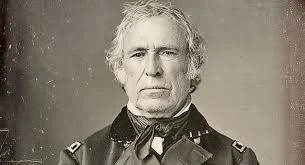
Few presidential deaths in American history have produced as much curiosity, speculation, and half-believed folklore as that of Zachary Taylor, the 12th president of the United States. The commonly repeated story sounds almost absurd: a tough, battle-hardened military hero felled not by war or assassination, but by eating too many cherries and washing them down with milk at a Fourth of July celebration in 1850. Just five days later, on July 9th, Taylor was dead. The official cause was listed as gastroenteritis—an inflammation of the stomach and intestines that can cause rapid dehydration and death in severe cases. Over time, a popular explanation took root suggesting that the acid in the cherries, combined with cold milk, created a fatal reaction in his digestive system. Yet historians and medical experts have long debated whether this account reflects medical reality or whether it simplifies a far more complex and possibly suspicious event. Taylor’s sudden death not only shocked the nation but reshaped the course of U.S. history, making the circumstances surrounding it one of the most intriguing medical and political mysteries of the 19th century.
Zachary Taylor’s Final Days and the Fateful Fourth of July Celebration
On July 4, 1850, Washington, D.C. was sweltering under intense summer heat. Thousands gathered on the National Mall to witness ceremonies marking the laying of the cornerstone for what would eventually become the Washington Monument. President Zachary Taylor attended the festivities despite the oppressive temperature, remaining outdoors for several hours. Taylor was known for his stubborn resilience—after all, he had earned his fame as “Old Rough and Ready” through decades of brutal frontier warfare—and he apparently thought little of the physical strain the heat placed on his aging body.
After returning to the White House, Taylor reportedly consumed a large quantity of fresh cherries, a seasonal delicacy at the time, along with iced milk or water. The next day, he became violently ill. Reports from his physicians described severe diarrhea, vomiting, cramps, and intense dehydration. Over the next several days, his condition worsened despite medical treatment, which at the time consisted largely of opium, calomel (a mercury-based compound), bloodletting, and poultices—therapies that often did more harm than good. By July 9th, after five days of relentless suffering, Taylor died.
Almost immediately, rumors began circulating about the cause of his death. Many people focused on the unusual dietary combination of cherries and milk, believing the acidic fruit had curdled the dairy in his stomach, triggering fatal illness. Others pointed instead to the contaminated water supply of Washington, D.C., where sewage and drinking water often flowed uncomfortably close together. Gastrointestinal disease was common in summer months, especially during heat waves. Regardless of the true biological cause, the suddenness of Taylor’s decline stunned the nation. Presidents were expected to die from old age or violence, not from fruit consumed during a holiday celebration. The strangeness of the event stamped it into public memory, where it would remain as a peculiar cautionary tale for generations.
Yet what made Taylor’s death especially suspicious to some contemporaries was timing. His presidency had reached a critical moment of national tension over slavery and the future of the Union. The implications of his sudden passing would ripple far beyond medical curiosity, transforming what might have been a tragic personal event into a potential turning point of American history.
The Medical Reality: Gastroenteritis, Contaminated Water, and 19th-Century Treatment
From a modern medical perspective, the idea that cherries and milk alone could directly cause fatal gastroenteritis is deeply questionable. While consuming large quantities of acidic fruit with dairy might cause digestive discomfort, bloating, or nausea, it is extremely unlikely to produce the severe, rapidly fatal illness that claimed Taylor’s life. Far more plausible is the explanation that he contracted a severe bacterial infection, most likely from contaminated water consumed during the outdoor July 4th event.
Washington, D.C.’s sanitation in 1850 was notoriously poor. The city lacked a modern sewage system, and human waste frequently seeped into wells and water sources. During hot summer months, bacteria such as Salmonella, Shigella, and other pathogens spread rapidly. Symptoms described in Taylor’s case—persistent vomiting, diarrhea, dehydration, and collapse—align closely with severe foodborne or waterborne illness. Such infections could easily turn deadly, especially in older individuals subjected to unsafe medical practices.
Even more troubling was the medical treatment Taylor received. Physicians administered calomel, a mercury-based drug commonly prescribed at the time for gastrointestinal disorders. Mercury poisoning itself can cause severe intestinal inflammation, kidney damage, and organ failure. While calomel was considered standard treatment, it often worsened dehydration and toxicity. Opium was also used to control pain and diarrhea, but it could suppress respiration and further complicate recovery. Bloodletting, still popular in mid-19th-century medicine, would have reduced Taylor’s already decreasing blood volume, intensifying shock.
In this context, the cherries-and-milk explanation begins to resemble a folk simplification of a much more dangerous reality: the lethal combination of contaminated water and harmful medical intervention. For ordinary Americans unfamiliar with germ theory—the idea that microscopic organisms cause disease would not gain acceptance for several more decades—the digestive upset caused by cherries seemed like an obvious explanation. But modern historians increasingly view the tale as a misinterpretation of bacterial illness intensified by flawed medical care.
While the cherry story persists in popular history, most medical scholars now consider Taylor’s death a case of acute gastroenteritis likely triggered by water contamination rather than fruit chemistry. Still, this medical explanation does not fully account for why suspicions of foul play would emerge and remain alive for more than a century.
Political Motives, Poison Theories, and a Disturbing National Debate
Zachary Taylor’s death did not occur in a political vacuum. By 1850, the nation was tearing itself apart over slavery, territorial expansion, and constitutional authority. Although a Southern slaveholder himself, Taylor had adopted an unexpectedly firm stance against the extension of slavery into new territories acquired during the Mexican-American War. He supported the immediate admission of California as a free state and opposed congressional compromises that would divide territories along slavery lines.
This position enraged many powerful Southern politicians who saw Taylor’s actions as a betrayal of sectional interests. Some even whispered of secession. His sudden death just weeks before critical congressional negotiations intensified long-standing suspicions that political enemies might have poisoned him to remove an obstacle to pro-slavery expansion. While no direct evidence of assassination emerged at the time, the speed of his decline, the unpredictability of his illness, and his political enemies made conspiracy theories almost inevitable.
These suspicions lingered quietly for more than a century until 1991, when Taylor’s body was exhumed for forensic analysis. Scientists tested hair and tissue samples for arsenic, the poison most commonly associated with 19th-century political assassinations. The results showed arsenic levels far below lethal thresholds, effectively ruling out poisoning as the cause of death. However, while arsenic was eliminated, the tests could not definitively identify the bacterial organism responsible for Taylor’s illness. Thus, while murder was largely dismissed, absolute certainty remained elusive.
The politics of Taylor’s death cannot be separated from its consequences. Upon his passing, Vice President Millard Fillmore assumed the presidency. Unlike Taylor, Fillmore supported the Compromise of 1850, a sweeping legislative package designed to temporarily ease sectional tensions. This compromise included the controversial Fugitive Slave Act, which strengthened the capture of escaped enslaved people and enraged abolitionists across the North. Had Taylor lived, historians widely agree that the legislative path of the nation might have unfolded very differently.
Thus, Taylor’s death, whether medically mundane or politically suspicious, altered the trajectory of American history. The cherry-and-milk story may be incomplete medically, but the political ripples it left behind were profound and enduring.
How the “Cherry Overdose” Myth Took Hold in American Memory
The story of Zachary Taylor dying from a cherry overdose is a classic example of how history becomes simplified through repetition and symbolism. Cherries are innocent, wholesome, and almost whimsical. The idea that such a harmless fruit could kill a sitting president strikes a dramatic contrast that naturally captures public imagination. Over time, this narrative became a convenient shorthand for explaining a complex medical and political event with a single memorable image.
Part of the myth’s power comes from the lack of clear medical knowledge available at the time. Germ theory was not yet established, so bacterial contamination seemed invisible and abstract to 19th-century Americans. In contrast, cherries and milk were visible, tangible culprits. It made intuitive sense to blame what people could see rather than what they could not. Newspapers repeated the story, schoolbooks simplified it, and eventually it hardened into accepted lore.
Another reason the myth endured is that it allowed Americans to avoid confronting darker possibilities. If Taylor died from fruit and milk, then his death was tragic but accidental. If he died from contaminated water, it exposed the public health failures of the capital city. If he died from poisoning, it would imply deep political corruption at a catastrophic level. The cherry story offered the least disturbing explanation.
Even today, many people encounter Taylor’s death as a quirky historical fact rather than a subject of serious inquiry. It circulates widely in trivia books, classrooms, and online lists of “strange presidential deaths.” In this reduced form, context is lost. The suffering Taylor endured, the dangerous medical treatments he received, and the political shockwaves that followed often disappear behind the novelty of cherries.
Yet myths are not always lies—they are stories shaped by emotion and repetition. The cherry overdose narrative reflects the human desire to make sense of sudden tragedy through simple cause and effect. It offers a clean ending to a messy reality. But for those who study history closely, the truth behind Taylor’s death is far more revealing than the myth itself.
The Lasting Impact of Taylor’s Sudden Death on the Nation
Zachary Taylor served as president for only sixteen months, yet his sudden death created consequences far greater than the brevity of his term might suggest. As a military hero with little previous political experience, he represented a unifying national figure at a time of extreme polarization. His resistance to aggressive pro-slavery policies angered many in the South but earned cautious respect among moderate Northerners. His passing removed a powerful independent voice from a deeply divided government.
Millard Fillmore’s assumption of the presidency marked an immediate shift in national policy. Whereas Taylor had threatened to veto compromise measures that expanded slavery enforcement, Fillmore embraced them. The Compromise of 1850, passed shortly after Taylor’s death, temporarily quieted sectional conflict but did so by embedding injustice more deeply into federal law. The strengthened Fugitive Slave Act radicalized many previously moderate citizens, accelerating the nation’s march toward civil war.
In hindsight, Taylor’s survival might not have prevented the conflict altogether, but it almost certainly would have altered its timeline and legal framework. His death acted as a political release valve, allowing legislation to pass that reshaped the moral and legal battlefield of the 1850s. Thus, the same illness that ended his life also reshuffled the balance of power at one of the most sensitive moments in the nation’s history.
Public memory of Taylor gradually faded behind more dramatic figures like Lincoln, Grant, and Washington. Yet his unusual death ensured that he would never disappear entirely from the national imagination. Unlike presidents felled by bullets or age, Taylor’s passing remains suspended between medical misfortune and political mystery. It stands as a reminder that history does not always turn on grand battles or speeches—sometimes it pivots on contaminated water, flawed medicine, and a bowl of summer fruit.
His story also highlights the vulnerability of leaders in a pre-modern medical world. Even the most powerful man in the country could be brought down by invisible pathogens and treatments that unintentionally hastened death. In that sense, Taylor’s demise reflects the precariousness of life in the 19th century more clearly than many battlefield deaths ever could.
Cherries, Milk, and the Fragility of History
The popular story that President Zachary Taylor died from a cherry overdose after a Fourth of July party in 1850 is one of those historical tales that feels too strange to forget. While he did indeed eat cherries and drink milk shortly before becoming violently ill, modern understanding strongly suggests that contaminated water and dangerous medical treatment—not fruit chemistry—were the real causes of his fatal gastroenteritis. Yet the legend persists because it is simple, symbolic, and oddly memorable.
What makes Taylor’s death so significant is not just how unusual it was, but what followed it. His sudden passing reshaped the nation’s political future at a moment when compromise and conflict hung in delicate balance. Whether remembered for war, politics, or cherries, Taylor’s final days remind us that history is often guided as much by fragile human biology as by ideology and ambition. One illness, triggered in the heat of a summer celebration, helped alter the path toward civil war.
In the end, Zachary Taylor’s legacy is not defined by cherries alone—but by the profound consequences that followed his unexpected fall. His death stands as a haunting example of how quickly power can vanish, how myths can replace medicine, and how the smallest moments can become the hidden turning points of history.
Leave a Reply