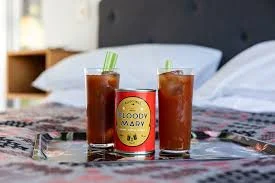
The Bloody Mary is one of the most recognizable cocktails in the world, instantly associated with brunch culture, hangover cures, and an unmistakable crimson color that makes it impossible to confuse with any other drink. Its combination of vodka, tomato juice, spice, and citrus has inspired endless variations across bars and restaurants worldwide. Yet behind its modern identity lies a far stranger and more theatrical story—one that begins with a name far more gruesome than today’s already dramatic title. Before it was ever known as the Bloody Mary, this iconic drink went by the shocking name A Bucket of Blood. Later, as sensibilities shifted, it became known as the Red Snapper, before finally settling into the name that would define it for generations. The evolution of the drink’s name tells a fascinating story of social change, marketing, cultural taste, and the shifting boundaries of what people found entertaining, acceptable, or unsettling. Tracing that transformation reveals not only how a cocktail earned its identity, but how public attitudes toward nightlife, alcohol, and spectacle changed across the 20th century.
The Birth of a Cocktail in Post-War Paris and the Name “A Bucket of Blood”
The origins of the Bloody Mary trace back to the aftermath of World War I, when Europe was still reeling from devastation yet brimming with creative energy. In the early 1920s, Paris became a magnet for artists, writers, musicians, and expatriates seeking freedom, inspiration, and escape. Among these expatriates were Americans who filled the bars of the French capital, eager to drink, socialize, and leave behind the horrors of war. One of these establishments was Harry’s New York Bar, a legendary gathering place for writers, journalists, and travelers. It was here that the drink that would become the Bloody Mary is widely believed to have been invented.
The bartender most often credited with its creation is Fernand “Pete” Petiot, a young French barman experimenting with new flavor combinations for his American customers. According to popular accounts, Petiot mixed vodka—still relatively exotic to American palates at the time—with tomato juice, a novelty ingredient in alcoholic beverages. The initial mixture may have been remarkably simple, lacking many of the spices that define today’s Bloody Mary. What it lacked in complexity, however, it made up for in visual impact. The deep red color of the drink was striking, dramatic, and somewhat unsettling in an era when most cocktails were pale, golden, or clear.
This shocking appearance inspired the drink’s first known nickname: A Bucket of Blood. The name was reportedly suggested by American patrons who associated the drink’s appearance with the theatrical violence of Parisian cabaret culture. Some stories link the name to a nearby nightclub whose décor was intentionally macabre, complete with horror-themed performances. Whether this connection is literal or symbolic, the name reflects the darker aesthetic that fascinated many postwar artists and expatriates. After experiencing the mass bloodshed of World War I, grotesque humor and morbid imagery had seeped into popular culture in unexpected ways.
At the time, calling a drink “A Bucket of Blood” wasn’t necessarily meant to be repulsive—it was provocative, unsettling, and intriguing. It attracted attention in the smoky, decadent nightlife of 1920s Paris. However, as the drink began to travel beyond that specific subculture, its original name would soon prove too extreme for broader audiences.
From Shock Value to Respectability: The Transition to “Red Snapper”
As the tomato-based cocktail crossed the Atlantic and made its way into American bars, it encountered a very different cultural environment. The United States in the 1920s and early 1930s was defined by Prohibition, moral reform movements, and a growing sensitivity to public decency. While Americans were no strangers to violent imagery in newspapers and theater, branding a drink as A Bucket of Blood was a step too far for mainstream society. Bartenders who served the drink in the United States quickly realized that its original name was more likely to repel customers than attract them.
During this period, the cocktail underwent its first major rebranding: it became known as the Red Snapper. This name cleverly retained the reference to the drink’s vivid red color while removing the gore implied by the earlier version. “Red Snapper” sounded sporty, nautical, and even slightly elegant. It also allowed bartenders to market the drink without invoking explicit violence, making it more acceptable in hotel bars, upscale lounges, and restaurants catering to polite society.
Interestingly, this change also coincided with the drink’s refinement in flavor. As the cocktail gained popularity, bartenders began experimenting with additional ingredients—Worcestershire sauce, black pepper, cayenne, lemon juice, and later celery salt and hot sauces. These changes transformed the drink from a simple vodka-tomato mixture into a complex savory cocktail. The name “Red Snapper” arguably suited this more sophisticated version better than the crude original title.
However, the rebranding was not always consistent. Some bars continued to use the name interchangeably with Bloody Mary, while others insisted on calling it a Red Snapper if it was made with gin rather than vodka. This distinction still exists in some classic cocktail references, reflecting how fluid naming conventions were during this transitional period.
Despite its wider acceptance, “Red Snapper” never quite captured the public imagination the way “Bloody Mary” eventually would. It lacked the mythic, provocative edge that gives a drink cultural staying power. While “Red Snapper” sounded respectable, it also sounded generic. The drink needed a name that would fuse its dramatic appearance with a story powerful enough to make it unforgettable. That story would come from history, legend, and a touch of dark romance.
The Rise of “Bloody Mary” and the Power of a Name
The final transformation in the drink’s identity came when it acquired the name that would cement its place in global culture: the Bloody Mary. The precise origin of this name remains debated, but it is most often linked to Mary I of England, the 16th-century queen remembered for her brutal persecution of Protestants. Known to history as “Bloody Mary,” she earned the nickname after hundreds of religious executions during her reign. The association between the drink’s deep red color and her macabre legacy was both obvious and irresistible.
Another popular theory suggests that the name came from a waitress named Mary who worked at a bar frequented by the drink’s early fans. According to some versions of the story, patrons jokingly referred to the cocktail as “Bloody Mary” after her. As with many legends, this explanation may contain a grain of truth wrapped in folklore.
What matters most is not which origin is correct, but why the name resonated so deeply. “Bloody Mary” strikes a perfect balance between shock and sophistication. It is dark without being explicitly grotesque. It hints at history, violence, and mystery without spelling it out. It is provocative enough to be memorable but refined enough to be served in elegant surroundings. Unlike “A Bucket of Blood,” it doesn’t sound like a horror prop. Unlike “Red Snapper,” it doesn’t fade into generic obscurity.
By the time Fernand Petiot relocated to New York and began working at the St. Regis Hotel’s King Cole Bar in the 1930s, the name “Bloody Mary” had gained traction. At the St. Regis, the cocktail achieved a new level of prestige. Served to wealthy guests, celebrities, and influential figures, it transitioned from an expatriate novelty to a fashionable American classic. The hotel even attempted to rename it “Red Snapper” once again to appeal to their refined clientele, but the public preferred the drama of “Bloody Mary.” The name stuck permanently.
From that point on, the Bloody Mary was no longer just a drink—it was a cultural symbol, a conversation piece, and a ritual. Its name, steeped in historical suggestion and visual metaphor, helped elevate it from cocktail to icon.
How the Drink Evolved Alongside Its Name
As the Bloody Mary’s name evolved, so did its flavor and cultural role. Early versions were relatively simple, often little more than vodka and tomato juice. Over time, the drink became a canvas for culinary creativity. Spices, citrus, sauces, and garnishes transformed it into one of the most complex cocktails ever created. Today’s Bloody Marys may include horseradish, celery salt, black pepper, paprika, hot sauce, lemon juice, and even beef broth. Some versions now resemble full meals, crowned with skewers of shrimp, bacon, pickles, olives, or sliders.
This evolution mirrors the drink’s changing identity across decades. In its “Bucket of Blood” era, the cocktail was a novelty meant to shock. In its “Red Snapper” phase, it aimed for respectability and broad appeal. As the “Bloody Mary,” it became something else entirely: a customizable ritual drink associated with late mornings, social recovery, and indulgence without shame.
The Bloody Mary also gained a reputation as a hangover remedy, further shaping its public image. The mixture of salt, spice, acidity, and hydration created the illusion of medicinal benefit, even if the alcohol itself complicated recovery. This dual identity—as both indulgence and cure—added another layer of intrigue to the drink’s mythology.
Geography also played a role. In different cities, the Bloody Mary developed distinct personalities. In New York, it remained close to its classic hotel-bar roots. In Chicago, it became bolder, spicier, and more heavily garnished. In coastal areas, seafood became a natural addition. Each variation reinforced the idea that the Bloody Mary was not a fixed recipe but a living tradition.
Through all of these changes, the name continued to anchor the experience. Ordering a Bloody Mary means more than requesting a drink—it invokes a visual, a flavor profile, a mood, and a piece of cultural history. That power of association is precisely what earlier names lacked. “A Bucket of Blood” shocked, but could not sustain mass appeal. “Red Snapper” was safe, but forgettable. “Bloody Mary” achieved the rare combination of danger, elegance, and storytelling that defines a true classic.
Why Names Matter in Cocktail History and Popular Culture
The story of the Bloody Mary’s name transformation reveals a deeper truth about how drinks become cultural icons. Cocktails are not remembered solely for their taste. They are remembered for their stories, their symbolism, and the emotional responses they provoke. A name acts as a gateway into that symbolic world. It frames expectations before the glass ever touches the table.
“A Bucket of Blood” framed the drink as a joke, a provocation, and a piece of dark performance art suited to bohemian nightlife. “Red Snapper” framed it as respectable, sporty, and safe. “Bloody Mary” framed it as a legend. That final framing gave the cocktail historical weight and emotional resonance. It invited customers to participate in something larger than a beverage—a narrative connecting royalty, religion, violence, and indulgence.
The same pattern appears throughout cocktail history. The Martini is not just gin and vermouth—it is sophistication. The Old Fashioned is not just bourbon and sugar—it is nostalgia and tradition. The Bloody Mary, thanks to its name, is not just vodka and tomato juice—it is spectacle, ritual, and contradiction.
Even the ritual of ordering a Bloody Mary carries a sense of performance. The drink arrives visually dramatic, unapologetically red, garnished extravagantly. It announces itself. That theatricality can be traced all the way back to its first identity as a “Bucket of Blood.” Though the name changed, the instinct for drama never disappeared. It simply became more refined.
The name also shaped how the drink was judged socially. Bloody Marys became acceptable as morning drinks, brunch drinks, even “functional” drinks. Its savory nature broke the usual rules of cocktail sweetness. The name helped carry that transgression. You aren’t sipping something delicate—you’re drinking a Bloody Mary. The name gives permission to indulge without elegance, to enjoy salt, spice, and heat without apology.
In this way, the evolution of the Bloody Mary’s name is also a story about evolving societal boundaries. It shows how shock becomes normalized, how provocation becomes tradition, and how something once considered scandalous becomes a beloved cultural fixture.
From Bucket of Blood to Brunch Royalty
The Bloody Mary’s journey from “A Bucket of Blood” to “Red Snapper” and finally to its iconic modern name is one of the most fascinating transformations in cocktail history. What began as a shocking novelty in postwar Paris evolved into a refined hotel-bar offering and ultimately into one of the most recognizable drinks in the world. Each name reflects a different cultural moment—one defined by dark humor, another by social respectability, and the final one by a perfect balance of menace and myth.
Today, few people think of the Bloody Mary as anything other than a brunch staple or a hangover companion. Yet hidden beneath its celery stalks and spice lies a theatrical origin story filled with blood-red imagery, shifting social values, and the power of naming to shape identity. The drink did not change just because ingredients were added—it changed because its name allowed it to cross cultural boundaries and emotional thresholds.
In the end, the Bloody Mary remains a reminder that even something as everyday as a cocktail can carry a dramatic and evolving story. From a macabre joke to a global ritual, its name charted its rise. And while “A Bucket of Blood” might still make people laugh in disbelief, it is “Bloody Mary” that continues to command attention, one crimson glass at a time.
Leave a Reply