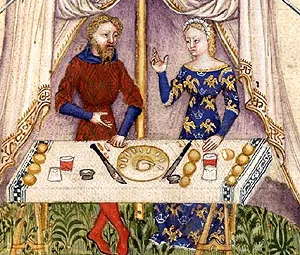
For most people today, the fork is such an ordinary object that it barely registers as a cultural artifact. It sits quietly beside the plate, unquestioned and unnoticed, a simple extension of daily habit. Yet for centuries, this humble utensil was not only unfamiliar but deeply controversial. In medieval Europe, the fork was widely condemned as unnatural, arrogant, and even blasphemous. Clergy, moralists, and chroniclers described it as an “artificial hand” that interfered with God’s natural order and insulted divine creation.
To modern sensibilities, this reaction seems almost absurd. How could a small piece of metal provoke religious outrage? The answer lies in how medieval society understood the body, humility, and humanity’s relationship with God. Eating was not just a practical act; it was a moral and spiritual experience. Hands were believed to be the tools God had given humans to interact with the world, including food. Replacing them with crafted metal instruments raised uncomfortable questions about pride, excess, and defiance of divine intent.
The fork’s journey from sacrilege to standard reveals how cultural norms evolve slowly and often painfully. It exposes deep anxieties about technology, status, and the boundaries between nature and artifice. The story of why forks were once seen as an offense to God is not merely about table manners, but about power, religion, and how societies resist change long before they accept it.
Eating with Hands as God’s Design
In medieval Europe, eating with one’s hands was not seen as primitive or uncivilized. On the contrary, it was considered natural, proper, and divinely ordained. Hands were believed to be a direct gift from God, perfectly designed for human needs. They allowed people to feel food, break bread, and share meals in ways that reinforced humility and gratitude. Touching food connected the eater to God’s creation in a direct and honest way.
Religious thinkers of the Middle Ages often emphasized the idea that nothing God created required improvement. The human body, crafted by divine will, was seen as complete and sufficient. Introducing an “artificial hand” in the form of a fork suggested that God’s design was inadequate. This implication alone was deeply troubling to a worldview that placed obedience and reverence above innovation. To eat without touching food was, in the eyes of many, a rejection of God’s wisdom.
Meals also had strong social and moral dimensions. Sharing bread by hand symbolized community, equality, and Christian fellowship. The act of eating together reinforced bonds between individuals and reminded them of their shared dependence on divine provision. Using utensils to distance oneself from food was perceived as an attempt to separate oneself from others, elevating personal comfort over communal humility.
This belief system explains why early resistance to forks was not merely about unfamiliarity. It was rooted in theology. Eating with hands aligned humans with nature and God, while eating with forks appeared to elevate human craftsmanship above divine creation. The fork was not just unnecessary; it was morally suspicious, a symbol of excess in a world that prized restraint and reverence.
The Fork’s Arrival from Byzantium
The fork did not originate in medieval Western Europe. It arrived gradually from the Eastern Mediterranean, particularly through the courtly culture of the Byzantine Empire. In Byzantium, small forks had been used by elites for centuries, especially for sticky or delicate foods. These utensils were seen as practical tools rather than moral threats, reflecting a different cultural relationship with luxury and refinement.
The fork entered Western consciousness most famously through aristocratic marriage alliances. One of the earliest recorded controversies occurred when a Byzantine princess married into the Italian nobility. At her wedding banquet, she reportedly used a small golden fork instead of her fingers. Observers were scandalized. Clergy in attendance condemned the practice as prideful and offensive, accusing her of refusing God’s gifts in favor of artificial tools.
This incident spread quickly through chronicles and sermons, becoming a cautionary tale. The fork was framed as a symbol of Eastern decadence, excess, and moral corruption. Western Europe already viewed Byzantine culture with suspicion, associating it with luxury and moral softness. The fork became an easy target, a visible object onto which broader cultural anxieties could be projected.
In cities like Venice, which maintained close trade ties with the East, forks slowly gained a foothold among elites. Yet even there, their use was controversial. They were associated with foreign influence, wealth, and social separation. To use a fork was to signal not just refinement, but a willingness to challenge long-standing religious and cultural norms. This made the utensil both fashionable and dangerous, admired by some and condemned by others.
“Artificial Hands” and the Charge of Blasphemy
The most powerful argument against forks was theological. Religious authorities frequently described forks as “artificial hands,” a phrase loaded with spiritual meaning. Hands were not merely functional; they were symbols of God’s craftsmanship. Replacing them suggested human arrogance, the belief that man could improve upon divine design. In a deeply religious society, this was a serious accusation.
Medieval sermons and moral writings often warned against unnecessary luxury. Anything that made life too comfortable or distanced humans from natural experience was suspect. Forks, especially when made of precious metals, embodied this danger. They were seen as tools of indulgence, encouraging daintiness and excess rather than gratitude and moderation. Eating with a fork meant avoiding the tactile reminder of food’s origins, a reminder that reinforced humility.
Some religious commentators went further, linking fork usage to sin. They argued that distancing oneself from food symbolized spiritual detachment from God. Just as pride separated humans from divine grace, the fork separated the eater from God’s gifts. This symbolism made the utensil more than a practical object; it became a moral statement.
The fear was not irrational within its context. Medieval society believed that small habits shaped the soul. How one ate reflected inner virtue or vice. The fork’s very existence challenged established ideas about obedience, humility, and the proper relationship between humanity and creation. In this worldview, blasphemy did not require words against God. It could be committed silently, at the dinner table, with a piece of metal.
Forks, Class, and Social Division
Beyond theology, the fork became a powerful marker of social distinction. In medieval Europe, most people ate communally, sharing dishes and tearing food with their hands. This practice reinforced a sense of equality at the table, even when social hierarchies existed outside it. Forks disrupted this dynamic by introducing personal utensils that emphasized individual space and refinement.
When elites adopted forks, they did so deliberately. The utensil allowed them to eat more delicately, avoiding greasy fingers and public messiness. This cleanliness was not merely hygienic; it was symbolic. It suggested control, sophistication, and separation from the laboring classes. To critics, this separation was morally dangerous. Christianity emphasized humility and warned against pride, especially among the wealthy.
Forks also changed the pace and style of eating. Meals became more restrained, slower, and more controlled. While this appealed to courtly culture, it clashed with traditional values that celebrated hearty, communal feasting. Critics argued that forks transformed eating into a performance, prioritizing appearance over substance.
This class tension reinforced religious opposition. What appeared as blasphemy was often also resentment toward elite behavior. Forks were not just artificial hands; they were symbols of inequality. Condemning them allowed religious authorities to criticize aristocratic excess without directly confronting political power. In this sense, the fork became a focal point for broader anxieties about wealth, status, and moral decay.
Gradual Acceptance and Cultural Shift
Despite fierce resistance, forks did not disappear. Their gradual acceptance reflects broader changes in European society during the late medieval and early modern periods. As urbanization increased and courtly culture spread, standards of cleanliness and etiquette evolved. Eating with hands, once seen as natural, began to be associated with roughness and lack of refinement.
Italy played a key role in normalizing the fork. By the Renaissance, Italian elites widely used forks, especially for pasta and other foods ill-suited to fingers. From there, the utensil spread northward, carried by fashion, diplomacy, and imitation. France and England initially resisted, but over time, practicality outweighed theological objections.
Religious attitudes also shifted. As scientific thinking and humanism gained influence, the idea that all innovation challenged God’s will weakened. Tools came to be seen as extensions of human ingenuity rather than acts of defiance. The fork’s association with blasphemy faded, replaced by concerns about etiquette and hygiene.
By the seventeenth century, forks were increasingly common among European elites, though widespread adoption took much longer. What had once been condemned as sacrilegious gradually became invisible, absorbed into daily life. The controversy surrounding forks serves as a reminder that cultural acceptance often arrives quietly, long after fierce opposition has burned itself out.
Fear of Change at the Dinner Table
The history of the fork reveals how deeply fear of change can penetrate everyday life. What seems trivial today once carried profound moral and spiritual significance. Forks were not rejected because they were useless, but because they challenged assumptions about God, nature, and human humility. As “artificial hands,” they symbolized a dangerous confidence in human invention.
This story is not unique. Throughout history, new technologies have often been framed as threats to divine or natural order. The fork’s journey from blasphemy to banality mirrors countless other transitions, where innovation slowly reshapes values and customs. What begins as sacrilege can end as tradition.
Understanding this past invites humility of our own. Just as medieval diners feared forks, modern societies sometimes resist unfamiliar tools and ideas with moral certainty. The fork reminds us that even the smallest objects can provoke big questions about who we are, what we value, and how we relate to the world around us.