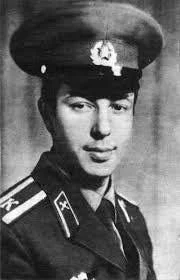
In the early hours of April 26, 1986, while most of the world slept unaware, one of the worst technological disasters in human history was unfolding in the Soviet Union. Reactor No. 4 at the Chernobyl Nuclear Power Plant had exploded, tearing open its core and releasing massive amounts of radioactive material into the atmosphere. Amid confusion, denial, and incomplete information, a small group of firefighters were dispatched to the site. They were told there was a fire. They were not told there was radiation. Among the very first to arrive was Vladimir Pravik, a 23-year-old lieutenant in the Soviet fire service. He climbed onto the burning reactor roof, exposed himself to lethal radiation levels, and helped prevent a catastrophe that could have rendered much of Eastern Europe uninhabitable. Within days, his body began to fail. Within two weeks, he was dead. His story is not just one of tragedy, but of extraordinary courage, sacrifice, and the hidden human cost of nuclear disaster.
The Night of the Explosion and the Chaos That Followed
At 1:23 a.m. on April 26, 1986, Reactor No. 4 at the Chernobyl Nuclear Power Plant suffered a catastrophic explosion during a poorly designed safety test. The blast destroyed the reactor core, blew the 2,000-ton concrete lid into the air, and exposed the nuclear fuel directly to the environment. A graphite fire ignited, sending a plume of radioactive particles high into the atmosphere.
In the nearby city of Pripyat, life continued as normal. People slept. Lights remained on. No evacuation orders were issued. Soviet authorities initially believed the situation was under control, or at least manageable. Inside the plant, however, workers were injured, radiation levels were off the charts, and fires burned across the facility.
Emergency calls went out shortly after the explosion. The report was vague: there was a fire at the power plant. Firefighters from Pripyat and nearby towns were dispatched immediately. Among them was Vladimir Pravik, the commander of Fire Station No. 2 in Pripyat. Like his colleagues, he had no protective equipment for radiation—only standard firefighting gear designed for smoke and heat.
When Pravik and his unit arrived at Chernobyl, they encountered a scene unlike anything they had trained for. Blocks of graphite lay scattered across the ground, glowing eerily and emitting intense radiation. Fires burned on the reactor roof and adjacent buildings. The air itself was dangerous, though nothing about it looked or smelled unusual.
Pravik did not hesitate. He organized his men, assigned positions, and led them toward the most dangerous areas of the plant. Their mission was simple but terrifying: extinguish the fires before they spread to Reactor No. 3, which was still operational. Had that reactor ignited or exploded, the consequences would have been unthinkable.
In those first hours, decisions were made in ignorance, bravery, and urgency. No one told the firefighters the truth about radiation exposure. No alarms warned them. Yet they acted anyway, walking directly into a lethal environment in service of others.
Who Vladimir Pravik Was Before Chernobyl
Vladimir Pavlovich Pravik was born in 1962 in Ukraine, then part of the Soviet Union. Like many young men of his generation, he grew up in a system that emphasized discipline, duty, and service to the state. He chose firefighting not for glory, but for stability and purpose. By his early twenties, he had already earned the rank of lieutenant, a sign of both competence and leadership.
Colleagues described Pravik as calm, intelligent, and deeply responsible. He took his role seriously and was known for looking out for the men under his command. Firefighting in the Soviet Union was a respected but dangerous profession, especially in industrial regions like Pripyat, where chemical plants and power facilities posed constant risks.
Pravik had recently married. He was building a future—planning a family, advancing in his career, living a life that, by all accounts, was just beginning. There was nothing extraordinary about him in a mythical sense. He was not famous, powerful, or influential. He was simply prepared to do his job well.
This ordinariness is part of what makes his story so powerful. Pravik did not wake up that night expecting to become a hero. He did not know his actions would be remembered decades later. He responded to an emergency call the same way he always had: by showing up.
When the call came from Chernobyl, he put on his uniform, gathered his crew, and headed toward danger. There was no dramatic speech, no hesitation, no attempt to protect himself at the expense of others. His sense of duty was ingrained.
That night transformed him from a local firefighter into one of the first human shields against a nuclear disaster.
Fighting a Fire That Was Not a Fire
The fires burning at Chernobyl were unlike ordinary blazes. Many were fueled by graphite from the reactor core, which burns at extremely high temperatures and cannot be extinguished easily with water. Even worse, the fires were emitting intense radiation. Firefighters working on the roof and near the reactor were exposed to doses far exceeding lethal limits within minutes.
Vladimir Pravik climbed onto the roof of Reactor No. 3, directly adjacent to the destroyed Reactor No. 4. From there, he directed efforts to extinguish flames and remove burning debris. He and his men handled pieces of graphite with their bare hands, mistaking them for ordinary construction material. In reality, each piece was emitting radiation strong enough to destroy human cells on contact.
Within an hour, Pravik began to feel the effects. Nausea, metallic taste, dizziness, and weakness set in—classic early symptoms of acute radiation sickness. Still, he continued to lead until his condition made it impossible to stand.
By dawn, the fires had been largely contained. Reactor No. 3 was saved. The immediate risk of a chain reaction was prevented. This outcome was not guaranteed. It was the direct result of the firefighters’ actions, including Pravik’s leadership under unimaginable conditions.
Only later would it become clear what that success had cost.
Radiation exposure does not kill instantly. It destroys the body from the inside out. Cells that divide rapidly—such as those in the bone marrow, digestive system, and skin—are especially vulnerable. In the hours after exposure, victims may appear relatively stable. The true damage unfolds over days and weeks.
For Pravik and many others, the worst was yet to come.
The Medical Aftermath and Rapid Decline
Vladimir Pravik was hospitalized shortly after being removed from the site. He was first treated locally, then transferred to Hospital No. 6 in Moscow, a facility specializing in radiation injuries. By the time he arrived, doctors already knew his prognosis was grim.
He had received an estimated radiation dose far exceeding survivable levels. His bone marrow was severely damaged, preventing his body from producing new blood cells. His immune system collapsed. Internal bleeding, organ failure, and infections followed.
One of the most haunting details often associated with Pravik’s condition is the reported change in his eye color—from brown to blue. While dramatic, this detail should be understood carefully. Extreme radiation exposure can cause severe damage to the eyes, including corneal injury, cataracts, and changes in pigmentation or appearance due to tissue destruction and swelling. Whether his eye color literally changed or appeared altered due to damage and lighting, the account reflects the profound physical transformation caused by radiation.
Over the next 15 days, Pravik endured intense pain. Skin peeled and blistered. Hair fell out. He experienced fevers, vomiting, and hemorrhaging. Doctors attempted bone marrow transplants and supportive care, but medical science in 1986 had limited tools for treating such extreme exposure.
Despite the suffering, those who visited him reported that he remained conscious for much of the time and aware of what was happening. He reportedly asked about his men and the situation at the plant, concerned not for himself, but for others.
On May 11, 1986—just 15 days after the explosion—Vladimir Pravik died from acute radiation sickness. He was 23 years old.
The First Responders and the Hidden Death Toll
Pravik was not alone. He was one of dozens of firefighters and plant workers who received lethal radiation doses that night. Many of them died within weeks or months. Others lived longer but suffered chronic illnesses that shortened their lives dramatically.
The Soviet government initially downplayed the scale of the disaster and the human cost. Official death tolls were low, carefully controlled, and politically motivated. It would take years for the full scope of the tragedy to become clear.
The first responders—firefighters, engineers, and technicians—were later referred to as “liquidators,” though that term more commonly applied to those involved in cleanup efforts in the months and years after. The firefighters of April 26 were a distinct group: the very first humans to confront the exposed reactor.
They did so without knowledge, protection, or choice.
Many were buried in zinc coffins to contain radioactive remains. Families were often not told the full truth about what their loved ones had been exposed to. In some cases, pregnant wives were advised not to see their husbands due to contamination risks.
The heroism of these men was undeniable, but for years it went unacknowledged outside the Soviet Union. Pravik himself was posthumously awarded the title Hero of the Soviet Union, one of the highest honors, but such recognition could not undo the loss.
Their sacrifice bought the world time—time to contain the disaster, to evacuate populations, and to prevent a far greater release of radiation.
Why Vladimir Pravik’s Actions Mattered So Much
It is difficult to overstate the importance of what Pravik and his fellow firefighters accomplished. By extinguishing the fires on the reactor roof and nearby structures, they prevented the spread of flames to Reactor No. 3. Had that reactor exploded or caught fire, the resulting radiation release could have been several times worse.
Some scientists have suggested that a secondary explosion could have rendered large portions of Ukraine, Belarus, and even parts of Europe uninhabitable for centuries. Millions more lives could have been affected.
Pravik did not know any of this at the time. He did not weigh outcomes or calculate risks. He responded to a fire call and acted according to his training and sense of duty.
This is what makes his heroism so profound. It was not based on abstract understanding or future recognition. It was immediate, instinctive, and selfless.
In modern discussions of Chernobyl, attention often focuses on political failures, design flaws, and systemic secrecy. These are important. But they should not overshadow the human beings who stood between disaster and annihilation.
Pravik represents thousands of such individuals—ordinary people who performed extraordinary acts without expectation of survival.
Memory, Recognition, and Historical Legacy
Today, Vladimir Pravik is remembered in Ukraine, Russia, and beyond as one of the heroes of Chernobyl. Memorials bear his name. His story appears in documentaries, books, and historical accounts. Yet for many years, his sacrifice remained largely unknown to the wider world.
The passage of time has allowed a more honest reckoning with Chernobyl’s human cost. As archives opened and survivors spoke, stories like Pravik’s emerged more clearly. They challenge simplistic narratives of heroism by showing its true price.
Pravik did not live to see the consequences of his actions, but those consequences shaped history. His life, brief as it was, altered the trajectory of one of the worst disasters ever recorded.
In remembering him, we are reminded that technological catastrophes are not abstract events. They are human tragedies. They are faced by individuals who make split-second decisions that ripple outward across generations.
A Life Given to Stop the Unstoppable
Vladimir Pravik was 23 years old when he walked into the ruins of Chernobyl. He had no special equipment, no warning, and no guarantee of survival. What he had was a sense of duty and the willingness to act.
The radiation he absorbed destroyed his body in a matter of days. It took his health, his future, and his life. Yet it did not take his legacy.
Because of Pravik and those like him, a catastrophe was contained. Because of their sacrifice, countless lives were spared. Their courage stands as a stark reminder that behind every disaster statistic are human beings who faced the unimaginable.
Vladimir Pravik did not choose to become a symbol. He chose to answer a call.
And the world is still living in the shadow—and the safety—of that choice.
Leave a Reply