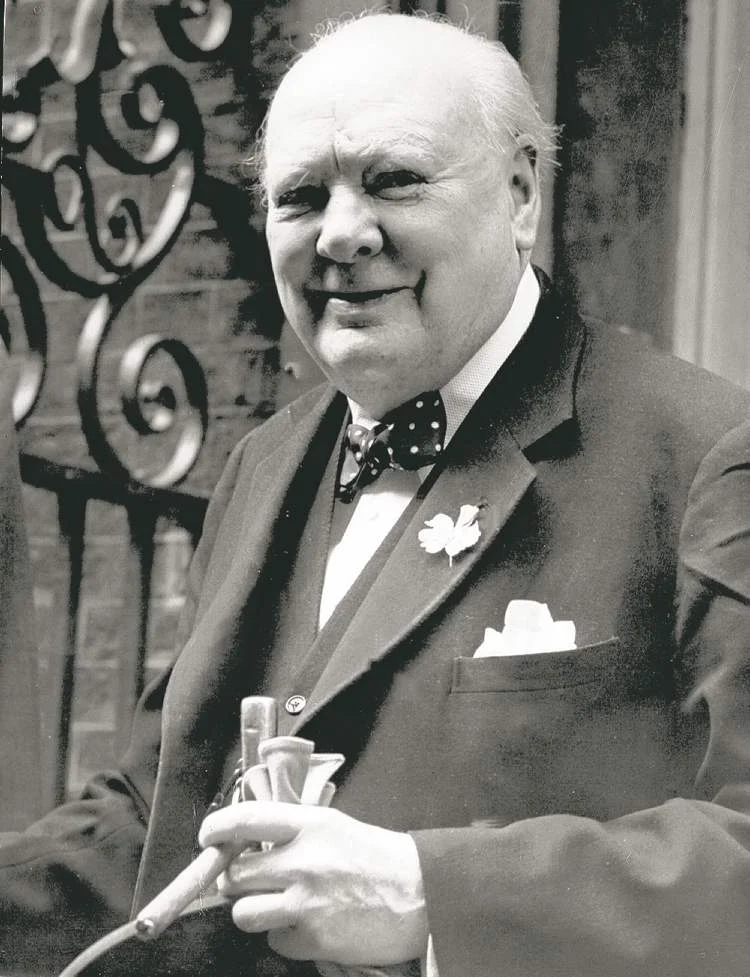
Winston Churchill’s public image is inseparable from smoke, drink, and defiance. The clenched cigar, the glass of alcohol always within reach, and the unmistakable air of indulgence became as iconic as his speeches and wartime leadership. To modern observers, his habits seem excessive, even self-destructive. Yet to Churchill himself, they were neither vice nor weakness. They were part of a carefully cultivated lifestyle, deeply entwined with his personality, his work ethic, and his understanding of health and morale.
Churchill smoked prodigiously. Eight to ten cigars a day was normal, and on particularly intense days he could smoke as many as fifteen. He drank regularly, often beginning at lunch and continuing into the evening. Despite this, he lived to the age of ninety and remained intellectually active well into old age. His habits baffled doctors, delighted journalists, and horrified critics.
One of the most revealing episodes illustrating Churchill’s relationship with alcohol occurred during the era of American Prohibition. When alcohol was legally banned across the United States, Churchill found a uniquely Churchillian solution: he obtained a doctor’s note stating that he required “indefinite” amounts of alcohol for medical reasons. This document allowed him to continue drinking while visiting the U.S., legally and unapologetically. The episode perfectly captures his blend of privilege, humor, and unshakable self-belief.
Understanding Churchill’s indulgences is not about glorifying excess. It is about understanding how culture, class, medicine, and personality intersected in the life of one of the twentieth century’s most influential figures.
Cigars as Identity, Ritual, and Psychological Armor
Winston Churchill did not merely smoke cigars; he lived with them. From early adulthood onward, cigars became an extension of his identity. He favored large, heavy cigars, often Cuban, and was rarely seen without one. Photographs, paintings, and newsreels cemented the image so thoroughly that the cigar itself became symbolic of British resistance during the Second World War.
Churchill’s smoking habits were structured around ritual. He typically began smoking late in the morning and continued steadily throughout the day. The cigar marked transitions: from writing to meetings, from meals to discussions, from work to reflection. In a life governed by intense pressure and constant decision-making, these rituals provided rhythm and familiarity.
Psychologically, the cigar also functioned as armor. Churchill was acutely aware of image and morale, both his own and that of others. The sight of him calmly smoking during moments of crisis projected confidence and control. To allies and subordinates, it suggested steadiness under fire. To enemies, it conveyed defiance. The cigar became part of his personal theater of leadership.
Doctors repeatedly warned him about the risks of heavy smoking, particularly after he suffered strokes later in life. Churchill listened politely and continued unchanged. He believed deeply in the idea that temperament mattered as much as physical health. Worry, he thought, was more dangerous than tobacco. In his mind, the pleasure and comfort of smoking outweighed hypothetical future harm.
That he smoked so much and lived so long reinforced his personal philosophy. To Churchill, his survival validated his choices. The cigar was not a vice to be apologized for; it was a companion that had seen him through war, depression, and triumph.
Alcohol as Medicine, Pleasure, and Daily Companion
Churchill’s relationship with alcohol was just as deliberate as his smoking. He drank daily, often beginning with diluted whisky or brandy at lunch, followed by wine at dinner and champagne or spirits in the evening. Contrary to caricature, he was rarely drunk. His drinks were often weaker than they appeared, and he consumed them slowly over long hours.
To Churchill, alcohol was not merely indulgence; it was medicine. He genuinely believed that small, regular amounts of alcohol aided digestion, lifted mood, and sustained energy. This belief was not unusual for his generation. In the late nineteenth and early twentieth centuries, alcohol was commonly prescribed for stress, appetite, and circulation.
Churchill’s famous quip that he had “taken more out of alcohol than alcohol has taken out of me” reflected sincere conviction. He credited alcohol with helping him endure long nights of work and relentless stress. During the Second World War, he often worked until the early hours of the morning, dictating memos and speeches. Alcohol, in his view, was fuel for stamina rather than an obstacle.
Critics accused him of excess, and political opponents occasionally attempted to use his drinking against him. Yet there is little evidence that alcohol impaired his judgment in critical moments. On the contrary, those who worked closely with him often remarked on his clarity and focus, even late at night.
Alcohol also played a social role. Churchill used shared drinks to build relationships, ease tension, and assert dominance in conversation. In diplomatic settings, he understood the power of hospitality. A well-stocked table was as much a tool of statecraft as any formal speech.
American Prohibition and the Doctor’s Note
One of the most famous stories about Churchill’s drinking habits involves the era of Prohibition in the United States. From 1920 to 1933, the manufacture, sale, and transport of alcohol were illegal under American law. For many visitors, this meant abstinence or discreet lawbreaking. Churchill, however, chose a more creative route.
When traveling to the United States, Churchill obtained a doctor’s note stating that he required alcohol for medical reasons. The wording was famously vague, prescribing “indefinite” amounts of alcohol for his health. This note allowed him to legally consume alcohol under Prohibition-era medical exemptions, which were often exploited but rarely with such confidence.
The episode illustrates several key aspects of Churchill’s character. First, his belief that rules were negotiable when they conflicted with common sense or personal necessity. Second, his willingness to use privilege unapologetically. Third, his sense of humor. The phrase “indefinite amounts” was not subtle, and Churchill knew it.
American hosts often found the situation amusing rather than offensive. Churchill’s stature and charm insulated him from criticism. In an era when many Americans quietly resented Prohibition, his open defiance resonated. He became a symbol of Old World indulgence confronting New World moralism.
The doctor’s note also highlights how medical authority was used at the time. Physicians wielded significant discretion, and medical exemptions were common. Churchill’s case was extreme but not unprecedented. What made it memorable was his complete lack of embarrassment.
Health, Longevity, and the Churchill Paradox
From a modern medical perspective, Churchill’s habits appear incompatible with long life. Heavy smoking, regular alcohol consumption, poor sleep patterns, and extreme stress are typically associated with shortened lifespan. Yet Churchill lived to ninety, outliving many contemporaries who lived far more moderately.
This paradox has fascinated historians and physicians alike. Some point to genetics. Others emphasize the difference between chronic intoxication and steady, controlled consumption. Churchill was consistent in his habits, rarely bingeing and rarely abstaining. His body adapted to a stable routine rather than experiencing shocks.
Equally important was his mental resilience. Churchill survived deep depressive episodes, which he famously referred to as his “black dog.” He coped through work, routine, and indulgence. For him, pleasure was not escapism but survival. Removing those pleasures, he believed, would have been more damaging than maintaining them.
Churchill also benefited from excellent medical care and personal attention. He had access to top physicians, attentive staff, and the freedom to rest when needed. His lifestyle was indulgent, but it was not chaotic.
The lesson is not that his habits were healthy, but that human health is complex. Churchill’s life demonstrates that longevity is influenced by psychology, purpose, and resilience as much as by physical moderation.
Public Image, Myth, and Cultural Legacy
Churchill’s cigars and drinks became inseparable from his public image. They symbolized defiance, tradition, and masculine authority. In wartime Britain, this image mattered. A leader who appeared calm, indulgent, and unbroken projected stability in a world of rationing and fear.
After the war, the image hardened into myth. Paintings, statues, and films emphasized the cigar and the glass. They became shorthand for Churchill himself. This mythologizing simplified a complex individual but also preserved his charisma.
Critically, the image also obscured the discipline beneath the indulgence. Churchill worked relentlessly. He wrote constantly, revised obsessively, and demanded excellence. His pleasures existed alongside, not instead of, labor.
Today, his habits are often cited humorously, sometimes admiringly, sometimes critically. They serve as anecdotes about excess, privilege, and individuality. Yet they also remind us that leadership does not conform to a single template.
Indulgence, Individuality, and Historical Context
Winston Churchill’s cigars and alcohol were not accidental excesses; they were deliberate choices rooted in culture, medicine, and personal philosophy. Smoking eight to ten cigars a day, sometimes fifteen, and drinking regularly were parts of a lifestyle he believed sustained his energy and spirit.
The Prohibition-era doctor’s note prescribing “indefinite” amounts of alcohol perfectly captures his attitude toward authority and self-knowledge. He trusted his own judgment above all else, even when it defied convention or law.
Churchill’s story does not offer a model to imitate. Rather, it offers perspective. It reminds us that historical figures lived under different assumptions, with different medical advice and cultural norms. Judging them by modern standards alone risks missing the deeper truth.
In Churchill’s case, indulgence and discipline coexisted. Pleasure and responsibility were not opposites but companions. His life stands as a reminder that human greatness often comes wrapped in contradiction, smoke, and a raised glass.