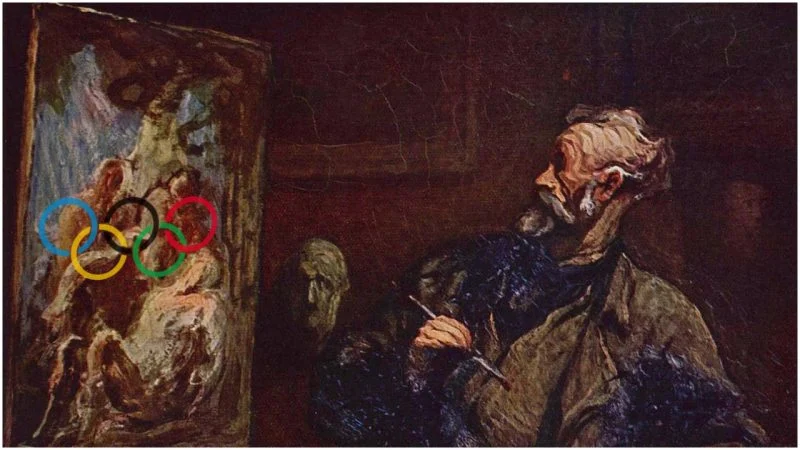
Today, the Olympic Games are synonymous with athletic excellence, global competition, and remarkable displays of physical ability. Yet, tucked away in an almost-forgotten chapter of Olympic history lies a surprising truth: for more than three decades, the Games awarded medals not only for athletic performance but also for achievements in the fine arts. From 1912 to 1948, artists from all over the world competed in categories such as literature, architecture, sculpture, painting, and music, submitting works that celebrated sport, competition, and the Olympic spirit. These artistic events were not sideshows or exhibitions—they were official medal competitions, judged and honored just like gymnastics, swimming, or track and field. Many people today have no idea that an Olympic gold medal was once awarded for writing a poem or designing a stadium. This extraordinary blending of art and sport reflects the original vision of Baron Pierre de Coubertin, the founder of the modern Olympic Games, who believed that true Olympic excellence required nurturing both body and mind. Revisiting this unusual era helps us understand not only how the Games evolved but also how deeply intertwined creativity and athleticism were in the early twentieth century.
Why the Olympics Included Art Competitions: Coubertin’s Vision and Cultural Ideals
The integration of the arts into the Olympic Games was not an afterthought but a deliberate decision rooted in ancient Greek tradition. The founder of the modern Games, Baron Pierre de Coubertin, admired the holistic ideal of the ancient Olympics, where athletic and artistic achievements were celebrated together. In ancient Greece, poets recited epic verses, sculptors displayed new works, and philosophers debated ideas during the same festivals that featured athletic contests. To Coubertin, reviving this cultural synthesis was essential for recreating what he saw as the true spirit of the Olympics. He envisioned the Games as an event that would elevate global culture through the celebration of mind, body, and creative spirit. For him, athletic competition alone could not fulfill this mission; art had to occupy a central place.
This philosophy resonated strongly with many early supporters of the Olympic movement, who were steeped in classical education and romantic ideals of human development. At the beginning of the twentieth century, the cultural climate in Europe emphasized artistic refinement, national pride, and physical vigor. The idea of giving Olympic medals for artistic accomplishments therefore did not seem odd but rather a natural expression of contemporary values. However, implementing this vision proved challenging. Finding a practical structure for art competitions required years of discussion, and early attempts struggled with low participation and questions about judging standards. Nevertheless, Coubertin persisted, arguing that the arts were essential to the moral and cultural mission of the Games.
The first official art competitions debuted at the 1912 Stockholm Olympics, marking a significant milestone in Coubertin’s quest to blend culture and sport. The categories were carefully chosen to mirror the disciplines of ancient Greece, emphasizing forms of artistic expression that could capture the beauty and drama of athletic competition. Works submitted had to be original and explicitly inspired by sport, ensuring that the arts maintained a direct connection to the Olympic theme. This requirement shaped the evolution of the competitions, resulting in a unique body of artworks that blended national artistic traditions with the universal language of athleticism. Although participation in the early years was modest, the inclusion of art in the Olympics revealed an ambition far beyond traditional sport: it was an effort to shape global culture through creativity and shared ideals.
The Artistic Events: How the Olympic Fine Arts Competitions Worked
The Olympic fine arts competitions were separated into five categories—literature, architecture, sculpture, painting, and music—with each category containing multiple sub-classifications. Just like athletes, artists submitted their works to juries composed of experts chosen from various countries. These juries awarded gold, silver, and bronze medals to the top entries, and the winning works were often exhibited during the Games. Despite the artistic nature of the competitions, the rules were surprisingly strict. All works needed to be newly created and must not have been previously published or displayed. They also had to be inspired by sport in some capacity, whether through direct depiction, metaphor, or thematic symbolism.
Each discipline developed its own conventions over the years. In the architecture category, for example, submissions often included plans for stadiums, swimming venues, or gymnasiums—some of which were eventually built. Sculpture frequently centered on athletic figures, capturing movement and muscle in poses reminiscent of ancient Greek statuary. Paintings included portraits of athletes, dynamic scenes of competition, or symbolic representations of national pride. Literature accepted works in the form of poems, dramas, and essays, while music submissions ranged from symphonic pieces to choral works composed specifically to honor sport. The variety of entries reflected not only artistic skill but the global diversity of cultural expressions tied to physical achievement.
As participation grew, so did the prestige of these competitions. Well-known artists, architects, and writers submitted works, though many of them did so anonymously due to academic conventions of the time. One of the most curious facts of all is that Pierre de Coubertin himself won a gold medal in the literature category in 1912 under a pseudonym. His ode, Ode to Sport, exemplified the idealistic and moral tone that he believed should guide both artistic creation and athletic competition. While this fact amused later historians, it also highlighted a deeper truth: the artistic competitions were not merely decorative but a serious component of Olympic culture.
Nevertheless, the fine arts competitions faced challenges as the twentieth century progressed. Ensuring fair judging in subjective categories proved difficult, and controversies occasionally erupted over artistic style or national representation. Furthermore, determining whether professional artists should be allowed to compete raised questions about amateurism—a core Olympic principle at the time. Unlike athletes, who were required to maintain amateur status, many artists made their living from their craft, creating an inconsistency in how Olympic rules were applied. These issues would later influence the eventual discontinuation of the competitions, but for over three decades, they remained an integral part of the Games, shaping a distinctive and largely forgotten chapter of Olympic history.
Memorable Works, Artists, and Controversies from the Fine Arts Olympics
Although many submissions from the Olympic art competitions have faded into obscurity, several notable works and personalities stand out. One of the most frequently discussed contributions came from architect Jan Wils, who won the 1928 gold medal for designing the Olympic Stadium in Amsterdam—an achievement remarkable not only for its artistic merit but for its tangible connection to the Games themselves. The stadium, built according to his awarded design, served as the venue for the 1928 Olympics and remains an architectural landmark, demonstrating how the fine arts competitions could influence real-world structures and leave a lasting cultural legacy.
In sculpture, artists often channeled classical motifs, drawing inspiration from ancient athletic forms. Italian sculptor Rembrandt Bugatti created dynamic bronze figures that reflected the graceful movement of athletes, though he never formally competed. Meanwhile, German sculptors submitted numerous entries that emphasized idealized physical perfection, mirroring the period’s shifting political aesthetics. Paintings ranged from dramatic portrayals of rowing teams cutting through sunlight-dappled waters to expressive depictions of runners mid-stride, capturing the intensity and fleeting nature of athletic moments. Many of these works were displayed in galleries during the Games, attracting public attention and sometimes sparking debates about artistic trends and national artistic identity.
Literature posed unique challenges, as its works were harder to display and often required translation. Still, winning entries included epic poems that glorified athleticism and plays centered on themes of competition and honor. Music entries were equally diverse, with orchestral compositions performed live during ceremonies or special exhibitions. These pieces often evoked triumph, discipline, and the grandeur of sport, aiming to elevate the emotional impact of the Games. Yet with such diversity came disputes. Some critics argued that judging art was inherently subjective, and therefore incompatible with the competitive nature of the Olympics. Others questioned whether the requirement for sports-themed works limited artistic freedom, forcing creators to adjust their styles to fit the competition rather than allowing them to explore broader themes.
By the 1930s, political tensions seeped into the arts competitions, particularly during the 1936 Berlin Olympics. Although the fine arts events continued, the cultural atmosphere of the Games became overshadowed by Nazi ideology, influencing both the themes of submitted works and the international reaction to them. These tensions highlighted the vulnerabilities of the fine arts categories and foreshadowed their eventual decline. Yet despite these complexities, the artistic competitions produced a significant body of work, much of which remains archived today, offering insight into early twentieth-century artistic interpretations of sport.
Why the Olympic Fine Arts Competitions Ended and How Their Legacy Lives On
The final Olympic fine arts competitions took place at the 1948 London Games, marking the end of a unique era. By this time, the debates over amateurism had reached a critical point. The International Olympic Committee insisted that only amateurs could compete in Olympic events, but the majority of professional artists earned income from their craft. This contradiction made it increasingly difficult to justify awarding Olympic medals to professionals when athletes were held to stricter standards. Moreover, the postwar world was shifting rapidly—politically, culturally, and socially. The fine arts were becoming more specialized, modernist trends challenged classical aesthetics, and global audiences were increasingly focused on athletic performance rather than cultural displays.
In 1952, the IOC officially removed the fine arts competitions from the Olympic program, replacing them with noncompetitive cultural exhibitions. While these exhibitions continued the spirit of showcasing artistic achievement, they lacked the medal-based structure that had made the earlier competitions unique. This transition reflected both practical concerns and the evolving identity of the Olympics as primarily an athletic spectacle rather than a holistic cultural festival. Some historians argue that the removal of the art competitions represented a narrowing of Coubertin’s original vision, while others believe it allowed the Games to adapt to modern expectations and logistical realities.
Despite their discontinuation, the legacy of the Olympic fine arts competitions continues to influence the Games today. Modern Olympics still feature cultural programs, artistic performances, and public installations that celebrate creativity and national identity. Many of the artworks produced during the early twentieth century remain preserved in museums and archives, offering valuable insight into how artists interpreted sport during a period of rapid global change. Additionally, the idea of blending art and sport has made a partial comeback in recent years through Olympic cultural festivals, youth programs, and interdisciplinary initiatives that encourage artistic expression alongside athletic development.
More broadly, the story of the fine arts competitions challenges us to reconsider the purpose of the Olympics. Are the Games solely about breaking records and winning medals, or should they also strive to inspire creativity and celebrate the broader human spirit? By revisiting this forgotten chapter, we are reminded that the Olympics were originally conceived as a cultural endeavor that included both physical achievement and artistic excellence. The fine arts competitions may no longer award medals, but their influence persists in the ongoing dialogue about what the Olympics represent and what they could still become.
A Forgotten but Fascinating Chapter of Olympic History
The inclusion of fine arts competitions in the Olympic Games stands as one of the most intriguing and overlooked episodes in modern history. For more than three decades, writers, painters, composers, sculptors, and architects competed for Olympic medals alongside athletes, contributing to a holistic vision of human achievement rooted in ancient tradition. These events reflected a belief that the pursuit of beauty, creativity, and cultural expression was as valuable to society as physical strength or competitive skill. While the fine arts competitions ultimately ended due to shifting cultural norms and organizational challenges, they left behind a legacy that enriches our understanding of the Olympic movement and its evolution.
Today, this forgotten chapter raises questions about the broader meaning of excellence and the many ways humans strive for greatness. It shows that creativity and athleticism are not opposites but complementary expressions of human potential. As the world continues to celebrate the Olympics as a global festival of unity and achievement, remembering the era when artists stood on the podium alongside athletes adds depth, nuance, and inspiration to the story of the Games. The fine arts competitions may be gone, but the spirit of innovation and creativity they embodied still echoes through every Olympic ceremony, symbol, and cultural celebration.
Research and further reading
For readers who want to verify details or continue researching this subject, these external reference collections provide useful starting points: