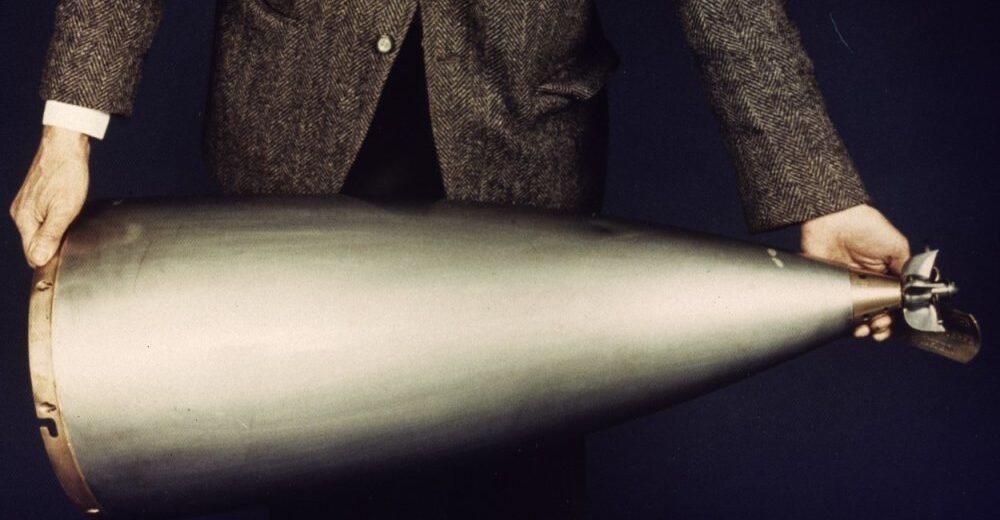
Whitehead torpedo is a revealing historical subject because it opens a clear path into the people, events, and wider changes that shaped its era.
In the age of ironclads, naval power seemed to belong to the biggest hull, the thickest armor, and the heaviest guns. Battleships were expected to dominate the sea through sheer mass and firepower, and for a time that assumption looked unshakable. Then a compact, underwater weapon emerged that changed the balance of fear. Robert Whitehead’s self-propelled torpedo did not merely add a new weapon to the fleet; it altered the logic of naval warfare itself. Suddenly, a fast and comparatively cheap craft could threaten a ship worth millions, and the old confidence in armored dominance began to crack.
What made the Whitehead torpedo so revolutionary was not only its destructive power, but the kind of warfare it enabled. It transformed the sea from a battlefield of visible broadsides into a more anxious environment where danger could arrive below the waves, often unseen until the last moment. For admiralties and strategists in the late 19th century, that was a profound shock. The torpedo boat became a symbol of this new era: small, agile, and potentially lethal to the most formidable warships afloat. In that sense, the Whitehead torpedo helped usher in a modern naval age defined by speed, concealment, and countermeasures as much as by guns and armor.
To understand why this mattered so much, it helps to trace the story from Whitehead’s engineering breakthrough to the first real battlefield uses and the scramble by major navies to respond. The torpedo’s success was not inevitable. It depended on solving a series of technical problems that had long defeated inventors, and then on convincing naval planners that a compact underwater missile could truly change the balance of power. Once that happened, the torpedo boat, and eventually the destroyer built to hunt it, became permanent fixtures of naval history.
From idea to working weapon: Robert Whitehead and the engineering breakthrough
Before the Whitehead torpedo, the word “torpedo” referred to a wider class of explosive devices, many of them stationary or only loosely guided by human control. Naval warfare had long involved underwater threats in one form or another, from mines and spar torpedoes to crude explosive charges mounted on poles or boats. These weapons could be dangerous, but they lacked the autonomy and reliability needed to revolutionize the battlefield. Robert Whitehead, a British engineer working in the port city of Fiume, solved the central problem by creating the first practical self-propelled torpedo in the 1860s.
His achievement rested on compressed-air engineering, careful balance, and a control system that allowed the weapon to travel underwater in a reasonably stable line. Whitehead’s design used a small engine powered by compressed air to drive a propeller, giving the torpedo its own motive force rather than relying on a ship, a pole, or gravity. That distinction sounds simple, but it was transformative. A weapon that could launch from a distance, move independently, and strike below the waterline created a wholly new threat profile. Armor belts mattered less if the attack came under them.
The early Whitehead torpedo was not perfect. It had limited speed, modest range, and a frustrating tendency to run too deep or too shallow. Yet it was reliable enough to attract attention, and reliability was crucial. Navies did not embrace inventions merely because they were clever; they adopted systems that could be manufactured, stored, launched, and trusted under wartime conditions. Whitehead’s torpedo met that standard better than anything that had come before it. By the late 1860s and 1870s, the weapon had gone from a promising experiment to a serious military technology.
This mattered because it compressed strategic thinking. Earlier naval innovations often improved familiar forms of combat, as seen across history from Roman rapid-fire weapon systems to the Byzantine reliance on specialized defenses such as Greek fire: and the Byzantine naval defense. The Whitehead torpedo, however, did something more disruptive. It created a weapon that could not be easily answered by adding more armor or bigger guns. The threat moved beneath the ship’s most vulnerable surface, and that changed the rules.
Why the Whitehead torpedo frightened battleship admirals
The late 19th century was an era of capital ship confidence. Ironclads and then pre-dreadnought battleships embodied national prestige and technological sophistication. Their construction consumed vast budgets, and their presence signaled maritime strength in a way no smaller vessel could. The Whitehead torpedo threatened this order at its core. For the first time, a small craft with a minimal crew could potentially disable or sink one of the most expensive weapons a navy possessed.
The reason this was so alarming lay in the economics of asymmetry. A battleship represented years of planning, industrial labor, and financial commitment. A torpedo boat, by contrast, was relatively cheap and quick to build. If one torpedo boat, or even a small flotilla, could credibly threaten a capital ship, then naval power no longer depended only on matching heavy units against heavy units. It also depended on protecting those heavy units against very inexpensive attackers. That shift forced naval leaders to think defensively in a way they had not before.
Just as important was the psychological effect. Battleships had always been expected to fight in the open, trading fire with an enemy visible on the horizon. The torpedo introduced a different kind of danger: sudden, hidden, and underwater. A ship could be struck in conditions where gunnery was less useful and reaction time was short. This was not merely another projectile. It was a weapon that introduced uncertainty, and uncertainty is often more destabilizing than raw destructive power. The sea, once seen as a realm where steel and artillery could dominate, now contained a concealed menace.
Naval writers and planners quickly understood that if the torpedo matured, it could undermine the very logic of battleship-centered fleets. Large warships might still win line-of-battle engagements, but they could no longer assume safety in harbor, at anchor, or near coastal waters. Port defenses had to change. Fleet formations had to change. Night operations had to change. The Whitehead torpedo did not make battleships obsolete overnight, but it made them vulnerable in ways their designers had not fully anticipated. That vulnerability was enough to force a strategic rethink across Europe and beyond.
From novelty to combat reality: the first torpedo attacks and naval adoption
Once a weapon proves it can work in theory, the real test is whether anyone can use it in war. The Whitehead torpedo passed that test in the years that followed its invention. Major navies, including the British, French, Russian, Austro-Hungarian, and others, studied the weapon closely and began purchasing or licensing versions of the design. The speed of adoption was itself a sign of how seriously naval officials took the threat. This was not a curiosity for exhibitions; it was a technology with obvious battlefield consequences.
The earliest combat uses demonstrated the torpedo’s potential to terrify even when success was uneven. Small boats armed with torpedoes could close under darkness or confusion, strike at close range, and escape before heavier guns could respond. That possibility alone forced commanders to reconsider anchorage security and coastal patrols. Once a few real attacks occurred, the imagination of navies changed faster than any peacetime memo could have achieved. The torpedo became not just a device, but a doctrine.
Adoption also spread through naval experimentation. Fleets began developing dedicated torpedo craft, refining launch tubes, and training crews in the difficult art of nighttime approach. The torpedo was not a simple weapon to use well. Speed, timing, weather, visibility, and sea state all mattered. Yet this complexity did not slow its rise; it encouraged tactical innovation. Navies discovered that the torpedo was best used as part of a system, where small craft, scouting, and surprise worked together. The weapon rewarded initiative and punished complacency.
As with other transformative military technologies, the Whitehead torpedo worked because it altered both capability and expectation. It was one thing to know a weapon existed; it was another to begin planning every fleet movement around the possibility that a torpedo strike might arrive from a small craft in the dark. In that sense, the torpedo’s greatest early achievement was not any single sinking, but the mental revolution it imposed on naval warfare. Once commanders believed the weapon could be decisive, they had to prepare as if it always might be.
The rise of the torpedo boat and the logic of asymmetric sea power
The torpedo’s most dramatic consequence was the rise of the torpedo boat. These were small, fast vessels designed to exploit the Whitehead torpedo’s advantages: speed, surprise, and the ability to approach a larger ship before being destroyed. The torpedo boat represented a striking inversion of traditional naval hierarchy. Instead of the biggest ship dominating the smallest, the smallest might now deliver the fatal blow. That inversion gave the torpedo boat an outsized place in the imagination of the late 19th century.
For smaller navies, torpedo boats offered a way to challenge stronger maritime powers without trying to match them ship for ship. A coastal defense strategy built around torpedo craft could create real danger for blockading fleets or ships operating near shore. This was especially attractive for states that lacked the industrial base to build large battle fleets but still wanted a credible deterrent. In strategic terms, the torpedo boat democratized naval threat. It let modest resources produce disproportionate anxiety.
The rise of torpedo boats also changed harbor defense and fleet posture. Anchored ships became less secure, and navies had to invest in patrols, barriers, nets, lookouts, and rapid-response systems. The sea was no longer divided neatly between the offensive power of battleships and the passive security of ports. Coastal waters became a contested zone where speed and surprise mattered as much as caliber and armor thickness. That made naval operations more complex and more expensive in subtle ways, because every capital ship now needed protection from a cheap attacker.
Yet torpedo boats were not just weapons of the weak. They also represented a broader evolution in military thinking: the idea that technological specialization could offset numerical inferiority. That same logic appears repeatedly in military history, from ancient weapons to modern irregular warfare. The torpedo boat fit perfectly into that pattern. It was a platform built around a single purpose, and for a time that purpose was enough to make admiralties nervous across the world.
How destroyers and new tactics answered the torpedo threat
Naval history rarely stops with a breakthrough weapon. It usually continues with adaptation, counter-adaptation, and a new equilibrium. The torpedo boat’s success created a demand for an escort vessel that could defend the fleet against small, fast attackers. This need helped inspire the destroyer, originally conceived as a “torpedo-boat destroyer.” In other words, the destroyer was born directly from the Whitehead torpedo’s impact. Its mission was to protect larger ships by hunting the very craft that threatened them.
Destroyers combined speed, maneuverability, and lighter armament in a way that made them ideal for interception. Their emergence is one of the clearest examples of military technology producing not just a new weapon, but an entirely new class of warship. That is how deep the Whitehead torpedo’s influence ran. It did not simply add firepower to naval arsenals; it reordered fleet composition. Battleships still mattered, but they now operated inside a protective ecosystem of smaller vessels, scouting screens, and defensive measures.
At the tactical level, navies responded by changing how ships moved and fought. Night operations became more cautious. Harbor defenses were improved. Formation discipline became essential. Crews trained to detect small approaching craft and to react quickly to torpedo warning. Even the design of ships evolved, with attention given to underwater protection and compartmentalization. The torpedo forced navies to think three-dimensionally, in the sense that the threat could now come from beneath the surface rather than only from across it.
This process is what makes the Whitehead torpedo so important in military history. It did not abolish the battleship, but it ended the battleship’s comfort. The big ship remained central, yet it could no longer stand alone as the unquestioned master of the sea. The torpedo boat had become a serious threat, and the destroyer had become a necessary answer. Between them, they redefined the architecture of naval warfare for decades to come. By the end of the 19th century, the sea had become a far more complicated and dangerous place, shaped by the invisible logic of the undersea attack.
The Whitehead torpedo transformed naval warfare because it changed what navies feared, what they built, and how they imagined victory. It made small craft strategically meaningful, exposed the vulnerability of armored giants, and pushed fleets toward a new balance of offense and defense. In a very real sense, Whitehead’s invention marked the moment when the sea became modern: not just a space for heavy guns and proud hulls, but a battlefield where speed, stealth, and technology could overturn established power. That legacy would echo far beyond the 19th century, but its first great shock was felt when battleships realized they were no longer safe simply because they were big.
Research and further reading
For readers who want to verify details or continue researching this subject, these external reference collections provide useful starting points: