When people imagine pets in the ancient world, they often project modern habits backward in time—assuming that cats lounged in Roman homes much as they do today. But the reality of animal companionship in the Roman Empire was far more surprising and far less feline. While cats did exist on the fringes of Roman society, they were not the dominant household pet. Instead, three animals defined Roman domestic companionship and utility: ferrets, dogs, and monkeys. Ferrets were prized for their unmatched ability to hunt mice and rats inside homes and granaries. Dogs served not only as beloved companions but as guards, hunters, and symbols of loyalty. Monkeys, exotic and intelligent, filled the role of entertainer and status symbol. Together, these animals reveal how differently Romans understood pets—not primarily as emotional companions, but as functional, symbolic, and social tools woven deeply into daily life.
Why Cats Were Not the Primary Roman Household Pet
It often surprises modern audiences to learn that cats were not the default domestic animal in ancient Rome. While cats had been domesticated in Egypt thousands of years earlier, their spread throughout the Mediterranean world was slow and uneven. By the time Rome reached its imperial height, cats were present but not yet culturally central. They existed mostly as curiosities, imported animals, or rare companions in certain elite households, rather than as widespread domestic fixtures.
One key reason for this lies in Roman practicality. The Roman household prioritized animals that provided clear economic, protective, or functional value. While cats are excellent hunters, they are solitary hunters by nature, difficult to control, and not easily trained. Romans preferred animals whose behavior could be directed with precision and consistency. Ferrets, as will be explored, offered this exact kind of control for pest management.
There was also a cultural distinction in how animals were perceived symbolically. In Egypt, cats were sacred. They were associated with goddesses such as Bastet and protected by religious law. Rome, however, had no such reverence for cats. Roman religion emphasized animals tied to work, warfare, protection, and strength. Dogs filled many of those symbolic roles. Cats, by contrast, had no major place in Roman myth or ritual life.
Additionally, Roman urban architecture shaped animal priorities. Roman cities were densely populated with multi-story apartment buildings known as insulae. These buildings stored grain, dried foods, and household supplies in confined spaces—perfect breeding grounds for rodents. Romans needed pest-control animals that could be directed into walls, storage pits, and narrow tunnels. Ferrets, long-bodied and fearless, fit the task perfectly. Cats could catch mice, but they could not be reliably deployed into deep spaces on command.
Thus, while cats slowly entered Roman awareness through trade with Egypt and the eastern Mediterranean, they remained secondary animals. Rome’s priorities favored animals that could serve clear, controllable, and profitable roles within the household. Emotional companionship alone was not yet enough to elevate an animal to cultural dominance.
Ferrets: Rome’s Most Effective Solution for Rodent Control
In the Roman world, ferrets were not cute novelties—they were essential tools of survival, hygiene, and economic protection. Grain was the lifeblood of Roman society. It fed families, armies, and entire cities. Rats and mice posed a serious existential threat to food security. A single infestation could destroy months of stored grain. Disease followed rodents wherever they spread. Without effective pest control, famine and illness were constant risks.
Ferrets excelled at a task that neither dogs nor cats could perform as efficiently: hunting rodents inside enclosed spaces. Their long, narrow bodies allowed them to chase rats into tunnels, walls, storage cavities, and burrows. Unlike cats, ferrets did not hunt at their own leisure. They could be handled, inserted into specific areas, and retrieved after flushing out prey. Romans valued this level of control.
Roman farmers, grain merchants, bakers, and householders used ferrets deliberately and systematically. A ferret would be released into a storage area, forcing rodents to flee toward waiting dogs or human trappers. This coordinated method dramatically increased rodent control efficiency. In granaries that supplied armies and large urban populations, ferrets were not pets in the emotional sense—they were working animals as essential as plows or wagons.
Literary references confirm their importance. Roman naturalists such as Pliny the Elder wrote about rodents devastating crops and food supplies, and about animals used to counter them. Ferrets appear repeatedly in practical agricultural contexts. Their role was deeply tied to Roman economic logic: anything that protected grain protected the empire itself.
Ferrets were also used beyond homes. Warehouses, ships, military supply depots, and merchant stores all employed them. On ships, ferrets served a crucial role during long sea voyages, where rats could consume food reserves and destroy ropes or cargo. The presence of ferrets could mean the difference between survival and disaster at sea.
In this way, ferrets occupied a uniquely practical status in Roman society. They were not ornamental. They were not symbolic. They were indispensable. Their relationship with humans was based on function rather than affection—but that functional bond kept them present in Roman life for centuries.
Dogs as Guards, Hunters, and Family Companions
Among all Roman pets, dogs held the most emotionally complex and socially honored position. They were not only workers and protectors but also true household companions. Dogs filled multiple roles simultaneously—as guards, hunters, watchdogs, status symbols, and loyal friends.
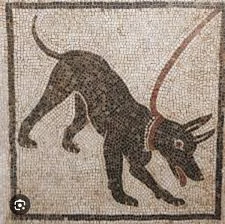
Roman homes, whether urban apartments or rural villas, required protection. Theft was a constant concern. Street crime flourished in crowded cities. Dogs served as living alarm systems. Their presence alone discouraged intrusion. Famous mosaic floor inscriptions reading “Cave Canem” (“Beware of the Dog”) have survived from Roman homes, testifying to their central role in security.
Roman hunting culture also elevated dogs into elite prestige. Noble families bred powerful hunting dogs for chasing boar, deer, and wolves. These animals were trained with precision, decorated with leather collars, and celebrated in art and literature. Owning fine hunting dogs signaled both wealth and masculine virtue.
At the same time, many Romans formed genuine emotional bonds with their dogs. Tombstones, epitaphs, and poems dedicated to deceased dogs reveal a surprisingly tender side of Roman pet culture. Some inscriptions mourn dogs as family members, praising their loyalty, intelligence, and companionship. This emotional attachment breaks the stereotype of Romans as emotionally distant from animals.
Different breeds served different functions. Large mastiff-type dogs guarded estates and livestock. Smaller lapdogs, especially among elite women, served as companions. These smaller dogs appear frequently in Roman artwork resting on laps, tucked into sleeves, or curled beneath furniture.
Unlike ferrets, dogs lived alongside humans in an emotional sense. They shared daily routines, responded to names, and participated in social life. Their ability to bond made them unique in Roman society. While dogs worked hard, they were also loved deeply.
This combination of utility and affection ensured that dogs remained the most culturally stable and widespread pet in the Roman world. Long after ferrets faded and monkeys remained exotic, dogs endured as Rome’s only truly universal animal companion.
Monkeys as Exotic Entertainers and Status Symbols
If ferrets represented necessity and dogs represented loyalty, monkeys represented luxury and spectacle. Monkeys were not native to Italy or most of Europe. They arrived in Rome through long-distance trade routes connecting the Mediterranean to Africa and Asia. Because of this, they were rare, expensive, and closely associated with elite display culture.
Romans encountered monkeys primarily through imperial expansion. As Rome conquered territories in North Africa and beyond, exotic animals flooded into the empire—lions, leopards, elephants, parrots, and monkeys. Some of these animals were destined for gladiatorial games or public spectacles. Others were purchased privately as living curiosities.
Monkeys became fashionable among wealthy households precisely because they were strange. Their human-like movements, facial expressions, and intelligence fascinated Roman observers. Monkeys were trained to perform tricks, imitate human behavior, and amuse guests at banquets. They became living entertainment devices in aristocratic social life.
Owning a monkey signaled not just wealth, but global reach. It proved that one had access to distant lands and exotic trade networks. A monkey dancing at a Roman dinner party symbolized Rome’s domination over the natural and cultural world beyond the Mediterranean.
Yet the relationship between Romans and monkeys was often unsettling. Some Roman writers expressed discomfort with how closely monkeys resembled humans. Their distorted imitation of human behavior triggered both laughter and anxiety. This ambiguity—amusement mixed with unease—helped secure the monkey’s place as entertainment rather than as a true companion animal.
Monkeys rarely lived long in Roman homes. Their specialized dietary needs, sensitivity to climate, and stress from captivity limited their survival. As a result, they were often replaced repeatedly among the elite, reinforcing their status as luxury consumables rather than enduring companions.
Still, during Rome’s imperial height, monkeys were among the most recognizable symbols of elite pet culture—creatures owned not for protection or labor, but to be admired, laughed at, and used as proof of social dominance.
How Roman Pet Ownership Reflected Social Class
Pet ownership in the Roman Empire was deeply tied to class. The types of animals one owned—and the way one interacted with them—revealed social rank as clearly as clothing or housing. The elite, the middle class, and the poor experienced animal companionship in profoundly different ways.
For the wealthy, animals were expressions of abundance. They could afford decorative lapdogs, trained monkeys, and beautifully bred hunting dogs. Their homes were spacious enough to accommodate animals comfortably. Servants handled feeding, cleaning, and training. Pets became extensions of lifestyle and image.
For the urban poor, animal ownership was entirely utilitarian. Ferrets controlled vermin. Dogs served as basic protection and scavengers. These animals were not decorative. They existed to support survival. Emotional bonds may have existed, but necessity always came first.
In rural areas, animals blurred the line between pet and livestock. Dogs guarded flocks. Ferrets protected grain stores. These animals lived close to humans but remained tied to labor.
Monkeys rarely appeared outside elite circles. Their cost and impracticality placed them firmly within aristocratic culture. A monkey in a Roman household communicated not affection, but luxury.
Thus, Roman pets functioned as social markers. What you owned—and why you owned it—revealed exactly where you stood in the empire’s hierarchy.
Why Romans Valued Function Over Sentimentality
Modern pet culture is driven primarily by emotional fulfillment. Romans, however, operated within a worldview shaped by survival, labor, and pragmatism. They lived in a society where disease, scarcity, and violence were ever-present. In this context, animals were first assessed for usefulness.
Ferrets controlled disease-carrying rats. Dogs protected property and lives. Monkeys entertained and displayed wealth. Emotional companionship existed, but it was rarely presented as the primary justification for ownership. Romans invested in animals that earned their place in the household through contribution.
This functional mindset also shaped animal training. Romans trained animals harshly but effectively. Ferrets were disciplined. Dogs were rigorously trained for hunting and guarding. Performance mattered.
Even in emotional relationships, usefulness remained central. A beloved dog was still a watchdog. A cherished lapdog still symbolized leisure and class. Pure sentiment divorced from function would have seemed frivolous to most Romans.
This worldview reflects how fundamentally different Roman daily life was from the modern world. In a society without refrigeration, antibiotics, public lighting, or modern policing, animals filled essential survival roles. Sentiment followed service—not the other way around.
The Decline of Ferrets and the Rise of the Cat
Over time, Roman animal priorities slowly shifted. As trade networks expanded further and domestic animal breeding improved, cats gradually gained ground as household companions. Their independence became less of a liability as homes adopted more stable construction and food storage improved.
By late antiquity and the early medieval period, cats began replacing ferrets as preferred rodent hunters. Their quiet stalking abilities worked well in enclosed human spaces. Their low-maintenance care also suited changing lifestyles.
Ferrets never vanished entirely, but their dominance faded. Dogs, however, remained permanently entrenched as human companions. Monkeys, too, declined as the empire weakened and exotic trade diminished.
By the Middle Ages, the Roman pet hierarchy had largely inverted. Cats became dominant. Ferrets became specialized. Monkeys disappeared from ordinary life. The transformation reflected changes in economy, architecture, disease control, and cultural values.
Yet for centuries at the heart of imperial Rome, it was ferrets, dogs, and monkeys—not cats—that defined pet ownership.
What the evidence can support
The Roman world viewed animals through a lens very different from our own. Ferrets were not cute—they were survival tools. Dogs were not merely companions—they were protectors, hunters, and symbols of loyalty. Monkeys were not pets in the emotional sense at all—they were spectacles of wealth and empire.
Together, these animals reveal a society that valued function first, symbolism second, and sentiment last. Roman pet ownership reflected economic need, social rank, and imperial reach rather than emotional comfort alone.
The absence of cats as dominant household pets surprises modern audiences only because we forget how much our own pet culture depends on stable infrastructure, food security, and emotional leisure—luxuries that Romans could rarely take for granted.
In the homes, granaries, and villas of the Roman Empire, it was the ferret hunting the rat, the dog guarding the door, and the monkey entertaining the elite guests that defined what it truly meant to keep a pet.
Research and further reading
For readers who want to verify details or continue researching this subject, these external reference collections provide useful starting points: