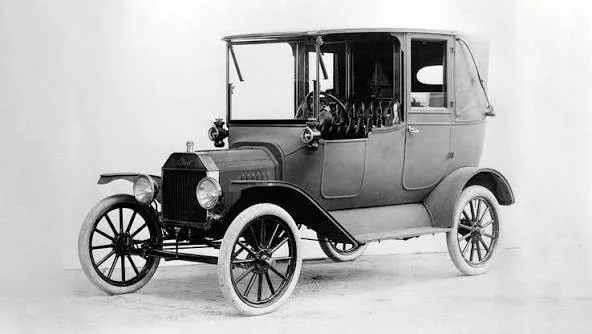
Many people assume the automobile is a distinctly American invention, born from the same industrial spirit that later produced assembly lines, highways, and car-centered cities. This belief is understandable. The United States would eventually revolutionize car production, popularize ownership, and shape global car culture. Yet the origin of the automobile itself lies firmly in 19th-century Europe, not America. Long before Henry Ford ever imagined a Model T, European engineers were experimenting with self-propelled vehicles powered by internal combustion engines. Among them, Karl Benz of Germany and Émile Levassor of France played decisive roles in transforming the idea of mechanized transport into a practical reality. In 1886, Benz patented what is widely recognized as the world’s first true automobile. The story of how the car came into being is not one of sudden invention, but of gradual experimentation, bold engineering, and a distinctly European technological environment that nurtured the birth of modern transportation.
The World Before Cars: Why the Automobile Did Not Emerge in America First
To understand why the automobile was not invented in the United States, it helps to examine the technological and cultural landscape of the 19th century. While America was rapidly industrializing, Europe—particularly Germany and France—was the epicenter of mechanical engineering, precision manufacturing, and scientific education. European universities and technical institutes produced generations of engineers who were trained in physics, metallurgy, and mechanical design at a level unmatched elsewhere.
Transportation before the automobile relied on horses, steam-powered trains, and canal boats. Steam engines were well-established by the early 1800s, but they were large, heavy, and ill-suited for personal vehicles. Engineers needed something smaller, lighter, and controllable. This challenge required advanced understanding of combustion, fuel efficiency, and mechanical timing—fields in which European inventors were already deeply engaged.
In the United States, industrial energy was focused elsewhere. American engineers excelled at scaling production, building railroads, and developing agricultural machinery. The emphasis was on expansion and infrastructure rather than fine mechanical experimentation. Moreover, American cities were more spread out, and railroads dominated long-distance travel. There was less immediate demand for small, personal motorized vehicles.
Europe, by contrast, had dense cities, shorter travel distances, and long traditions of craftsmanship. Workshops in Germany and France were already experimenting with gas engines for stationary use. The idea of adapting these engines for transport emerged naturally within this context. Additionally, patent systems in Europe encouraged individual inventors to protect and commercialize their designs, providing motivation and recognition for innovation.
Thus, the automobile did not appear in America first because the technological conditions were not yet aligned there. It emerged where mechanical theory, manufacturing skill, and urban necessity intersected—19th-century Europe.
Karl Benz and the First True Automobile
Karl Benz is widely credited with inventing the first true automobile, and for good reason. While earlier inventors had experimented with steam-powered vehicles, Benz created the first practical, gasoline-powered, self-propelled vehicle designed from the ground up as an automobile. In 1885, he completed his Motorwagen, and in 1886, he patented it—marking a decisive moment in transportation history.
Benz’s invention was revolutionary not because it was the first machine to move without horses, but because it integrated multiple systems into a single, functional vehicle. The Benz Patent-Motorwagen featured an internal combustion engine, a chassis designed specifically for motorized travel, a throttle system, and a transmission that allowed controlled movement. Unlike earlier contraptions that were essentially modified carriages, Benz’s design acknowledged that motor vehicles required entirely new engineering principles.
The engine itself was a marvel for its time. It ran on gasoline, ignited by an electric spark, and delivered power smoothly enough to propel the vehicle forward without constant breakdowns. While the Motorwagen was slow and fragile by modern standards, it worked—and that mattered more than anything else.
Benz’s patent, officially granted in January 1886, is often considered the birth certificate of the automobile. This legal recognition established his machine as a distinct invention rather than a novelty experiment. Importantly, Benz was not merely tinkering in isolation. He believed in the commercial potential of his creation and worked to refine it for practical use.
One of the most famous moments in automotive history occurred in 1888, when Benz’s wife, Bertha Benz, undertook the first long-distance automobile journey without her husband’s knowledge. Her successful trip proved the vehicle’s reliability and demonstrated its real-world potential. This journey cemented Benz’s place in history as the inventor of the automobile—not in theory, but in practice.
Émile Levassor and the Foundations of the Modern Car Layout
While Karl Benz invented the automobile, Émile Levassor helped define what a car should look like. Working in France with the firm Panhard et Levassor, Levassor made engineering decisions that would shape automotive design for decades to come. His most important contribution was the front-engine, rear-wheel-drive layout, which became the standard for most automobiles well into the 20th century.
Levassor recognized that placing the engine at the front of the vehicle improved balance, cooling, and control. Earlier designs often placed engines under seats or at the rear, creating instability and maintenance challenges. By moving the engine forward and transmitting power to the rear wheels via a driveshaft, Levassor created a more stable and scalable vehicle architecture.
This configuration allowed for larger engines, improved steering, and better passenger comfort. It also made vehicles easier to manufacture and repair—an essential factor as cars moved from experimental devices to commercial products. Levassor’s design choices were not accidental; they emerged from systematic testing and mechanical insight.
Levassor was also instrumental in advancing automobile racing as a proving ground for innovation. In the 1890s, he participated in and promoted long-distance races, believing that competition would drive technical improvement. These races tested durability, speed, and reliability under real conditions, accelerating development far beyond what laboratory experimentation could achieve.
Unlike Benz, Levassor did not patent a single defining automobile, but his influence permeated the industry. His layout became so dominant that it is still recognizable in modern vehicles. In many ways, Benz invented the car, but Levassor invented the car as we know it.
Together, their work demonstrates how innovation rarely emerges from a single mind. The automobile was born through collaboration across borders, ideas, and engineering philosophies—all firmly rooted in Europe.
Why America Became Associated with Cars Anyway
If cars were invented in Europe, why do so many people associate them with the United States? The answer lies not in invention, but in production and cultural impact. While Europe created the automobile, America perfected its mass adoption.
At the turn of the 20th century, automobiles were luxury items—hand-built, expensive, and owned by elites. European manufacturers focused on craftsmanship and performance rather than affordability. In the United States, however, industrial thinkers saw an opportunity to democratize the car.
Henry Ford did not invent the automobile, but he revolutionized how it was made. By introducing the moving assembly line in 1913, Ford drastically reduced production time and costs. This innovation made cars affordable for ordinary Americans and transformed them from curiosities into necessities.
America’s vast geography further fueled car culture. Unlike Europe’s dense cities, the U.S. had long distances between towns, limited public transit outside cities, and expanding suburban development. Cars were not just convenient—they were essential.
As American car ownership exploded, the automobile became embedded in national identity. Roads, motels, gas stations, and drive-in culture followed. Hollywood films, advertising, and music reinforced the image of the car as a symbol of freedom and progress.
Over time, this cultural dominance overshadowed the automobile’s European origins. While Benz and Levassor laid the groundwork, American manufacturers scaled it globally. The myth that cars were invented in the U.S. is therefore a reflection of cultural memory, not historical fact.
The Difference Between Invention and Innovation
The misconception about the automobile’s origins highlights an important distinction: invention is not the same as innovation. Karl Benz invented the automobile by creating the first functional gasoline-powered vehicle and securing its patent. Émile Levassor innovated by refining its layout and making it practical. America innovated further by transforming the automobile into a mass-produced consumer product.
Each stage required different skills. Invention demanded theoretical insight and mechanical creativity. Early innovation required experimentation and engineering refinement. Mass adoption required industrial efficiency, marketing, and infrastructure.
Confusing these stages leads to distorted historical narratives. It is tempting to credit the country that popularized a technology with inventing it, but this overlooks the foundational work that made later success possible.
The automobile’s story is therefore a shared one. It belongs to German inventors, French engineers, and American industrialists alike. But its birthplace—the moment when a self-propelled gasoline vehicle first became reality—was unmistakably European.
How the Benz Patent Changed the Course of Transportation
Karl Benz’s 1886 patent did more than protect an invention—it legitimized an entirely new category of technology. By formally defining the automobile as a distinct machine, Benz opened the door for further experimentation, investment, and competition.
Once the concept was proven, other European inventors rapidly joined the field. Daimler, Maybach, Peugeot, and Renault all developed their own vehicles within a decade. Each built upon Benz’s foundation, refining engines, transmissions, and chassis designs.
The patent also encouraged legal and commercial frameworks that supported automotive growth. Investors could fund development with confidence. Manufacturers could license technologies. Consumers could trust that automobiles were more than passing novelties.
Without Benz’s patent, the automobile might have remained a fringe experiment for years longer. Instead, it became a recognized innovation that attracted global attention. By the time American manufacturers entered the field, the basic principles of automotive engineering were already established.
Why This History Still Matters
Understanding that cars were invented in Europe rather than the United States is not about diminishing American contributions. It is about recognizing how innovation truly works—across borders, cultures, and generations.
The automobile is a global invention. It reflects the cumulative effort of engineers who solved different problems at different times. Benz addressed propulsion. Levassor addressed layout. Americans addressed scale. Each contribution was essential.
Recognizing this broader history encourages a more accurate appreciation of technological progress. It reminds us that no nation invents in isolation and that even the most iconic technologies often have unexpected origins.
A European Invention That Changed the World
Cars were not invented in the United States. They were born in 19th-century Europe, where Karl Benz patented the first automobile in 1886 and Émile Levassor helped define its modern form. America would later transform the car into a global necessity, but the spark of invention came from European engineers working in small workshops, driven by curiosity and mechanical ambition.
The automobile’s true history is richer—and more international—than popular myth suggests. By understanding where cars really came from, we gain a deeper appreciation for how ideas travel, evolve, and ultimately reshape the world.
Research and further reading
For readers who want to verify details or continue researching this subject, these external reference collections provide useful starting points: