The idea sounds shocking to modern ears, almost unbelievable: wealthy Europeans deliberately consuming human remains as medicine. Yet in the sixteenth century, this practice was not fringe behavior, nor was it limited to secret cults or desperate outcasts. It was fashionable, medically endorsed, and practiced by the social elite. Kings, nobles, physicians, and scholars all participated in a strange medical tradition rooted in the belief that the human body itself held curative power. Among all the remedies derived from human remains, one stood above the rest in prestige and price: Egyptian mummies.
This phenomenon did not emerge from ignorance alone. It was shaped by Renaissance medicine, classical texts, religious logic, and early scientific thinking. The belief that consuming parts of the dead could heal the living was woven into respected medical systems and supported by some of the most prominent intellectuals of the age. To people of the sixteenth century, this was not cannibalism as we define it today, but medicine.
Understanding why this practice existed requires stepping into a world where disease was poorly understood, anatomy was still being rediscovered, and ancient authority carried enormous weight. The consumption of corpses was seen not as barbaric, but as refined, rational, and even elegant. The fact that Egyptian mummies were considered the highest delicacy only deepens the historical paradox and reveals how myth, empire, and commerce combined in one of the strangest chapters of medical history.
Medicine, Authority, and the Human Body in the Renaissance
In sixteenth-century Europe, medicine was undergoing a transformation, but it was still deeply rooted in ancient traditions. Physicians relied heavily on classical authorities such as Galen and Hippocrates, whose writings emphasized balance, humors, and the transfer of vital forces. The human body was believed to contain powerful substances that could restore health when properly applied. Blood, fat, bone, and flesh were not viewed as taboo, but as potential remedies.
This medical worldview existed within a society that placed enormous trust in learned authority. If a respected physician prescribed a treatment, patients rarely questioned its moral implications. The idea that consuming human-derived substances could heal was already well established. Remedies made from skull powder were used to treat epilepsy, while human fat was applied to wounds. These practices were recorded in medical texts and taught in universities.
Importantly, this was not associated with poverty or desperation. The elite were the primary consumers of corpse-based medicine. Wealth allowed access to rare substances and skilled apothecaries who prepared them carefully. The more exotic the ingredient, the more potent it was believed to be. Human remains, especially those associated with antiquity or perceived purity, carried immense symbolic and medicinal value.
Religion did not initially pose an obstacle. The human body was seen as God’s creation, and using it for healing aligned with divine purpose. The dead were already beyond earthly suffering, while the living could benefit from their remains. In this framework, corpse consumption was not sacrilege but stewardship. This logic laid the groundwork for the widespread acceptance of mummy medicine.
The Origins of “Mummia” as a Medical Substance
The practice of consuming human remains in Europe became closely associated with a substance known as “mummia.” Originally, the word referred not to human flesh but to a naturally occurring bitumen used in ancient embalming practices. Medieval translators, however, misunderstood Arabic medical texts and gradually transformed the meaning of the term.
By the late Middle Ages and into the sixteenth century, mummia came to mean powdered flesh taken from embalmed human corpses. Egyptian mummies, preserved for millennia, were believed to contain powerful healing properties. Their longevity suggested a resistance to decay that physicians thought could be transferred to the living. This belief turned ancient corpses into coveted medical commodities.
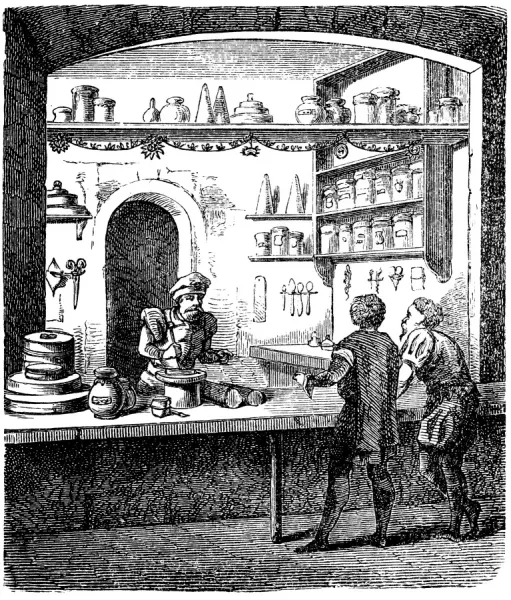
Apothecaries sold mummia as a standard ingredient. It was ground into powders, mixed with wine, or blended into syrups. Physicians prescribed it for ailments ranging from internal bleeding to plague, bruising, and chronic pain. The logic was straightforward by Renaissance standards: preserved flesh retained life force, and consuming it could restore bodily balance.
The demand for mummia grew rapidly. As authentic ancient mummies became scarce, a black market emerged. Recently deceased bodies were dried, treated, and sold as “Egyptian” remains. Few consumers could tell the difference, and many did not care. What mattered was the belief in efficacy, reinforced by tradition and authority.
This medical misunderstanding created a vast and ethically troubling trade that linked European pharmacies to tombs thousands of miles away. Egyptian burial grounds were looted not for historical curiosity, but for medicine cabinets in Paris, London, and Rome.
Egyptian Mummies as the Highest Medical Delicacy
Among all forms of corpse medicine, Egyptian mummies occupied the highest status. They were seen as ancient, exotic, and infused with mysterious power. Europe’s fascination with ancient Egypt was already strong, and mummies embodied the perceived wisdom and permanence of a lost civilization. Consuming them felt like ingesting antiquity itself.
Egypt’s dry climate and embalming traditions made its mummies uniquely preserved, which reinforced their perceived potency. Physicians argued that these bodies were superior to freshly deceased Europeans because they had resisted corruption for centuries. This resistance was interpreted as proof of medicinal strength. The older and darker the mummy, the more valuable it was thought to be.
Wealthy patients sought out mummy medicine as a mark of status. Kings and nobles used it openly. The French monarch Francis I was rumored to carry powdered mummy with him as a remedy for sudden illness. Such practices were not hidden; they were discussed in medical circles and sometimes even boasted about.
The consumption of mummies also intersected with colonial attitudes. Egypt was viewed as distant and other, making the moral implications easier to ignore. The bodies of ancient Egyptians were not perceived with the same reverence as Christian European dead. This psychological distance allowed elite consumers to justify their actions without confronting the reality of human remains.
Over time, mummies became less like people and more like products. They were shipped, ground, sold, and consumed with little regard for their origins. In elite circles, mummy medicine was not grotesque; it was refined, rare, and powerful.
Physicians, Scholars, and the Endorsement of Corpse Medicine
The legitimacy of corpse consumption rested heavily on the endorsement of respected physicians and scholars. Renaissance medicine was hierarchical, and opinions from learned men carried immense authority. When doctors prescribed mummia, patients complied. Questioning such treatments would have meant challenging the foundations of medical knowledge itself.
Some of the era’s most influential thinkers supported these practices. The physician and alchemist Paracelsus argued that the human body contained powerful essences that could be used medicinally. He believed that disease could be cured by applying like to like, a principle that justified using human material to treat human illness.
Medical texts of the sixteenth century frequently listed mummia alongside herbs and minerals. It was not considered experimental or extreme, but standard. Apothecaries were regulated, and their inventories inspected. The presence of mummy powder in these shops demonstrates how normalized the practice had become.
Criticism did exist, but it was limited. Some physicians questioned the quality of mummia being sold, suspecting fraud rather than immorality. Others worried about dosage or contamination. Rarely did they object on ethical grounds. The human body, once dead, was seen as a resource.
This professional endorsement insulated elite consumers from moral doubt. If learned men approved, then the practice must be acceptable. In this way, medicine provided not only treatment, but moral cover for one of the most unsettling habits in European history.
The Mummy Trade and the Economics of Death
As demand for mummia grew, a complex trade network developed. Merchants traveled to Egypt, purchasing mummies in bulk and shipping them to European ports. Some mummies were ancient, taken from tombs, while others were newly created to meet demand. Bodies of executed criminals, plague victims, and the poor were sometimes dried and sold as counterfeit mummia.
This trade was immensely profitable. Apothecaries marked up prices dramatically, especially for material claimed to be ancient. Consumers rarely saw the original form of the corpse; by the time it reached them, it had been reduced to powder or paste. This distance obscured the reality of consumption and made it easier to accept.
European artists even used ground mummy in paint pigments, creating a color known as “mummy brown.” This further normalized the reduction of human remains into raw material. The dead became ingredients, not individuals.
The scale of the trade eventually led to shortages of authentic mummies. By the seventeenth century, Egypt’s ancient burial sites had been heavily looted. This depletion contributed to growing skepticism and criticism, not out of concern for the dead, but due to declining quality and effectiveness.
Economics, rather than ethics, played a key role in the practice’s decline. When mummy medicine became harder to source and less reliable, its prestige faded. What had once been a luxury began to look like an outdated curiosity.
Decline, Criticism, and Changing Medical Thought
By the late seventeenth and early eighteenth centuries, attitudes toward corpse medicine began to shift. Advances in anatomy, chemistry, and empirical observation challenged older medical assumptions. Physicians increasingly demanded evidence rather than tradition. Remedies that could not demonstrate consistent results lost credibility.
At the same time, cultural views of the body changed. The human corpse began to be seen as something deserving of dignity rather than consumption. Religious and ethical concerns gained strength, especially as Enlightenment ideas emphasized rationality and human value. The notion of ingesting human remains started to provoke discomfort rather than confidence.
Some physicians openly criticized mummy medicine as superstition. They argued that its supposed effects were psychological rather than physiological. Others exposed the widespread fraud in the mummy trade, undermining trust in apothecaries. As skepticism grew, demand declined.
By the nineteenth century, corpse consumption had largely vanished from mainstream medicine. What remained was embarrassment and disbelief that such practices had ever been taken seriously. Mummy medicine became a historical curiosity, studied as an example of how deeply belief can shape medical behavior.
The decline was not sudden, but gradual. Like many medical traditions, it faded as new frameworks replaced old ones. Yet its long persistence reveals how powerfully culture, authority, and fear of disease can override ethical boundaries.
When Medicine Crossed a Moral Line
The consumption of dead bodies by Europe’s wealthy elite in the sixteenth century challenges modern assumptions about progress and morality. These were not ignorant people acting in desperation, but educated individuals following respected medical advice. Egyptian mummies were prized not out of cruelty, but out of belief in their healing power.
This history reminds us that medicine is never purely scientific. It is shaped by culture, symbolism, authority, and fear. What seems unthinkable today was once logical, even virtuous. The line between healing and harm has not always been clear, and it has shifted with time.
Looking back, the mummy craze serves as a cautionary tale. It shows how easily human bodies can be reduced to resources when belief overrides empathy. It also highlights the importance of questioning authority and tradition, especially when they conflict with basic human dignity.
The fact that Egyptian mummies were once considered the highest delicacy in European medicine is not just a bizarre footnote. It is a powerful reminder that the past was governed by different rules, and that our own medical practices will one day be judged with equal astonishment.