Before the advent of modern dentistry, losing one’s teeth was not merely a cosmetic inconvenience but a life-altering condition. Chewing became painful or impossible, speech was affected, and social standing could suffer greatly. In an era without synthetic materials, antibiotics, or standardized dental care, people turned to solutions that today feel almost unimaginable. Among the most disturbing of these practices was the use of human teeth taken from the dead—often young soldiers killed in battle—to create dentures for the wealthy. Long before the 19th century, the mouths of the elite were sometimes filled with the teeth of fallen men, harvested from Europe’s blood-soaked battlefields.
This practice was not fringe or rare. It was a recognized, profitable part of the dental trade, fueled by war, inequality, and desperation. Teeth became commodities, corpses became resources, and dentists, surgeons, and scavengers followed armies as closely as merchants and camp followers. Nowhere was this grim industry more visible than after one of Europe’s most famous conflicts: the Battle of Waterloo.
Dentistry Before Modern Materials: Why Human Teeth Were So Valuable
To understand why dentists resorted to using teeth taken from the dead, it is essential to grasp the limitations of pre-modern dentistry. Before the 19th century, there were no plastics, acrylics, or biocompatible ceramics. Porcelain existed, but early porcelain teeth were brittle, poorly fitted, and unnaturally white. Animal teeth—often taken from cows or horses—were also used, but they wore down quickly, stained easily, and failed to replicate the natural shape and density of human teeth.
Human teeth, by contrast, were considered the gold standard. They fit better, functioned more naturally, and were far more durable. Dentures made from real human teeth could last for years if properly maintained, making them highly desirable among the wealthy. However, this created an obvious problem: where could large quantities of healthy human teeth be obtained?
The poor sometimes sold their teeth while alive, often in moments of financial desperation. Young people with strong teeth might exchange them for small sums, permanently damaging their health for short-term survival. But the number of teeth that could be acquired this way was limited, and the quality was inconsistent. War, on the other hand, produced thousands of young, otherwise healthy corpses in a matter of hours. For dentists and tooth traders, battlefields became horrifyingly efficient supply sources.
This grim logic turned human remains into raw material. Teeth were extracted quickly, often crudely, and sorted like goods. The younger the soldier, the more valuable the teeth. In an age when class divisions were stark, the irony was brutal: the poor died in war, and their bodies were repurposed to restore the smiles of the rich.
The Battle of Waterloo and the Rise of “Waterloo Teeth”
The practice of harvesting teeth from the dead reached its most infamous moment after the Battle of Waterloo in 1815. Fought near the village of Waterloo in present-day Belgium, the battle marked the final defeat of Napoleon Bonaparte and resulted in tens of thousands of casualties in a single day. The sheer scale of death created an unprecedented opportunity for those willing to profit from human remains.
In the days following the battle, scavengers descended upon the field alongside medics and burial parties. Among them were individuals whose sole purpose was to extract teeth from the dead and dying. Dentists and intermediaries paid for sacks of teeth, knowing there would be high demand back home. These teeth became known as “Waterloo teeth,” a term that would soon be associated with quality dentures across Europe.
What made Waterloo teeth especially prized was the age of the soldiers. Many were young men in their late teens or early twenties, with strong, healthy teeth largely free of decay. In an era before widespread sugar consumption, dental health among young adults was often excellent. This made their teeth ideal for transplantation into dentures.
Once transported back to cities like London and Paris, the teeth were cleaned, shaped, and mounted onto ivory or metal bases. Wealthy clients often had no idea—or chose not to know—the origin of their dentures. For some, the association with a historic battle may even have added a strange sense of prestige. For others, the truth was quietly ignored, buried beneath etiquette and social norms that discouraged uncomfortable questions.
How Dentures Were Made From the Dead
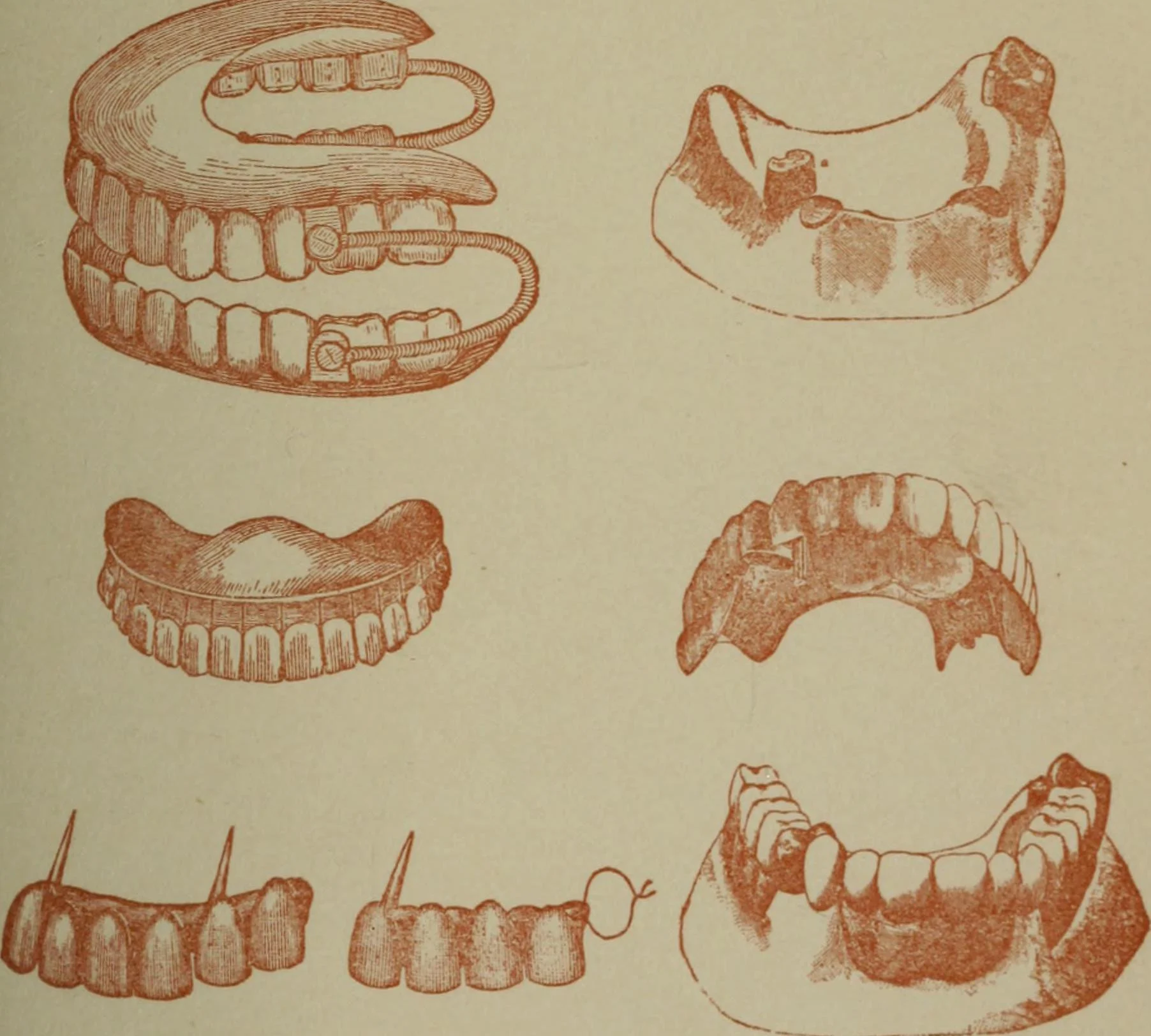
The process of turning battlefield teeth into functional dentures was both labor-intensive and deeply unsettling. Once collected, teeth were soaked and cleaned to remove tissue and blood. Dentists then selected sets that matched in size, shape, and color as closely as possible. Perfection was rare; most dentures were a patchwork of teeth from multiple individuals, stitched together into a single artificial smile.
The teeth were drilled and pinned into bases typically made from carved hippopotamus or walrus ivory. These materials were chosen for their strength and relative resistance to moisture, though they often absorbed odors over time. Springs and metal wires were used to hold upper and lower dentures together, relying on jaw pressure to keep them in place. Wearing such dentures could be uncomfortable and even painful, but they were vastly preferable to having no teeth at all.
Hygiene standards were rudimentary by modern definitions. Germ theory had not yet been established, and the risk of infection from transplanted teeth was poorly understood. Some wearers suffered from chronic mouth infections, gum disease, and abscesses. Despite these dangers, demand remained high, particularly among aristocrats, politicians, and wealthy merchants whose social lives depended on clear speech and presentable appearance.
Dentists themselves occupied an ambiguous social position. Some were respected professionals, while others operated on the fringes of medicine. The line between surgeon, barber, and tradesman was often blurred. In this environment, ethical considerations were secondary to effectiveness and profit. The dead had no rights, and their teeth were simply another resource to be claimed.
Class, Power, and the Morality of Battlefield Dentistry
The use of dead soldiers’ teeth exposes stark inequalities in pre-modern society. Those who fought and died were overwhelmingly drawn from the lower classes, while those who benefited from their remains belonged to the elite. This transfer of bodily resources from poor to rich was not accidental; it was a direct reflection of how power operated in early modern Europe.
For the wealthy, dentures restored dignity, authority, and social confidence. A toothless aristocrat risked ridicule and diminished influence. For soldiers, death offered no such benefits. Even in burial, their bodies were vulnerable to exploitation. Families often had no knowledge of what happened to their loved ones’ remains, and there were no legal protections to prevent postmortem harvesting.
At the time, public awareness of this practice existed but rarely translated into outrage. Death was omnipresent, and the idea of bodily integrity after death was less rigid than it is today. The concept of consent, especially for the poor, was loosely defined or ignored entirely. What mattered most was utility, not morality.
Yet even by the standards of the era, the practice made some uncomfortable. Satirical cartoons and critical writings occasionally mocked the idea of aristocrats smiling with the teeth of dead soldiers. These critiques hinted at growing unease with the commodification of human bodies, an unease that would later fuel reforms in medicine, anatomy, and dentistry.
The Decline of Human-Tooth Dentures
The use of human teeth in dentures began to decline in the early 19th century, driven by a combination of technological progress and changing ethical standards. Advances in porcelain manufacturing made artificial teeth more durable and realistic. By the mid-1800s, vulcanite rubber provided a cheaper, more comfortable base material for dentures, replacing ivory and metal frameworks.
Equally important was the shift in medical understanding. As germ theory gained acceptance, the dangers of using biological material from unknown sources became clearer. Infection risks, once poorly understood, were now recognized as serious threats. Public attitudes toward bodily integrity and consent also evolved, making the harvesting of teeth from corpses increasingly unacceptable.
By the late 19th century, dentures made from human teeth were largely obsolete. The term “Waterloo teeth” faded from common usage, becoming a historical curiosity rather than a commercial label. Museums and medical collections preserved examples as reminders of how far dentistry had come—and how unsettling its past could be.
Yet the legacy of this practice remains important. It highlights how technological limitations can shape moral choices and how inequality can turn human suffering into profit. The decline of battlefield dentistry was not merely a technological shift but a cultural one, reflecting broader changes in how societies valued human life and dignity.
What This Grim History Reveals About the Past
The story of dentures made from dead soldiers’ teeth forces us to confront uncomfortable truths about history. Progress in medicine has not always followed a straight, ethical path. Many practices now considered abhorrent were once normalized, justified by necessity or indifference. The mouths of Europe’s elite quite literally carried the hidden costs of war.
This history also reminds us that innovation often arises from crisis. Wars accelerated medical experimentation, sometimes producing advances, other times revealing the darkest sides of human ingenuity. Dentistry’s evolution from battlefield scavenging to modern biocompatible materials reflects both scientific growth and moral reckoning.
Today, when dental implants are crafted from titanium and custom-designed ceramics, it is easy to forget that comfort and safety were once luxuries built on exploitation. The story of Waterloo teeth lingers as a stark example of how human bodies were once stripped of identity and reduced to spare parts. Remembering this past is not about shock value but about understanding the conditions that made such practices possible—and ensuring they are never repeated.