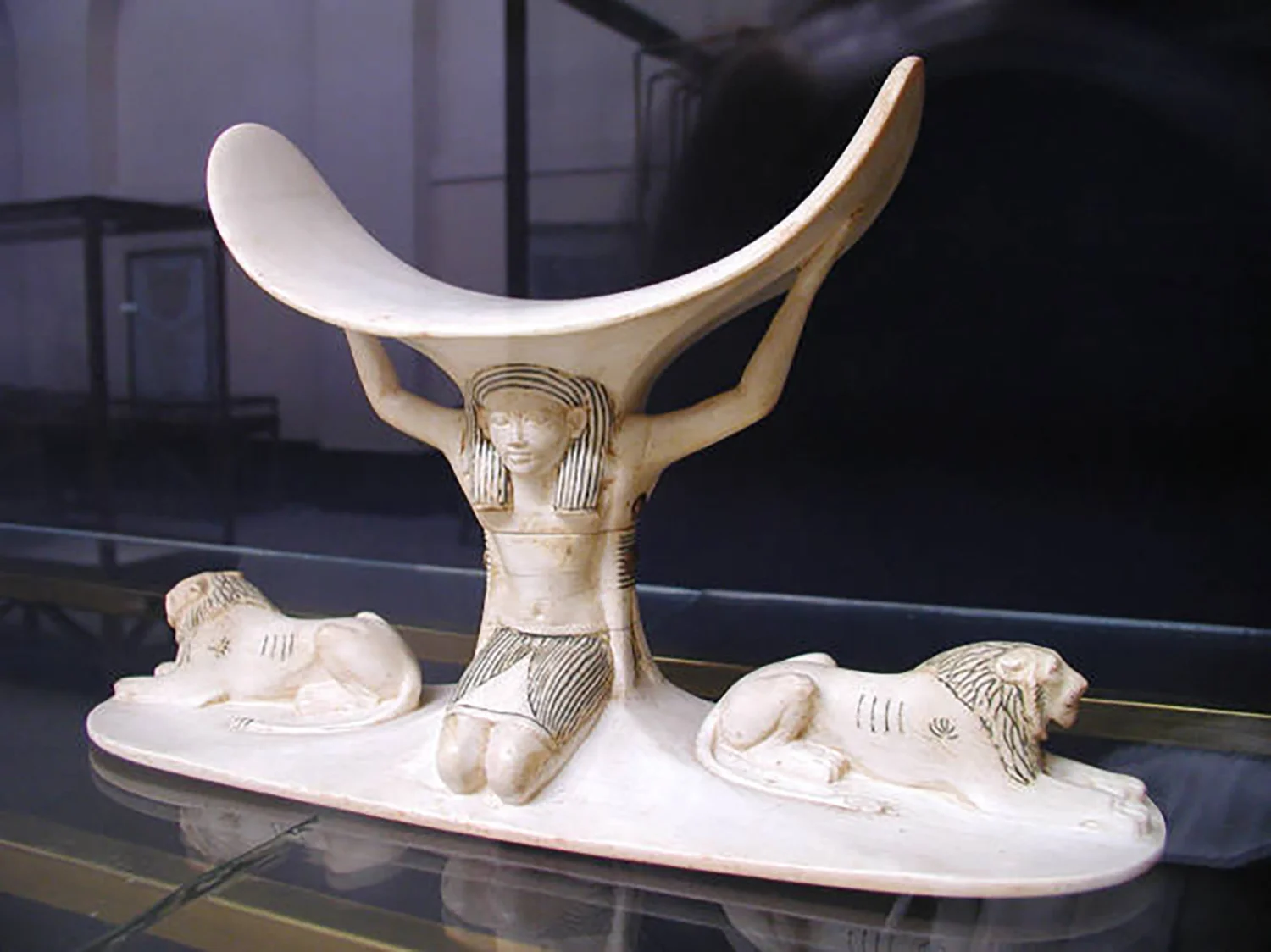
Long before soft mattresses, feather-stuffed cushions, and ergonomic memory foam became symbols of comfort, people adapted to sleep in ways that reflected their environment, beliefs, and technology. In the case of ancient Egypt, sleep was not merely a physical necessity but a deeply spiritual act. The civilization that built pyramids, preserved bodies for eternity, and filled tombs with objects for the afterlife also approached something as simple as a pillow with symbolic seriousness. Instead of fabric or stuffing, the Ancient Egyptians rested their heads on curved slabs of stone, wood, or ivory. To modern eyes, this seems harsh and uncomfortable. Yet in the worldview of ancient Egypt, it made perfect sense.
For the Egyptians, the head was not just another part of the body. It was considered the seat of spiritual life, identity, and divine connection. Protecting it during sleep was essential. As a result, what we call a “pillow” was designed not for softness but for support and spiritual safeguarding. These headrests, carefully shaped with a curved top and a stable base, were practical objects with profound meaning. To understand why stone could serve as a pillow, we must step into the climate, religious framework, and daily life of Ancient Egypt.
Sleep and Spiritual Beliefs in Ancient Egypt
In ancient Egyptian belief, sleep was closely connected to death and rebirth. Each night symbolized a temporary descent into a vulnerable state, much like the journey of the sun god Ra through the underworld. Just as Ra emerged renewed each morning, a sleeping person awakened restored. This cyclical understanding of existence shaped many aspects of daily life, including how Egyptians approached rest.
The head, in particular, held deep symbolic importance. It was associated with consciousness, identity, and the spiritual essence of a person. In funerary texts, the preservation and protection of the head were essential to ensuring successful passage into the afterlife. The concept of the “ba,” often depicted as a bird with a human head, reflected the belief that part of the soul was intimately connected with the head’s identity and form. Protecting it was not simply about physical safety but spiritual continuity.
Because sleep was seen as a state of vulnerability, the Egyptians believed the head required elevation and safeguarding. The curved headrest served both purposes. By raising the head above the body, it may have symbolized awareness and protection, preventing harmful forces from interfering with the sleeper’s spirit. In tombs, headrests were often placed beneath the heads of mummies, demonstrating that even in death, the head required careful support.
This blending of practical design and spiritual meaning illustrates how everyday objects in ancient Egypt carried symbolic weight. What appears to modern observers as a hard, uncomfortable slab was, in its original cultural context, an object of reverence and necessity.
The Design and Materials of Egyptian Stone Pillows
The so-called “stone pillow” was not a flat slab but a carefully crafted headrest. Typically, it consisted of three parts: a sturdy base, a narrow vertical support, and a curved top where the head would rest. The curvature was designed to cradle the back of the head and neck, distributing weight while keeping the skull elevated. Though rigid, the shape suggests an understanding of ergonomic principles long before the term existed.
These headrests were made from a range of materials depending on the owner’s wealth and status. Common examples were carved from wood, while more elaborate versions were fashioned from stone such as limestone or alabaster. Wealthy individuals might own headrests made of ivory or decorated with intricate carvings and inscriptions. The material itself could carry symbolic significance, especially in funerary contexts where durability was essential.
The choice of hard materials may also have been practical. Egypt’s hot climate made soft, fabric-based pillows less suitable. A raised headrest allowed air circulation around the neck and head, potentially offering some relief from heat. Additionally, keeping the head elevated may have helped reduce exposure to insects or crawling pests during the night.
In tombs, headrests were often discovered alongside beds and other domestic items, suggesting that they were not merely symbolic but used in everyday life. Some surviving examples show signs of wear, indicating regular use rather than purely ceremonial placement. Their durability has allowed archaeologists to recover them in remarkable condition, providing insight into daily life thousands of years ago.
What stands out most is the consistency of design across centuries. The basic form of the Egyptian headrest remained largely unchanged, reflecting both cultural stability and confidence in its function.
Headrests in Daily Life and the Afterlife
The presence of headrests in both homes and tombs underscores their dual role in Egyptian society. In everyday life, they were part of standard bedroom furniture. Ancient Egyptian beds were typically raised wooden frames with woven supports, and the headrest completed the sleeping arrangement. Unlike modern bedding, which emphasizes softness and layers, Egyptian sleeping spaces were relatively simple.
However, it is in the funerary context that the headrest’s deeper meaning becomes most evident. Tombs often contained headrests placed carefully beneath the heads of mummies. This practice symbolized rebirth and resurrection. Some headrests were inscribed with protective spells intended to guard the deceased in the afterlife. Texts sometimes invoked divine protection, asking deities to safeguard the head and ensure successful awakening in the next world.
In the tomb of Tutankhamun, multiple headrests were discovered among the burial goods. Their presence reflected both practical and symbolic importance. They were not random objects but essential components of the journey beyond death.
The headrest could even be linked to specific myths. In certain religious texts, a headrest is described as lifting the head of the deceased, allowing them to breathe and awaken. This imagery reinforces the idea that elevation of the head represented restoration of life. Sleep and death were intertwined, and the headrest became a tool of transformation.
Thus, what may seem to modern sensibilities like an uncomfortable stone slab was, in its original cultural setting, a bridge between physical rest and spiritual renewal.
Rethinking Comfort: Ancient Perspectives Versus Modern Assumptions
It is easy to assume that a hard stone pillow must have been uncomfortable. Yet comfort is shaped by cultural expectation and habit. Ancient Egyptians were accustomed to firm surfaces, both in seating and sleeping. Their concept of rest did not necessarily align with the modern emphasis on plush softness.
Moreover, the design suggests that the Egyptians prioritized support over cushioning. The curved top supported the neck and skull in a stable position. Many modern orthopedic pillows aim to achieve a similar alignment, albeit with softer materials. The difference lies not in function but in texture.
Climate also influenced perceptions of comfort. In the heat of the Nile Valley, a cool stone surface may have been more refreshing than padded fabric. The elevated design promoted airflow and reduced perspiration around the head and neck. Practical considerations likely reinforced spiritual ones.
When viewed through the lens of cultural relativism, the Egyptian headrest appears less strange and more ingenious. It fulfilled environmental, spiritual, and ergonomic needs simultaneously. It also highlights how material culture reflects belief systems. For the Egyptians, safeguarding the head was paramount. The headrest embodied that priority in physical form.
The survival of these objects in museums today invites reflection on how different societies define comfort, protection, and care. What seems austere to us may have been reassuring to them.
The use of stone and wooden headrests by the Ancient Egyptians belongs to the Ancient period of history. It reflects the religious worldview, environmental adaptation, and craftsmanship of one of humanity’s earliest great civilizations.
Research and further reading
For readers who want to verify details or continue researching this subject, these external reference collections provide useful starting points: