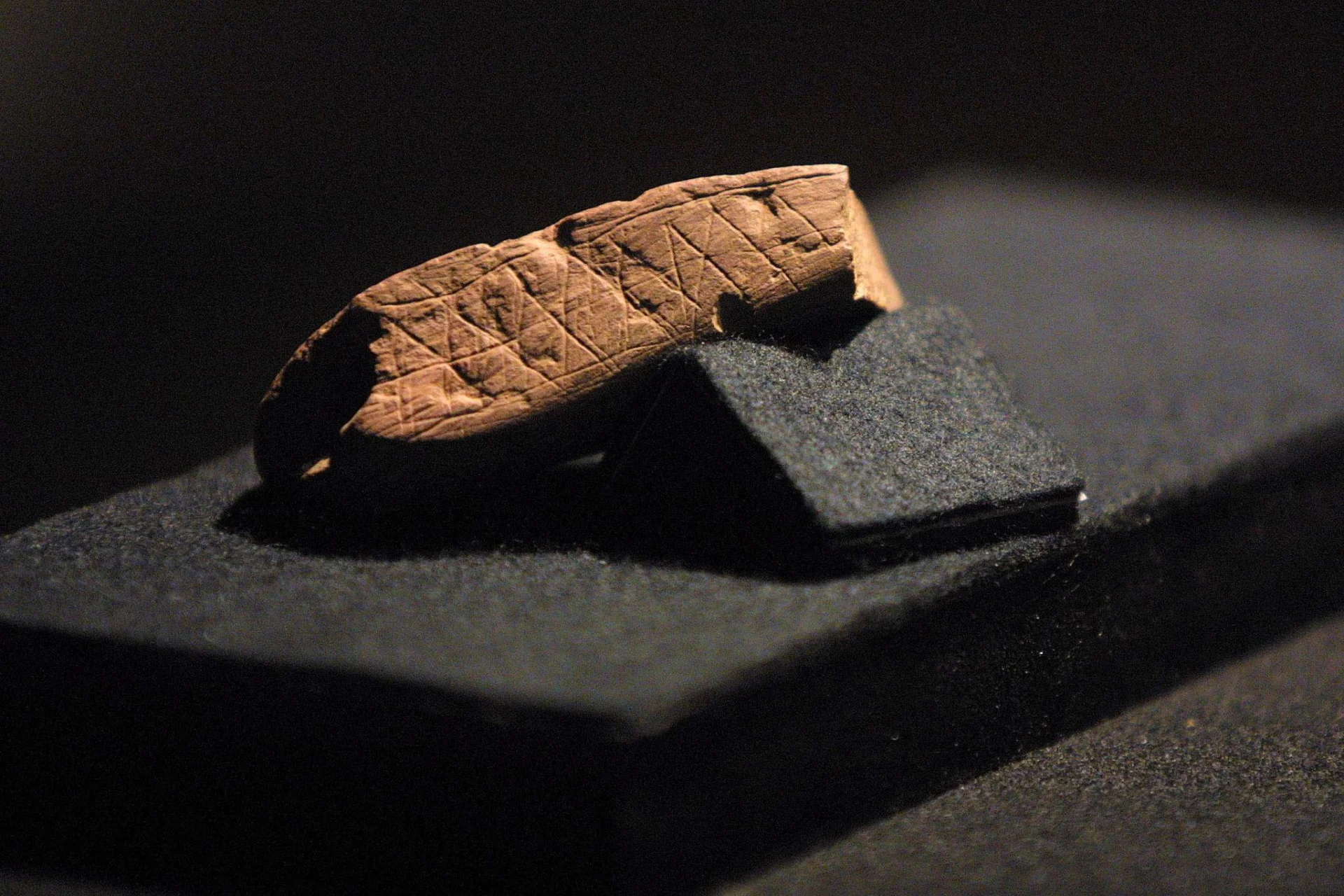
The search for the “first artwork” does not produce one universally accepted date because archaeologists distinguish between pigment preparation, engraved symbols, portable objects, figurative images and deliberate drawings. Blombos Cave in South Africa has produced ochre-processing evidence around 100,000 years old and engraved designs of similar antiquity, while a cross-hatched drawing on stone from the site is younger. These finds are important evidence for early symbolic behavior, but describing any single one as definitively “the first artwork” goes beyond what the archaeology can prove.
Among the most remarkable discoveries are cave paintings in what is now France, where some of the oldest known figurative artworks were found. These discoveries transformed our understanding of early humanity. They proved that long before civilization, humans were already symbolic thinkers capable of imagination, planning, and creative storytelling. Art, it seems, is not a recent luxury but a deeply rooted human instinct.
The Origins of Art: Early Symbolic Expression Around 100,000 Years Ago
The story of the first artworks begins not in Europe, but in Africa. Archaeological discoveries in sites such as Blombos Cave have revealed engraved pieces of ochre dating back approximately 100,000 years. These ochre fragments bear cross-hatched patterns that appear intentional rather than accidental. While simple in appearance, they represent a crucial step in human development: the ability to create abstract symbols.
These early markings were made by Homo sapiens during the Middle Stone Age. The engravings do not depict animals or landscapes; instead, they consist of geometric lines and patterns. This suggests that early humans were experimenting with symbolic communication long before the dramatic cave paintings of Europe. Some archaeologists believe these designs may have carried social or spiritual meaning, possibly serving as identifiers, ritual symbols, or early forms of expression tied to group identity.
In addition to engraved ochre, researchers have uncovered perforated shell beads from similar periods. The careful drilling and use of these beads indicate personal adornment, another sign of symbolic behavior. Wearing decorative objects suggests awareness of social signaling and aesthetic appreciation.
These early findings challenge the once-popular belief that artistic expression suddenly “exploded” in Europe. Instead, evidence points to a gradual development of creativity rooted in Africa, spreading alongside human migration. By the time Homo sapiens reached Europe, they already possessed the cognitive foundation necessary for more complex artistic achievements.
The beginnings of art, therefore, are not confined to a single cave or continent. They represent a slow awakening of symbolic thought—a turning point in human evolution that allowed imagination to take visible form.
The Upper Paleolithic Revolution and the Rise of Cave Art
By the time of the Upper Paleolithic period, roughly 50,000 to 12,000 years ago, artistic expression had become far more elaborate. This era is often associated with a surge in creativity sometimes called the “Upper Paleolithic Revolution.” During this time, Homo sapiens began producing sophisticated cave paintings, carvings, and portable sculptures across Europe.
These artworks frequently depicted animals such as horses, bison, mammoths, and deer. The level of detail and dynamic movement in many of these images demonstrates keen observation and technical skill. Artists used natural pigments like charcoal, manganese, and ochre to create black, red, and yellow hues. Some paintings were enhanced by the contours of cave walls, cleverly integrating natural rock shapes into the composition.
Hand stencils are among the most haunting images from this era. Created by placing a hand against the wall and blowing pigment around it, these prints are direct imprints of individuals who lived tens of thousands of years ago. They provide an almost intimate connection to our ancestors, reminding us that these were real people with thoughts, fears, and aspirations.
The purpose of these paintings remains debated. Some scholars propose that they were connected to hunting rituals, while others suggest spiritual or shamanistic meanings. Regardless of their exact function, the paintings demonstrate advanced cognitive abilities. Creating them required planning, cooperation, and a shared symbolic language within communities.
This flourishing of art marks a defining stage in human history. It reflects not just technical ability but imagination—the capacity to represent the world symbolically and perhaps even to transcend it.
The Oldest Known Artworks in France
Some of the oldest known figurative cave paintings were discovered in Chauvet Cave in southern France. Discovered in 1994, Chauvet Cave contains artwork dating back approximately 36,000 years. These paintings are remarkable not only for their age but also for their extraordinary sophistication.
Inside the cave, artists depicted lions, rhinoceroses, bears, and other animals with impressive realism and motion. In some cases, multiple overlapping outlines suggest attempts to convey movement. The shading techniques and perspective indicate an advanced understanding of visual representation far earlier than previously assumed.
The discovery of Chauvet Cave forced historians to reconsider earlier timelines. Before its discovery, many believed artistic sophistication developed gradually over thousands of years. Instead, Chauvet revealed that highly skilled artists were already active near the beginning of the Upper Paleolithic in Europe.
The cave’s location deep underground suggests that these paintings were not casual decorations. Reaching the chambers would have required torches and deliberate effort. This implies that the act of painting may have been ceremonial or spiritually significant. The cave itself may have functioned as a sacred space.
Chauvet is not the only site in France with ancient art, but it remains one of the oldest and most striking examples. It stands as powerful evidence that early Homo sapiens were capable of artistic brilliance long before recorded history.
Why Early Art Matters for Understanding Humanity
The existence of artwork dating back tens of thousands of years fundamentally changes how we understand human evolution. Art is more than decoration; it reflects imagination, communication, and abstract thinking. These qualities distinguish Homo sapiens from earlier hominin species.
The ability to create art suggests complex language, social cooperation, and shared belief systems. Painting animals on cave walls required not only technical skill but also symbolic intent. It implies that early humans could think beyond immediate survival and express ideas visually.
Moreover, art may have strengthened group identity. Shared symbols and rituals could reinforce bonds within communities, aiding cooperation and survival. In this sense, creativity may have played a direct role in the success of Homo sapiens.
The caves of France and the engraved ochre of Africa form chapters in the same story. They reveal a species increasingly aware of itself and capable of reflection. Art became a bridge between the physical world and the inner life of the mind.
The first known artworks, emerging around 100,000 years ago and flourishing during the Upper Paleolithic era, belong to the Ancient period of history—specifically prehistoric antiquity. They represent the dawn of symbolic culture and mark one of the most profound turning points in human development.
Key sources used for this review
Research and further reading
For readers who want to verify details or continue researching this subject, these external reference collections provide useful starting points: