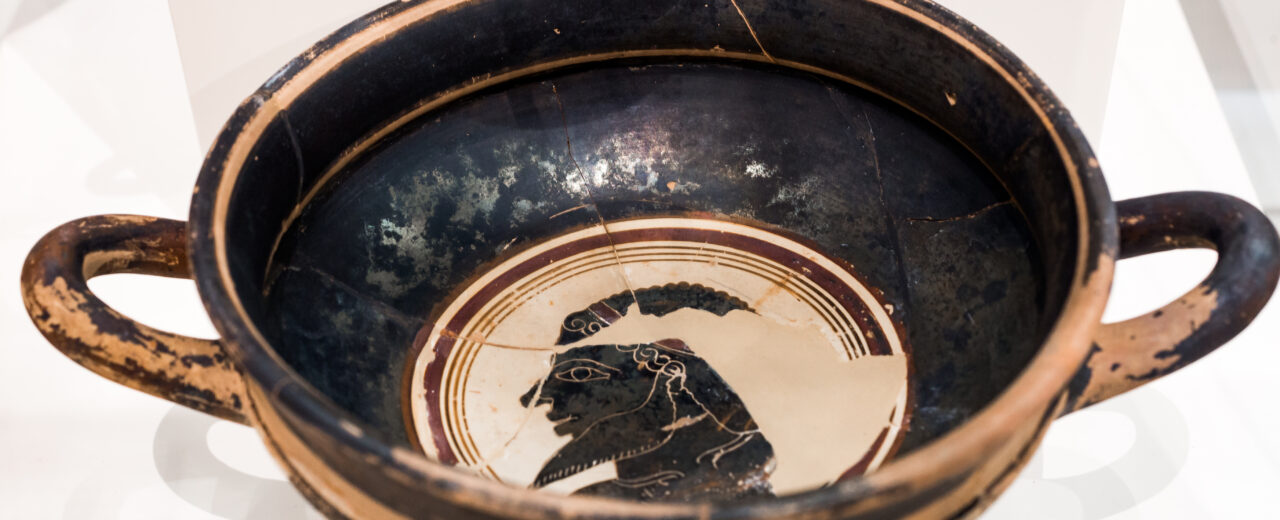
Naukratis archaeology is a revealing historical subject because it opens a clear path into the people, events, and wider changes that shaped its era.
For centuries, Naukratis sat half in history and half in legend: a Greek city in Egypt known from ancient writers, then blurred by time, floodplain mud, and the shifting channels of the Nile. It was one of those places that sounded important on paper, yet seemed frustratingly elusive on the ground. Then archaeology began to change the story. What excavators once thought was a modest, worn-out settlement turned out to be the remains of a major commercial gateway, a place where Greek settlers, Egyptian authorities, and merchants from across the Mediterranean negotiated daily life through trade, ritual, and compromise. The real breakthrough came not just from digging walls and pottery, but from rethinking the landscape itself—especially the harbor that linked Naukratis to the river and made the city function as a port. In the process, Naukratis has become one of the clearest examples of how archaeology can rescue a forgotten city from the edge of visibility and reveal the scale of ancient connectivity.
The first Greek city in Egypt and its place in a changing world
Naukratis was founded in the seventh century BC, at a moment when Egypt was opening selectively to foreign merchants and Greek communities were expanding across the Mediterranean. Its significance rests on a simple but remarkable fact: it was the earliest known Greek settlement in Egypt, and it was not merely a cluster of traders camping on foreign soil. It became an organized place of exchange, with structures, dedications, and a civic identity shaped by contact between two powerful cultural traditions. Greeks did not simply arrive and leave; they built a community that had to function within Egyptian political realities and alongside Egyptian institutions.
The city’s role was tied to movement—of people, amphorae, metal goods, fine wares, religious objects, and ideas. Naukratis sat in the western Nile Delta, a region whose waterways made it a practical meeting point between inland Egypt and the wider sea-lanes of the eastern Mediterranean. This was not a random frontier outpost. It was a strategically valuable node in a network of controlled trade, where access could be granted, managed, and taxed. The city’s importance, then, was not just commercial. It was diplomatic and cultural too. Naukratis embodied the ancient world’s tendency to turn border zones into places of connection rather than simple separation.
That is why archaeologists have long treated Naukratis as more than an isolated site. It helps explain how Greeks, Egyptians, Phoenicians, and others interacted in practice rather than theory. The city offers a view into the messy realities of trade regulation and accommodation, where exchange depended on local authority as much as merchant ambition. For readers interested in how archaeology reveals hidden contact zones, Naukratis belongs in the same broad conversation as other transformative discoveries such as the Tikal LiDAR discovery, which also showed how much more complex ancient landscapes could be once the right methods were applied.
What 19th-century excavators found—and what they missed
Naukratis entered modern scholarship through the efforts of 19th-century excavators who were already aware that they were standing on an important site. Yet their work, limited by the techniques and assumptions of the time, only partially captured what was really there. Early explorers uncovered inscriptions, pottery, and the remains of Greek sanctuaries, and these finds strongly encouraged the idea that Naukratis was primarily a religious and artistic colony. That interpretation was understandable: inscriptions and dedications were visible, impressive, and clearly Greek in character. But focusing on the most durable and easily recognizable material created a distorted picture of the city. The excavators saw a place defined by temples and imported objects, not a sprawling commercial landscape.
Part of the problem was the nature of the site itself. Naukratis had been reshaped by flooding, agriculture, and centuries of deposition in the Nile Delta. Buildings were not preserved in neat stratigraphic layers like those at some Mediterranean sites. Instead, the remains were fragmented, scattered, and sometimes deeply buried or eroded. Early excavation also tended to privilege artifacts that could be removed and classified over larger landscape questions such as where the city began and ended, where boats landed, and how water channels changed over time. In effect, archaeologists were looking at a city through a keyhole.
That older picture mattered, though, because it set the stage for later correction. The idea of Naukratis as a Greek enclave had enough truth to endure, but it was incomplete. Later scholarship, drawing on better mapping, excavation, and artifact analysis, showed that the settlement was not just a sacred or symbolic outpost. It was much bigger and more economically integrated than the first generation of excavators had realized. This shift in understanding is a good reminder that archaeology is often a process of revision rather than simple discovery. The past does not stay fixed; our access to it changes as methods improve. In that sense, Naukratis is a classic case study in how archaeology can overturn a long-standing narrative while still preserving the value of the earliest finds. Readers interested in enigmatic ancient objects and the limits of interpretation may find a similar tension in studies like the Phaistos Disk: The and the enduring mystery of, where evidence and interpretation remain in constant dialogue.
Finding the harbor: archaeology beneath the mud of the Delta
The most dramatic recent change in our understanding of Naukratis came from identifying its harbor. This was not a matter of simply locating a dock with a few stones still in place. In the Delta, harbors are often archaeologically difficult because rivers move, silt builds up, channels shift, and the ancient shoreline disappears under later deposits. At Naukratis, the harbor was effectively lost to time and geography, which is exactly why its rediscovery mattered so much. Once archaeologists began using broader landscape approaches, it became possible to reconstruct the relationship between the city and the riverine environment that sustained it.
British Museum-led research has been especially important here. Rather than treating Naukratis as a closed urban site, the project examined how the settlement related to the surrounding waterways and transport routes. The harbor was central to this effort, because without a functioning river access point Naukratis could not have operated as the commercial hub ancient evidence suggests. Archaeological investigation helped show that the city was organized around movement by water, with the harbor linking Nile traffic to overland and maritime exchange. In other words, the harbor was not a secondary feature. It was the engine of the city’s economy.
This discovery also broadened the known layout of Naukratis itself. The city was not just the patch of ground where early excavators happened to dig. It extended beyond previously recognized limits, with activity areas, deposition patterns, and structural traces indicating a far more extensive settlement. That broader footprint matters because it changes the scale of the story. Naukratis was not a minor enclave on the edge of Egyptian life; it was a substantial, organized place where trade was structured by physical infrastructure and by the management of access. Archaeology, in this case, did what written sources could not: it restored the city’s relationship to its environment. If you want another example of archaeology reshaping battlefield and landscape understanding through careful analysis, the Tollense Valley battlefield offers a useful parallel in how terrain can redefine historical interpretation.
Trade, regulation, and the everyday life of a cosmopolitan port
Naukratis was more than a place where ships unloaded cargo. It was a controlled interface between political systems and merchant communities, which is why trade regulation is so central to its history. Ancient Egypt did not simply absorb Greek presence passively; it managed it. Goods moving through Naukratis were part of a wider framework in which foreign commerce could be encouraged, supervised, and channeled. That made the city a laboratory for studying the rules and habits that governed ancient exchange. Pottery distributions, imported materials, and inscriptions together suggest a community deeply involved in routine commercial life, but never entirely outside state oversight.
The archaeology of Naukratis also points to people, not just products. Traders, craftsmen, ship crews, officials, and worshippers all intersected in this urban setting. Some may have stayed for long periods, while others passed through seasonally or as part of repeated commercial circuits. The city would have been filled with multilingual interaction, practical bargaining, and the negotiation of social boundaries. In such a place, even simple objects become evidence of wider systems. Amphorae imply storage and transport; fine ceramics imply taste and exchange networks; dedications to gods imply that foreign communities adapted their religious practices to local circumstances.
That blend of commerce and ritual is one reason Naukratis remains so valuable to archaeologists. It demonstrates that ancient trade was never purely economic. It also carried identity, piety, and legal structure. A merchant city in the Nile Delta had to be legible to both Greeks and Egyptians, which meant its material culture reflected layered affiliations rather than a single national identity. Naukratis is therefore not only a story about Greece in Egypt. It is a story about how ancient globalization worked at human scale: through harbor activity, warehouse logic, administrative control, and everyday social contact. The city’s finds help explain how the Mediterranean world became more interconnected without becoming culturally uniform.
Why Naukratis still matters to archaeology and discovery today
Naukratis matters because it shows how archaeology can transform a familiar ancient name into a much richer historical landscape. For a long time, the city was known mainly from classical references and the most visible artifacts collected in early excavations. Now it is understood as a larger, more dynamic settlement shaped by river traffic, commercial regulation, and cross-cultural negotiation. The harbor identification was crucial because it grounded the city in movement and infrastructure rather than in temple remains alone. That shift changes not just Naukratis, but the broader way we think about ancient port cities in general.
There is also a methodological lesson here. The work at Naukratis demonstrates the value of combining older excavation records with modern survey, spatial analysis, and artifact study. Archaeology is not simply about uncovering new things; sometimes it is about returning to known places with better questions. The results can be startling. A site once thought to be fairly limited can turn out to have a much larger settlement pattern and a more important role in regional exchange than anyone expected. That kind of discovery is part of what makes archaeology so compelling: the ground does not just preserve facts; it preserves possibilities that only careful interpretation can unlock.
In the end, Naukratis is compelling because it sits at the meeting point of commerce and culture, land and water, Greek and Egyptian worlds. Its harbor once carried goods, people, and ideas into and out of the Delta, and archaeology has now restored that function to historical memory. The city’s rediscovery reminds us that some of the most important ancient places are not the ones that survived intact, but the ones that had to be pieced back together from fragments. Naukratis was never truly gone. It was waiting beneath the mud, in the records, and in the patterns archaeologists eventually learned how to see.
Research and further reading
For readers who want to verify details or continue researching this subject, these external reference collections provide useful starting points: