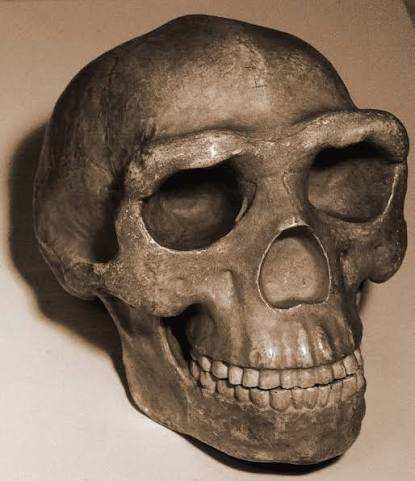
In the final weeks of 1941, some of the most important human fossils ever excavated disappeared in wartime China. The collection included skullcaps, jaws, teeth and limb bones from the site of Zhoukoudian, near Beijing. Packed for protection as conflict closed around the city, the specimens vanished before reaching any confirmed destination. No authenticated piece has surfaced since.
The missing Peking Man fossils are often said to have been handed to United States Marines for shipment to New York, only to be lost after Japan entered the Pacific War. That familiar account may be broadly correct. It is not, however, supported by an unbroken chain of documents. Recent archival research argues that the fossils may never have reached American hands at all.
The disappearance is more than a treasure hunt. Zhoukoudian helped establish that ancient humans had lived in East Asia deep in the Pleistocene, and the discoveries transformed the study of Homo erectus. The loss also exposes the vulnerability of scientific collections during war—and the ease with which repeated assumptions can harden into “fact” when the decisive evidence is gone.
What “Peking Man” actually means
Peking Man is the traditional English name for hominin remains found at Zhoukoudian, about 42 kilometres south-west of central Beijing. “Peking” reflects an older Western romanisation of the city’s name, while early scientific literature often rendered the site as Choukoutien. Neither label describes a single individual. The pre-war fossils represented many people who occupied the area at different times.
The remains were initially classified as Sinanthropus pekinensis, or “Chinese man of Peking.” Scientists later recognised close affinities with fossils from Java and placed the Zhoukoudian material within Homo erectus. The Smithsonian currently dates the relevant population broadly between about 780,000 and 400,000 years ago, while other institutional summaries use somewhat different ranges as dating methods and stratigraphic interpretations have changed.
It is also misleading to call Peking Man a direct, solitary “missing link” between apes and modern humans. Human evolution is branching, not a ladder of successive half-ape, half-human forms. Zhoukoudian preserves one important East Asian population within a much larger and still debated history of Homo erectus and later hominins.
From “dragon bones” to scientific excavation
Local people had long encountered fossil bones in the limestone landscape around Zhoukoudian. Such remains could be traded as “dragon bones,” a term used for fossils ground for traditional medicine. Scientific interest developed during a period when Chinese and foreign geologists were mapping the country and searching for evidence of ancient life.
In 1921 and 1923, the Austrian palaeontologist Otto Zdansky recovered two hominin teeth during work connected with the Swedish geologist Johan Gunnar Andersson. Zdansky published them cautiously. A further molar found by the Swedish palaeontologist Birger Bohlin in 1927 gave the Canadian anatomist Davidson Black material on which to name Sinanthropus pekinensis.
Naming a new genus from limited dental evidence attracted scepticism. The claims became far harder to dismiss on 2 December 1929, when the Chinese excavator Pei Wenzhong found the first largely complete skullcap at Locality 1. The discovery was an international sensation and a landmark for Chinese archaeology. It showed that the site could yield an extensive fossil population rather than a few isolated teeth.
The collection that vanished
Excavations through the 1930s produced an extraordinary sample. Published inventories differ slightly depending on how fragments are counted, but the missing material is commonly described as including five or six skullcaps, numerous cranial and facial fragments, more than a dozen mandibles, roughly 147 teeth and several limb bones. Together with later finds, the Zhoukoudian assemblage has been interpreted as representing more than 40 individuals.
The site also yielded great numbers of animal fossils and stone tools. Burned bone, dark deposits and other traces were interpreted as evidence that the hominins controlled fire. That claim was later challenged on geological and taphonomic grounds, with critics suggesting that some supposed ash or burned material had natural origins. Research since 2009 has strengthened the case for intentional fire use in at least part of Locality 1, but the old statement that Zhoukoudian supplied the world’s earliest unquestionable hearths is obsolete.
The importance of the discoveries lay not in one dramatic skull alone but in the scale of the sample. Multiple crania, jaws and postcranial bones allowed researchers to study variation within a population. In an era when the human fossil record was extremely sparse, losing such a collection was a scientific catastrophe.
An international project in a changing China
Zhoukoudian research combined Chinese institutions and scholars with foreign funding and expertise. The Geological Survey of China supervised the fossils, while the Cenozoic Research Laboratory operated in association with the Peking Union Medical College. The Rockefeller Foundation had built and supported the medical college, giving the project access to facilities uncommon in the region.
Davidson Black became the public face of the early research, but the discoveries depended on Chinese fieldworkers and scholars, especially Pei Wenzhong and later Jia Lanpo. After Black’s death in 1934, the German-born anatomist Franz Weidenreich led anatomical study of the fossils. His detailed descriptions, measurements, drawings and reconstructions would become crucial after the originals disappeared.
The history is sometimes told as Western scientists “discovering” a passive Chinese past. That oversimplifies a genuinely international project and understates Chinese leadership in excavation. It also ignores the unequal political and financial structures of the period. Zhoukoudian emerged from collaboration, but collaboration took place amid foreign privilege, nationalism and growing war.
Why casts became unexpectedly important
Weidenreich and his colleagues made high-quality casts of the major specimens. Casting was normal scientific practice, allowing researchers elsewhere to compare rare fossils without moving the originals. A first-generation reference set reached the American Museum of Natural History in New York in 1941.
Those replicas were not casual museum souvenirs. They recorded surface anatomy in fine detail, and Weidenreich’s publications documented the original bones from many angles. The combination of casts, photographs, drawings and measurements preserved a large part of the collection’s scientific information even when the fossils themselves were lost.
Replicas cannot replace originals. Modern methods such as micro-CT scanning can examine internal structures, while chemical and molecular techniques may answer questions no 1930s researcher could pose. A cast preserves shape but not original tissue, density, microscopic alteration or chemical history. Still, the foresight to make casts prevented the disappearance from erasing Peking Man entirely.
War closes around Beijing
Japanese forces had occupied Beijing, then widely called Peiping in foreign sources, after the outbreak of full-scale war in 1937. Excavation at Zhoukoudian stopped, but the fossils remained at the Peking Union Medical College. The institution’s foreign associations initially offered some protection, though no one could know how long that protection would last.
By 1941, war between Japan and the United States appeared increasingly possible. Japanese officials and officers had shown interest in the fossils, and staff feared seizure or destruction. Removing them deeper into China was discussed, but transport routes were dangerous. The formal agreement governing the collection also required that it remain in China.
A plan eventually emerged to send the fossils temporarily to the United States for safekeeping. According to later accounts, Chinese staff carefully wrapped the specimens and placed them in two wooden footlockers. The intended destination was the American Museum of Natural History. From this point, the evidence becomes much less secure than most retellings imply.
The standard story of the December 1941 shipment
The usual narrative says that the two cases left the medical college under U.S. Marine protection in early December. They were supposedly transported by train toward Camp Holcomb at Qinhuangdao, then often written Chinwangtao, a port east of Beijing. From there they were to be loaded aboard an American vessel and carried to the United States.
The timing was disastrous. Japan attacked Pearl Harbor on 7 December 1941, and Japanese forces moved against American positions across East Asia. The ship often connected with the rescue attempt, the SS President Harrison, never completed the supposed collection. It ran aground near the Yangtze while attempting a separate evacuation and was captured.
American Marines in northern China surrendered and became prisoners. The boxes did not arrive at the American Museum. After the war, searches at the medical college, military facilities, ports and in Japan failed to locate them. The simplest conclusion was that the cases had been lost or seized somewhere between Beijing and the coast.
Where the documentary trail breaks
The standard story rests heavily on recollections written years after the event. Accounts disagree over dates, routes, personnel and the point at which responsibility changed. Documents that later authors said should exist have not consistently been found in the relevant American archives. No surviving receipt conclusively records the U.S. military accepting the fossils.
A 2021 study in PaleoAnthropology re-examined the archival record and argued that there is no reliable evidence the cases ever reached American hands. The researchers identified a U.S. State Department document that, in their reading, makes transfer to the Marines unlikely. They urged historians to treat the standard shipment narrative as a hypothesis rather than an established chain of custody.
This does not prove that the fossils remained at the college or that every Marine-related memory was false. Wartime records can be lost, never created or deliberately vague. The important correction is narrower: the last securely documented location and the later assumed route are not the same thing.
The Japanese seizure theory
One enduring theory holds that Japanese troops confiscated the cases after taking over American and foreign facilities. The fossils were famous, and Japanese interest in them was known. They might have been sent to a museum, university, military office or private collection, only to be destroyed in bombing or lost during Japan’s defeat.
Post-war investigations found no verified trace in Japan. Claims that a particular ship carried the fossils and sank have likewise lacked a documented cargo record. The Awa Maru, torpedoed by an American submarine in 1945, is often mentioned in popular accounts, but no sound evidence places the Peking Man fossils aboard it.
Absence from surviving Japanese records does not make seizure impossible. It does mean the theory cannot be stated as fact. “Taken by the Japanese” often functions as a default explanation because Japan controlled Beijing when the fossils vanished, not because a receipt or eyewitness establishes the transfer.
Burial, shipwreck and private-collection theories
Other stories place the fossils beneath the former U.S. Marine barracks, under the grounds of an embassy, in a bank vault, aboard a sunken ship or in the possession of a soldier’s family. Each theory solves one problem while creating others. Burial could protect the cases from seizure, but no authenticated map marks a location. A shipwreck explains non-recovery, but only if the fossils can first be placed aboard the ship.
Private-possession stories have attracted particular attention because they offer the possibility of recovery. In the 1970s, a woman supplied a photograph said to show one of the missing skulls and then broke contact. Later analysis described the image as deceptive rather than evidence of the collection. No specimen in private hands has passed expert examination and provenance checks.
The multiplication of theories is itself evidence of how little is known. A plausible wartime scenario is not the same as a documented event. The fossils may have been destroyed, hidden, stolen, misidentified or dispersed. Without authenticated material or contemporary records, ranking possibilities must remain provisional.
The Camp Holcomb lead
In 2012, researchers published an investigation based on the recollection of former U.S. Marine Richard Bowen. Bowen said that while held prisoner in 1947 he saw a box containing bones buried near barracks at Camp Holcomb. The description and location appeared compatible with one version of the Peking Man route.
The team identified the former camp area near Qinhuangdao, but later construction had transformed the landscape. They concluded that excavation during future development might offer a slim chance of finding a buried footlocker. The report called the account credible and the location worth attention; it did not claim that the observed bones were certainly Peking Man.
The later archival critique challenged important parts of the Camp Holcomb scenario and argued that the fossils probably never reached the Marines. The two studies illustrate the difference between witness plausibility and corroboration. Bowen may have accurately remembered buried bones without those bones belonging to the Zhoukoudian collection.
What science could still learn from recovery
If genuine fossils resurfaced, identification would begin with comparison to Weidenreich’s casts, photographs, measurements and descriptions. Break patterns and distinctive anatomical details could connect a specimen to the pre-war catalogue. Sediment or old conservation materials might offer additional clues, though decades outside controlled storage would complicate analysis.
Originals would permit high-resolution imaging of internal structures unavailable from surface casts. Teeth could reveal enamel and dentine morphology, as post-war Zhoukoudian teeth have already done through micro-CT. Researchers might also investigate growth, pathology, taphonomy and the history of the cave deposits with tools unimaginable in 1941.
Recovery would not automatically yield ancient DNA. The age of the fossils and local preservation conditions make genetic survival uncertain, while handling and contamination would be major obstacles. Claims that finding the boxes would instantly “solve human evolution” exaggerate what any one collection can do. It would nevertheless restore an irreplaceable archive of East Asian prehistory.
How research continued without the originals
Work at Zhoukoudian resumed after 1949. New excavations recovered additional teeth, parts of jaws and limb bones, providing original material for modern study. A 2018 analysis used micro-CT to examine the internal structure of six post-war teeth and compare them with fossils from elsewhere in Asia, Africa and Europe.
The site’s importance also extends beyond the missing sample. Zhoukoudian contains multiple fossil localities, vast stone-tool collections and a long environmental sequence. It became a UNESCO World Heritage Site in 1987 because of its significance to human evolutionary research and the history of archaeology.
Like the spectacular finds at Sanxingdui, Zhoukoudian reshaped the archaeology of China while also becoming part of modern national memory. Its evidence belongs within a wider story of early human behaviour, including the difficult question of when symbolic activity emerged, explored in our article on the oldest known works of art.
Common myths about the Peking Man fossils
The fossils were not one complete skeleton, and they were not all destroyed at Zhoukoudian. They were a laboratory collection of remains from multiple individuals. Most pre-war originals disappeared in 1941, while casts, documentation and some material found before or after the main loss survived.
It is not confirmed that the United States Marines received the boxes. That is the central assumption of the standard story, now disputed on archival grounds. Nor is there proof that Japanese forces stole them, that they sank aboard a named ship or that they lie beneath a known building.
Finally, the loss did not make all Peking Man research impossible. Casts cannot answer every modern question, but they preserve anatomical information. Post-war discoveries provide original fossils, and Zhoukoudian itself remains an active archaeological archive. The disappearance is devastating, not scientifically absolute.
Conclusion: a mystery created by war and uncertain records
The confirmed history of the Peking Man fossils is already remarkable. Chinese and international teams excavated a large Homo erectus sample at Zhoukoudian, documented it in exceptional detail and packed the originals as wartime danger intensified. In December 1941, the collection disappeared. Every later reconstruction begins from that loss.
The familiar Marine shipment may describe what planners intended, but intention is not proof of completed transfer. Japanese seizure, burial at Camp Holcomb, shipwreck and private possession all remain possibilities rather than established outcomes. The most careful recent scholarship has made the mystery less cinematic but more historically honest: even the first step of the assumed journey may be uncertain.
What remains is a lesson in scientific preservation. Weidenreich’s casts and publications allowed research to continue, while renewed excavation ensured that Zhoukoudian was not reduced to an empty cave and a missing crate. The fossils may someday reappear. Until authenticated evidence does, their story should be told not as a solved wartime adventure, but as an open case bounded by documents, surviving replicas and the limits of memory.