Norse Greenland disappearance is a revealing historical subject because it opens a clear path into the people, events, and wider changes that shaped its era.
Few historical mysteries are as haunting as the disappearance of the Norse settlements in Greenland. For nearly five centuries, Viking-descended farmers, hunters, traders, and churchgoers carved out a life on the edge of the Arctic world. They built churches, raised livestock, traded with Europe, and adapted—sometimes stubbornly, sometimes creatively—to one of the harshest environments in the North Atlantic. Then, over time, they faded from the record. No dramatic conquest. No single catastrophe. Just an increasingly empty landscape, a thinning paper trail, and a set of clues that still invite argument more than certainty.
That is what makes the Greenland story so compelling. It is not merely about survival in a cold place; it is about how a society can flourish for generations and still become vulnerable to shifts in climate, trade, culture, and politics that seem small at first and then suddenly become overwhelming. The end of the Norse presence in Greenland remains one of history’s most enduring puzzles, standing alongside other enigmas where the evidence is tantalizing but incomplete, much like SS Baychimo: the Arctic ghost ship that vanished. To understand what happened, we need to trace the Norse rise, their economic lifelines, the pressures of the Little Ice Age, and the archaeological evidence that suggests they were not simply destroyed so much as slowly outlasted by changing circumstances.
The Norse Founding of Greenland and the Promise of a New Frontier
The story begins with Erik the Red, the famously exiled Icelandic settler whose name alone seems destined for saga literature. Around the late tenth century, Erik led a group of colonists westward to Greenland after conflicts and legal troubles in Iceland. The name “Greenland” has often been treated as a cynical bit of marketing, but it likely also reflected a practical truth: the southwestern coast did offer enough pasture in its warmer seasons to support farms, and the surrounding waters held resources that could be turned into wealth. For a people already experienced in marginal farming and maritime travel, Greenland was not a paradise, but it was not an impossible place either.
Over time, the Norse established two main settlement zones: the larger Eastern Settlement in the south and the smaller Western Settlement farther north and west. These communities were not tiny isolated camps. At their height, they may have supported several thousand people across hundreds of farms. Churches were built, bishops eventually arrived, and Greenland became integrated into the wider Norse world. The settlers brought their European farming habits with them, raising cattle, sheep, and goats while also relying on hunting and marine resources. This blend of pastoral life and Arctic adaptation was the key to their early success.
Yet from the beginning, Greenland was a place that required constant negotiation with nature. The growing season was short, the winters severe, and transport across the North Atlantic was unreliable. The Greenland Norse depended on sea lanes to maintain their connection to Iceland, Norway, and the rest of Europe. That connection was not merely cultural. It was economic, political, and spiritual. Without imported goods, especially timber and iron, the settlements could not easily sustain themselves. Without exports, they could not pay for the prestige and necessities that tied them to Europe. Their existence depended on being both remote and connected, a balance that would become harder to maintain as the centuries passed.
Walrus Ivory, Trade, and the Fragile Wealth of the Settlements
One of the most important reasons the Greenland Norse endured for as long as they did was trade. Greenland was poor in many conventional agricultural terms, but it possessed a valuable export: walrus ivory. In medieval Europe, ivory was prized for luxury objects, religious art, and elite display. Greenland’s walrus herds became a substitute source after access to elephant ivory was limited or more expensive. The Norse economy in Greenland was therefore not simply one of survival; it was part of a sophisticated commercial network that linked Arctic hunting to European demand.
Archaeological evidence shows that walrus ivory played a major role in sustaining the settlements, and the trade likely helped fund imports such as iron, wood, and perhaps grain. Timber, in particular, was vital. Greenland had limited trees suitable for large construction and shipbuilding, so imported lumber was precious. This created a dependency that grew more acute over time. The Norse were not just farming in Greenland; they were living in a place whose basic infrastructure relied on outside supply. When trade worked, the settlements could remain resilient. When it faltered, the whole system became more fragile.
The economy also reveals something important about the Greenland Norse mindset. They did not abandon their European identity and become wholly Arctic in orientation. Instead, they continued to participate in a status-driven Atlantic world. Churches, elite households, and imported goods signaled that Greenland was part of Christendom, not a forgotten frontier. Yet that same attachment may have limited their flexibility. If the settlements had leaned more heavily into fully marine subsistence or traded more extensively with Inuit neighbors, could they have survived longer? Historians debate this, and the answer is not simple. Still, the economic model clearly depended on a delicate combination of local adaptation and long-distance exchange.
When that exchange weakened, the Greenland Norse lost more than commerce. They lost access to the materials that made their way of life possible. In an environment where every resource was already scarce, the loss of imported timber and iron was not a minor inconvenience. It was structural pressure. A society can survive lean years if its foundations are flexible, but the Greenland settlements were tied to a network that became less dependable over time. Their disappearance was not caused by trade alone, yet trade was the thread that held much of the system together.
Climate Cooling, Sea Ice, and the Growing Hardship of Arctic Life
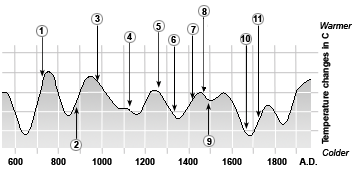
Climate is central to any serious explanation for the vanishing of the Greenland Norse. Beginning in the late medieval period, the North Atlantic entered a phase of cooling often associated with the Little Ice Age. The effects were not uniform from year to year, and scholars caution against reducing the story to “it got colder, so they left.” But even gradual climate change can have major consequences in a marginal farming society. Shorter summers would reduce hay production, and hay was essential for feeding livestock through the winter. More sea ice could make travel harder, interrupt trade, and complicate hunting and communication between settlements.
There is evidence that environmental conditions became increasingly difficult. The Western Settlement appears to have been abandoned earlier than the Eastern Settlement, possibly because it was more vulnerable to worsening climate and shifting ice conditions. As sea routes became less reliable, the settlements were less able to receive timber and iron and less able to export ivory efficiently. At the same time, pastoral farming became riskier. If winters were harsher or summers less productive, livestock mortality would rise and the ability to maintain large herds would diminish.
What is particularly striking is that the Greenland Norse did not live in a static environment. They had already adapted to Arctic realities in the centuries before their disappearance. They hunted seals, used marine resources, and adjusted parts of their economy to local conditions. But adaptation has limits. A society that depends on both farming and trade can be stretched beyond capacity when both systems are pressured at once. Climate cooling did not act alone; it compounded existing fragilities. That is one reason the end of the settlements is so difficult to pin to a single cause.
There is also a psychological dimension to environmental change. When a landscape becomes less predictable, the cost of every decision rises. Do you risk a voyage through sea ice? Do you spend scarce hay on cattle or reserve it for sheep and goats? Do you maintain traditions that bind you to your European identity, or do you change faster? These are not abstract questions. They would have shaped daily life. The Greenland Norse may not have experienced “collapse” as a single event, but as a long series of worsening winters, longer journeys, and narrower margins. In that sense, the story of Greenland is less like a sudden disappearance and more like a slow tightening of the walls.
Dietary Change, Inuit Contact, and the Limits of Adaptation
Archaeology offers some of the most revealing evidence about the final centuries of Norse Greenland. One of the clearest findings is a shift in diet. Early settlers relied heavily on livestock, just as they would have in Iceland or Norway, but later remains indicate increased consumption of marine foods, especially seals. This suggests that the Norse were adapting to their environment more than once thought. They were not rigidly frozen in a European farming ideal. They were responding to pressures by using more of the resources around them.
Still, adaptation has to be understood carefully. A change in diet does not necessarily mean a successful transformation. It may instead indicate stress. If a community moves from a mixed farming economy toward greater dependence on marine hunting, that can be a sign that its traditional system is becoming harder to sustain. The Greenland Norse may have become more flexible, but not enough to fully overcome their structural vulnerabilities. Their adaptation was real, yet it may have come too late or been too constrained by social expectations and economic dependence.
The role of Inuit contact is another major part of the discussion. The Thule Inuit arrived in Greenland with technologies and lifeways ideally suited to Arctic conditions, including sophisticated hunting equipment and mobility strategies. The question is whether Norse and Inuit communities interacted substantially, and if so, why Norse society did not adopt more Inuit-style adaptations. The evidence suggests some contact, but not a full cultural blending. The Norse may have maintained a strong boundary between themselves and the Inuit, shaped by identity, religion, and social hierarchy. That boundary may have limited their ability to learn from people whose Arctic expertise was unmatched.
This is one of the most human aspects of the mystery. History is often shaped not by what people could theoretically do, but by what they were willing to do. The Greenland Norse may have had access to survival strategies they did not fully embrace. Their choices were influenced by values as much as environment. In that sense, their disappearance belongs in the same category as other historical enigmas where behavior, fear, and culture complicate the evidence, much like the unresolved tension surrounding the Dyatlov Pass incident. Greenland’s ending may not be mysterious because no clues exist, but because the clues point to a society caught between habit and necessity.
The Hvalsey Record and the Quiet End of the Norse World
Among the last known traces of Norse Greenland is the famous Hvalsey wedding record of 1408, often treated as the final datable event in the Eastern Settlement. It comes from an Icelandic source describing a marriage held at Hvalsey Church, a poignant reminder that organized Norse life still existed in Greenland at the beginning of the fifteenth century. But the record tells us only so much. It is not a death notice for the settlements, nor does it reveal exactly how long people continued to live there afterward. It simply shows that there were still Norse communities active enough to celebrate a formal wedding and maintain ties with the wider North Atlantic world.
What makes Hvalsey so haunting is precisely its ambiguity. It stands like a marker at the edge of certainty. After that, the written evidence grows thinner and thinner. There are reports of intermittent contact and a few later references, but the documentary trail fades. The last Norse Greenlanders may have died out, moved away, or been absorbed in ways the sources never capture. No single dramatic endpoint was preserved by history. Instead, the settlements seem to have vanished into silence.
Why, then, did they finally disappear? The best answer is that no one cause is sufficient. Climate cooling made farming and travel more difficult. Sea ice disrupted trade and communication. The economy depended on exports that may have become less profitable over time. Imported timber and iron grew harder to obtain. Social and cultural commitments may have slowed adaptation. Contact with the Inuit offered alternatives, but perhaps not enough overlap to create a full solution. In the end, the Norse settlements were likely undone by cumulative pressure, not one fatal blow.
That is what makes this story endure in the historical imagination. The Greenland Norse did not vanish like a legend, yet their disappearance feels legendary because it resists a neat ending. They lived for centuries at the far edge of the known world, then slipped out of view as the conditions sustaining them changed. We can reconstruct much, but not everything. And perhaps that is fitting. Greenland’s Norse settlers remind us that history is full of civilizations that seem stable until the balance shifts. Their fate was not supernatural or inexplicable in a narrow sense, but it remains mysterious in the deepest sense: a human world that once existed, fully real, and then was gone.
In the end, the disappearance of the Norse settlements in Greenland is a story about resilience tested beyond its limits. It is about ambition, adaptation, trade, climate, and identity. It is also about the fragility of societies that depend on a narrow margin of success. The Norse did not simply “fail” to survive; they inhabited a world that changed around them faster than their institutions could cope. That is why the mystery still matters. It is not only a question of what happened in Greenland. It is a question of how any society endures when the environment, economy, and culture begin to pull in different directions.
Research and further reading
For readers who want to verify details or continue researching this subject, these external reference collections provide useful starting points: