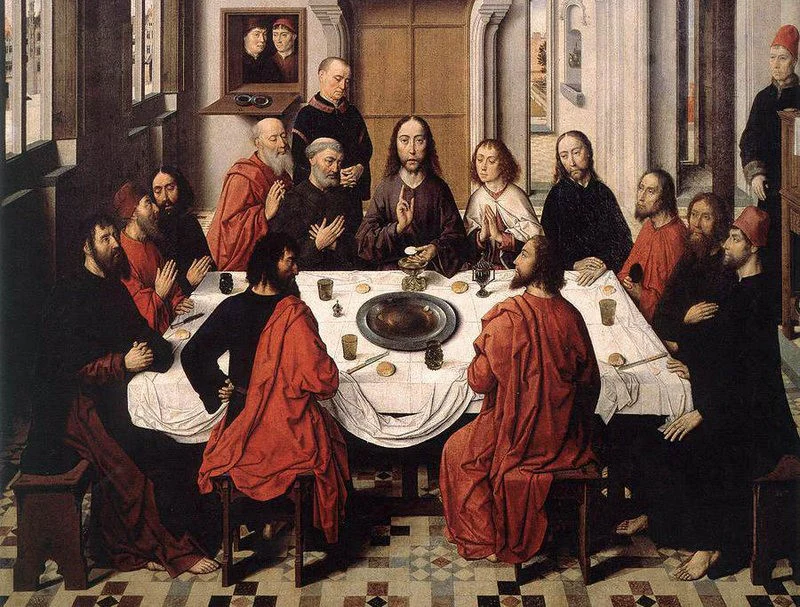
At first glance, the modern tablecloth seems like the very symbol of cleanliness, order, and polite dining. It protects the table, frames the dishes, and signals that a meal is meant to be enjoyed in a refined setting. Yet this gentle, hygienic image hides a startling truth from its earliest history. When tablecloths first appeared in European dining culture, they were not designed primarily to protect tables at all. They were meant to be wiped on. Hands, faces, greasy fingers, sauce-smeared mouths—everything went onto the cloth. The tablecloth was, in its original social function, one massive, communal napkin shared by every diner at the table. This practice, which feels almost unimaginable by modern standards, reveals a radically different understanding of hygiene, etiquette, and the body in the medieval and early modern world. To understand why people once cleaned their faces on the table itself, we must step into a time before individual napkins, before modern sanitation, and before the idea that dining was meant to be visually spotless.
Dining Before Napkins: The World That Created the Communal Tablecloth
Long before the widespread use of personal napkins, medieval dining operated according to very different assumptions about cleanliness and social behavior. In much of Medieval Europe, meals were loud, physical, and profoundly messy events. People ate with their hands as the primary tool. Knives existed, but forks were rare and slow to gain acceptance. Spoons were used mostly for broths and porridges. For solid food—meat, bread, cheese, vegetables—fingers ruled the table.
In this environment, grease, sauces, and crumbs were not social embarrassments. They were inevitable. Wealthy feasts featured roasted animals, thick gravies, and rich fats that coated hands within moments. Cleaning oneself was necessary, but personal cloths were rare and costly. Linen production required significant labor, and individual napkins were not yet widespread household items.
The tablecloth solved multiple problems at once. It covered and protected expensive wooden tables from damage caused by knives, heat, and spilled wine. At the same time, it provided a large, absorbent surface where diners could wipe their hands and mouths as needed throughout the meal. This dual function made it indispensable. The cloth was not meant to remain pristine. Its dirtiness served as proof that the feast had been enjoyed.
This communal use also reflected how medieval society understood the human body. Bodily fluids, grease, and sweat were part of visible daily life. Public bathing still existed in many regions. People worked physically and ate communally. The strict separation between “clean” and “dirty” that governs modern etiquette had not yet hardened into law.
Most importantly, dining itself was a collective experience. Feasts were social performances where abundance and generosity mattered more than visual order. A heavily stained tablecloth at the end of a banquet signaled success. It meant people had eaten well and without restraint. Cleanliness, in the modern sense, was not yet the goal. Participation was.
How the Communal Tablecloth Was Actually Used at Feasts
The idea of wiping one’s face on the tablecloth sounds extreme today, yet to medieval diners it was both practical and normal. At the start of a meal, the cloth was clean and bright. As dishes progressed, it gradually transformed into a record of the feast itself. Grease streaks from roasted meat, wine stains from spilled cups, sauce smears from thick stews—all accumulated over hours of eating.
Guests wiped their fingers whenever they felt the need, often casually reaching forward and dragging their fingertips across the edge of the cloth. Mouths were cleaned the same way. In some settings, diners used the cloth more politely by selecting a section directly in front of their place. In others, the wiping was more indiscriminate. Either way, no one expected the cloth to remain visually pure.
Illuminated manuscripts, banquet illustrations, and household account books all confirm this function. Artistic depictions show guests wiping their hands on the table’s front edge. Literary sources describe tablecloths being laundered after meals in ways that imply heavy soiling. The cloth was not a gentle background element. It was an active tool in the eating process.
Certain codes of etiquette did exist. While wiping grease on the cloth was acceptable, spitting food directly onto it could be considered rude in more refined settings. However, these boundaries varied by class and period. Among the nobility, some limits developed earlier. Among common people, strict rules were slower to emerge.
The shared use of the cloth also reinforced social hierarchy. Higher-ranking guests were often seated closer to the center of the table, where the cleanest portion of the cloth remained longest. Lower-ranking diners, placed near the ends, were more likely to share in the most heavily soiled sections. Even cleanliness at the table could reflect one’s social position.
After the feast, servants removed the cloth and carried it away for washing—sometimes for boiling and beating against river rocks to remove grease. A heavily stained cloth was expected. A spotless one could even suggest that guests had eaten poorly or timidly.
Why Separate Napkins Took So Long to Become Standard
The gradual shift from communal tablecloth to individual napkin was not sudden. It unfolded over centuries, shaped by changes in textile availability, hygiene theory, and social expectation. Personal napkins were known in antiquity, especially among elite Roman diners, but their use declined after the fall of the Roman world. For much of the medieval period, separate cloths for each diner simply were not a priority.
One of the primary barriers was economic. Linen production was expensive. Spinning, weaving, and bleaching cloth required time, skilled labor, and access to clean water. A household wealthy enough to own multiple personal napkins for every diner was extremely rare before the late Middle Ages. It was far more practical to invest in one large cloth than dozens of smaller ones.
There was also little philosophical pressure for change. The communal tablecloth worked well enough within the existing social system. It absorbed grease effectively, protected expensive tables, and satisfied basic cleaning needs. Since no one expected visual purity during meals, the presence of stains caused no shock.
The shift began slowly in aristocratic circles during the late medieval period and accelerated during the Renaissance. As courtly manners became more formalized, and as dining became a staged display of refinement rather than a purely physical act, the desire for visual cleanliness grew stronger. People began to associate restraint with nobility. Wiping one’s mouth publicly on a shared cloth started to look coarse rather than normal.
At the same time, expanding trade networks made linen cheaper and more accessible. Household inventories from the 15th and 16th centuries show increasing numbers of napkins among noble families. These cloths were often highly decorated, embroidered, and sometimes more about display than practical use at first.
By the early modern period, the napkin had begun to replace the tablecloth’s communicative cleaning function. The cloth still protected the table, but the body’s mess was supposed to be contained within personal fabric. This marked a profound cultural shift: dirt was no longer a communal reality. It became an individual responsibility.
The Tablecloth’s Symbolic Transformation from Utility to Refinement
As separate napkins became more common, the symbolic purpose of the tablecloth began to change. What had once been an active eating tool slowly transformed into a passive object of display. Instead of absorbing grease and stains throughout the meal, it now served as a visual frame for the food itself.
This shift mirrored broader changes in European attitudes toward the body and cleanliness. By the 17th and 18th centuries, influenced by evolving medical theories, people began to see dirt as something inherently dangerous rather than simply inconvenient. Disease started to be linked—imperfectly but increasingly—to decay, filth, and bodily fluids. The idea that everyone should wipe their mouths on the same cloth slowly began to seem not just inelegant, but unhealthy.
At elite tables, spotless cloths became a point of pride. A clean table signaled wealth, organization, and moral order. Servants were tasked with swiftly replacing any cloth that became overly stained during the meal. What had once been the final state of a successful feast—a dirty cloth—became a sign of failure.
Decorative tablecloths emerged during this period as well. Fine embroidery, lace edges, and patterned damasks transformed the cloth from utility object into centerpiece. The cloth now framed silverware, porcelain, and carefully plated courses. Its whiteness symbolized purity, control, and sophistication.
By the 18th century, wiping one’s hands on the tablecloth began to carry social risk. Doing so could mark a diner as uncultured, rustic, or improperly trained. Children were taught early to use their napkins instead. Table manners became a form of social literacy, revealing education and breeding.
This symbolic transformation turned the tablecloth inside out, socially speaking. What was once meant to be dirtied was now meant to remain untouched. The object did not physically change, but its meaning reversed.
The Role of Public Health, Disease, and Changing Body Awareness
The growing rejection of communal wiping was not driven by etiquette alone. Public health fears played an increasingly powerful role. While medieval people certainly feared disease, their understanding of how illness spread was limited. Many believed sickness came from bad air, divine punishment, or internal imbalance rather than physical contact with contaminated surfaces.
Over time, particularly after waves of plague, new anxieties emerged about shared surfaces. Tables where dozens of mouths and hands left traces began to feel dangerous. Even without germ theory, people developed an intuitive fear of invisible contamination. Wiping one’s mouth where others had already wiped theirs started to feel risky.
Urbanization intensified these concerns. As cities became larger and more crowded, disease outbreaks grew more frequent and devastating. Public baths declined. Streets became more polluted. In this environment, the idea of private cleanliness began to replace communal hygiene.
This did not happen evenly. Rural areas retained older habits longer. Elite circles adopted new ones first. What seems like an obvious hygienic advancement today was, at the time, a slow cultural negotiation between tradition and fear.
Napkins gradually became associated not only with refinement but with safety. One’s bodily mess was now contained, controlled, and separated from others. The tablecloth was spared and preserved as a neutral surface rather than a shared sponge.
By the time modern sanitation fully emerged in the 19th century, the idea of wiping one’s face on a communal tablecloth had become almost unthinkable—so foreign that it would come to seem mythical when later generations rediscovered it in historical sources.
Social Class, Labor, and Who Cleaned the Cloth
Even as cultural attitudes shifted, the burden of cleaning the tablecloth remained firmly on the lowest ranks of society. Servants, kitchen workers, and laundresses bore the physical labor of scrubbing grease-soaked linens long after diners had left the table.
In medieval households, washing a tablecloth was exhausting work. Grease clung to fibers stubbornly. Hot water had to be carried by hand. Ashes and lye were used as primitive detergents. Cloths were beaten against stone, stretched, wrung, and dried in sun and wind. One heavily soiled banquet cloth could require hours of labor to restore.
This labor was invisible to those who celebrated at the table, yet essential to the ritual itself. The willingness to stain the cloth freely was directly linked to having servants to clean it. As napkins proliferated, they too added to the hidden workload of laundry. Cleaner tables for elites often meant heavier burdens for the working poor.
The transformation of the tablecloth from communal napkin to display object also increased pressure on servants. A cloth that had to remain white demanded constant vigilance. Any visible stain now represented failure rather than success.
Thus, what looked like an advance in refinement also intensified the social divide. The cleaner the table became, the more labor it cost to keep it that way.
Why the Original Purpose of the Tablecloth Was Forgotten
As centuries passed and new dining customs solidified, the tablecloth’s original purpose gradually faded from memory. People inherited the object without inheriting the behavior that once defined it. By the modern period, the idea that a tablecloth had ever been designed for wiping faces had become almost unbelievable.
Written etiquette manuals from the Renaissance onward actively discouraged cloth-wiping. New cultural norms taught that the table should remain visually clean, that individual napkins should absorb bodily mess, and that showing stains during a meal reflected poor upbringing. These rules reshaped collective memory.
Eventually, people began to assume that tablecloths had always existed to protect furniture alone. Their original function as communal napkins became buried under layers of changing taste. When historians and social anthropologists later uncovered references to medieval practices, the discovery shocked modern sensibilities.
This forgetting reflects a broader truth about everyday objects: once they become normal, their histories disappear. We rarely question why something exists in the form it does. We inherit it as natural. Only when the past is excavated do we realize how dramatically meanings can change.
When the Table Itself Was Part of the Meal
The humble tablecloth carries within its folds a deeply unfamiliar history. What is now a symbol of cleanliness, elegance, and restraint began as a shared cleaning tool—one large, communal napkin designed to absorb the physical reality of eating with the hands. Wiping one’s mouth on the table was not rude. It was expected.
This practice reveals a world where dining was openly physical, where grease and sauce were accepted parts of social life, and where cleanliness operated on collective rather than individual terms. The shift from that world to our own reflects far more than a change in manners. It marks transformations in economics, textile production, health fears, body awareness, social class, and the meaning of refinement itself.
Every modern tablecloth still carries the ghost of its original purpose. It no longer absorbs the mess of the meal, but it still frames the act of eating. And buried beneath its clean surface lies the memory of a time when the table itself was not just where people ate—but where they cleaned themselves as well.
Leave a Reply