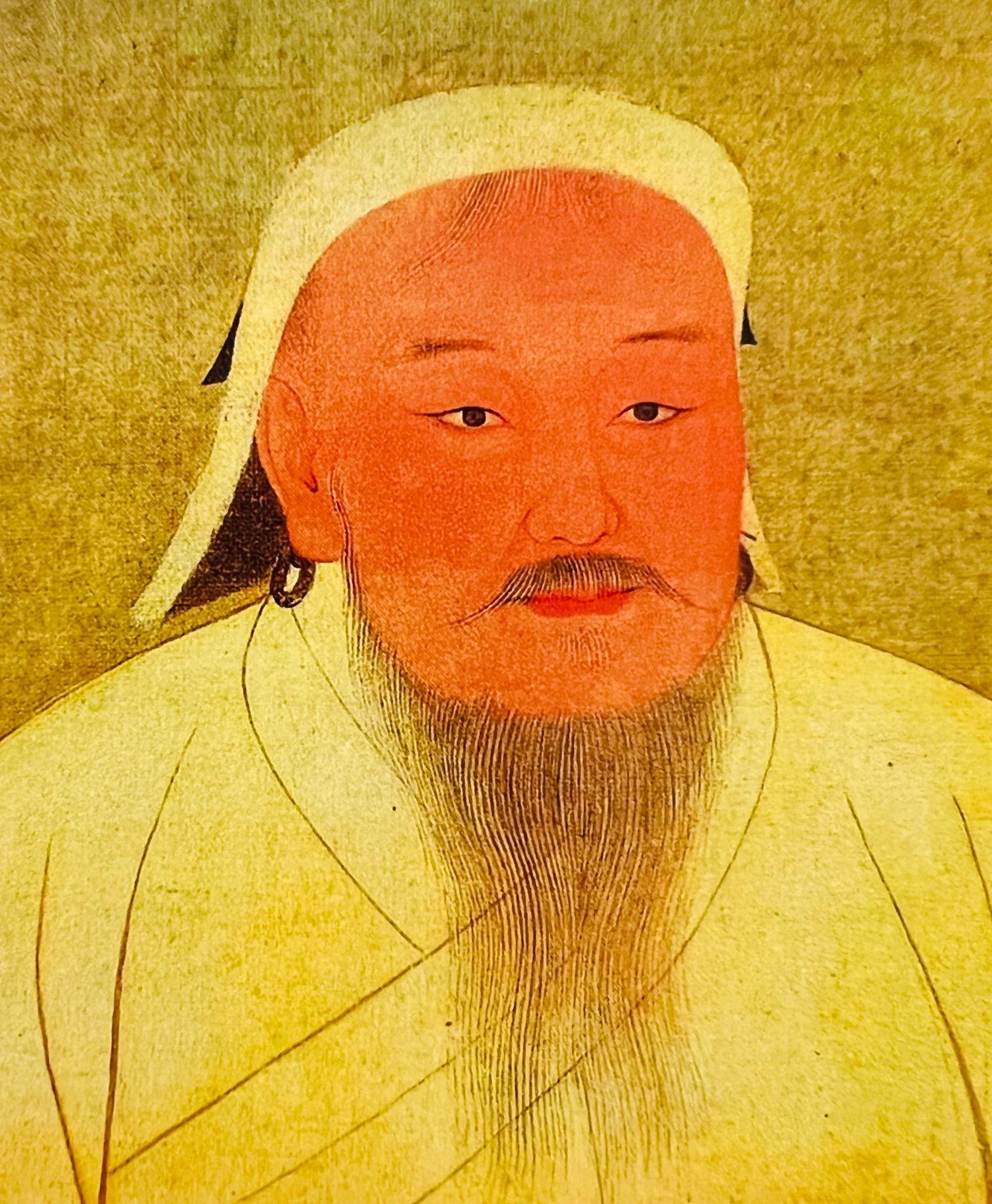
A 2003 genetics paper identified a striking Y-chromosome “star cluster” found across a large part of Asia and estimated that roughly 0.5% of the world’s men at the time carried it. The researchers argued that the lineage was consistent with descent from Genghis Khan or his close male-line relatives, but they could not test Genghis Khan’s DNA directly. The popular slogan that “1 in 200 men are descendants of Genghis Khan” therefore turns a plausible historical inference into a certainty the original study did not establish. New ancient-DNA research published in 2026 has added further reasons to treat the famous claim cautiously.
In 2003, a groundbreaking genetic study revealed a remarkable discovery: approximately one in 200 men alive today may be possible male-line descendants of Genghis Khan or closely related Mongol elites. The research focused on the Y chromosome, a genetic marker passed from father to son across generations. Scientists found a particular Y-chromosome pattern shared by millions of men across a vast region of Asia. This pattern appears to have originated about 800 to 1,000 years ago in Mongolia, precisely during the time when Genghis Khan and his descendants ruled the region.
The discovery sparked global interest, not only because of its scientific implications but also because it revealed how the actions of one historical figure could shape the genetic makeup of millions of people centuries later. Genghis Khan was known to have many wives and concubines, and his descendants continued this pattern, establishing powerful dynasties across the Mongol Empire. Over time, their male lineage spread widely through conquest, political influence, and social privilege.
Today, genetic research allows historians and scientists to explore the past in ways that were unimaginable just a few decades ago. The story of Genghis Khan’s descendants is not just about one ruler’s personal life—it is a powerful example of how genetics, history, and human migration intersect to shape the world we live in today.
The Rise of Genghis Khan and the Birth of the Mongol Empire
Before becoming one of the most influential figures in world history, Genghis Khan was born as Temujin around 1162 in the harsh steppe lands of Mongolia. His early life was marked by hardship and struggle. After his father was poisoned by rival tribes, Temujin’s family was abandoned by their clan and forced to survive in extreme poverty. These formative experiences shaped his personality, instilling resilience, determination, and an unyielding drive to rise above adversity.
The Mongolian steppe during this period was dominated by numerous rival tribes that constantly competed for power, livestock, and territory. Alliances shifted frequently, and warfare was a common way of life. Temujin gradually built alliances with other tribal leaders and began consolidating power through both diplomacy and military skill. His leadership style was revolutionary for the time. Rather than relying solely on noble lineage, he promoted individuals based on loyalty and merit.
By 1206, after years of conflict and strategic alliances, Temujin successfully united the Mongol tribes. At a grand assembly known as a kurultai, he was proclaimed “Genghis Khan,” a title often interpreted as meaning “Universal Ruler.” This moment marked the birth of the Mongol Empire.
Genghis Khan quickly transformed the newly unified Mongol forces into one of the most efficient military machines in history. His armies were highly disciplined, mobile, and organized using a decimal system that allowed commanders to control units with remarkable precision. Mongol cavalry could travel incredible distances across the steppe, striking enemies with speed and coordination rarely seen in medieval warfare.
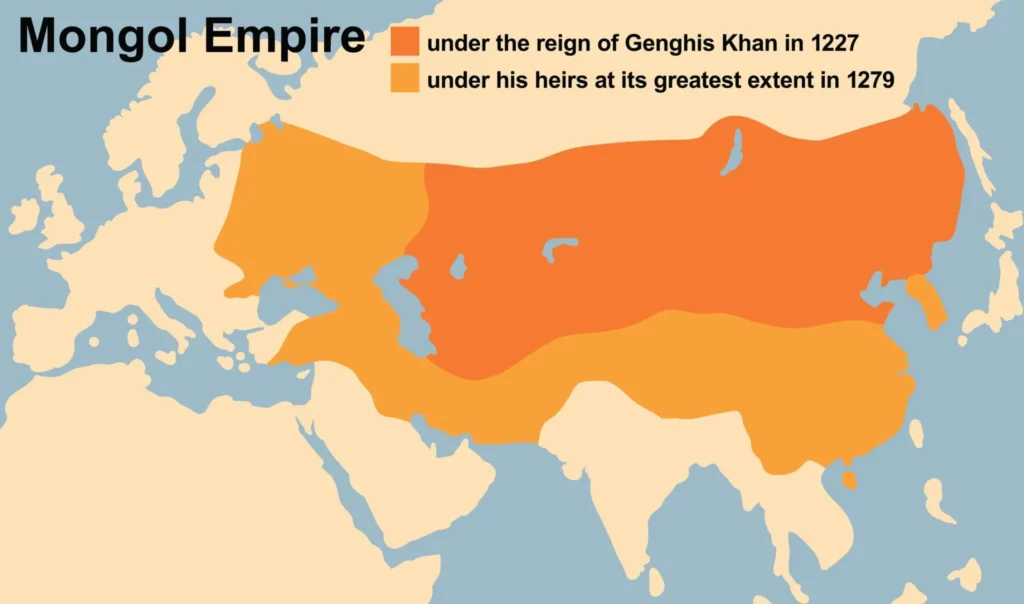
Within a few decades, the Mongol Empire expanded dramatically. Mongol armies conquered northern China, Central Asia, Persia, and parts of Eastern Europe. The empire eventually became the largest contiguous land empire ever created.
These conquests not only reshaped the political landscape of Eurasia but also laid the foundation for the genetic legacy that scientists would discover centuries later. As the empire grew, so did the influence and lineage of Genghis Khan and his descendants.
Genghis Khan’s Family and the Spread of His Bloodline
Genghis Khan’s personal life played a significant role in the remarkable spread of his genetic legacy. Historical records indicate that he had multiple wives and concubines, which was common among powerful rulers of the time. His primary wife, Börte, held a particularly important status and bore several of his sons who would later become key figures in the Mongol Empire.
Among his most well-known sons were Jochi, Chagatai, Ögedei, and Tolui. Each of these sons ruled different regions of the empire after their father’s death, establishing powerful dynasties that governed vast territories across Asia. Their descendants continued to expand and rule these regions for generations.
What made the Mongol imperial family unique was the extraordinary level of power and privilege they possessed. Male descendants of Genghis Khan often held elite status within Mongol society. They controlled large territories, commanded armies, and frequently had access to multiple wives or concubines. This social structure allowed their genetic lineage to spread rapidly.
In many cases, Mongol rulers also incorporated women from conquered regions into their courts and households. Political marriages were often used to strengthen alliances or solidify control over newly conquered territories. These relationships further expanded the family network of the Mongol elite.
Over several generations, the descendants of Genghis Khan ruled large parts of Asia through powerful khanates, including the Golden Horde in Eastern Europe, the Ilkhanate in Persia, the Chagatai Khanate in Central Asia, and the Yuan Dynasty in China founded by his grandson Kublai Khan.
Each of these ruling families continued the tradition of large households and multiple offspring. As a result, the male lineage of Genghis Khan multiplied rapidly. Over the centuries, the descendants of these dynasties spread across numerous populations, eventually blending into the broader genetic landscape of Eurasia.
The 2003 Genetic Study That Changed History
In 2003, an international team of geneticists conducted a groundbreaking study that would bring Genghis Khan back into global discussion in an unexpected way. The research focused on the Y chromosome, a segment of DNA passed exclusively from father to son. Because it changes very slowly over generations, the Y chromosome can be used to trace male ancestry over long periods of time.
The scientists analyzed genetic samples from more than 2,000 men across 16 populations in Asia. During their analysis, they discovered an unusual pattern: a specific Y-chromosome lineage that appeared at an exceptionally high frequency across a vast geographic region stretching from Mongolia to Central Asia.
Approximately eight percent of men in this region shared this distinctive Y chromosome. When researchers estimated the age of this genetic lineage, they found that it originated around 800 to 1,000 years ago—the same time period when Genghis Khan and his descendants ruled the Mongol Empire.
This discovery led scientists to a remarkable conclusion. The lineage likely originated from a single male ancestor who lived during the era of the Mongol Empire and whose descendants achieved extraordinary reproductive success. Given the historical context and the dominance of Genghis Khan’s family, researchers proposed that the most likely origin of this genetic signature was the Mongol emperor himself or one of his close male relatives.
The study estimated that roughly 16 million men alive today carry this lineage, representing about one in 200 men worldwide. While it is impossible to confirm that every one of these individuals descends directly from Genghis Khan, the evidence strongly suggests that the lineage originated from the Mongol imperial family.
This research demonstrated how genetics can reveal hidden patterns in human history. By studying DNA, scientists were able to uncover a story of empire, power, and reproduction that unfolded nearly a millennium ago.
Power, Conquest, and the Expansion of Genetic Influence
The extraordinary spread of Genghis Khan’s genetic lineage was not simply the result of having many children. It was closely tied to the political and social structure of the Mongol Empire. The ruling elite possessed immense authority and resources, allowing them to maintain large families and influence the demographics of entire regions.
Conquest played a major role in this process. Mongol armies moved across Eurasia with unprecedented speed and effectiveness, incorporating vast territories into their empire. In many cases, local rulers were replaced by Mongol governors or members of the imperial family.
As Mongol leaders established control over these territories, they often formed alliances with local elites through marriage. These unions strengthened political ties while also spreading the genetic lineage of the Mongol ruling class.
Another important factor was the long-lasting power of Genghis Khan’s descendants. Unlike many conquerors whose empires quickly collapsed after their deaths, the Mongol Empire remained influential for generations. Even after the empire fragmented into separate khanates, the ruling families continued to claim descent from Genghis Khan as a source of legitimacy.
This prestige meant that male descendants of Genghis Khan frequently occupied positions of authority and privilege. They were able to marry multiple partners, produce large families, and pass their genetic lineage to future generations.
Over centuries, these descendants gradually blended into the populations of Central Asia, China, Russia, and parts of the Middle East. What began as the bloodline of a single ruler eventually became embedded in the genetic history of millions of people.
Genetics, History, and the Legacy of Genghis Khan
The discovery that one in 200 men may share a genetic link to Genghis Khan highlights the powerful intersection between history and biology. It demonstrates that the actions of historical figures can leave traces not only in written records but also in the DNA of modern populations.
This phenomenon is sometimes referred to by scientists as a “star cluster” lineage, where a single male ancestor produces an unusually large number of descendants. Such patterns often occur when individuals hold positions of great power or social advantage that allow their families to expand rapidly over generations.
Genghis Khan represents one of the most dramatic examples of this phenomenon. His military conquests reshaped the political map of Eurasia, while his descendants ruled vast territories for centuries. These historical conditions created an environment in which his lineage could spread widely.
At the same time, the story reminds us that genetics alone cannot fully explain history. Cultural traditions, political power, social structures, and human choices all played important roles in shaping the spread of the Mongol imperial family.
Today, millions of men who carry this Y chromosome may live ordinary lives without any awareness of their distant connection to one of history’s most famous conquerors. Their shared genetic heritage serves as a fascinating reminder that the past is never truly gone—it continues to live on within us.
Conclusion
The idea that one in 200 men may be possible male-line descendants of Genghis Khan or closely related Mongol elites is both astonishing and revealing. It highlights how the life of a single historical figure can influence the genetic makeup of millions of people centuries later. Through conquest, political power, and the social structures of the Mongol Empire, Genghis Khan and his descendants created one of the most widespread male lineages in human history.
The 2003 genetic study opened a new window into understanding this legacy. By examining the Y chromosome shared by millions of men across Asia, scientists uncovered evidence of an ancestral lineage that traces back to the era of Mongol expansion. While it may never be possible to confirm every descendant, the genetic patterns strongly suggest that the Mongol imperial family played a central role in shaping this phenomenon.
Beyond the scientific discovery, the story also provides a deeper understanding of how history and human biology intertwine. Empires rise and fall, borders shift, and dynasties disappear, yet the genetic traces of these events remain embedded within human populations.
Genghis Khan’s legacy therefore exists on two levels. Historically, he transformed the political landscape of Eurasia and created one of the largest empires the world has ever seen. Biologically, his lineage continues to exist in the DNA of millions of people today.
In this way, the story of Genghis Khan reminds us that history is not only written in books and monuments—it is also written in our genes.
Key sources used for this review
Research and further reading
For readers who want to verify details or continue researching this subject, these external reference collections provide useful starting points: