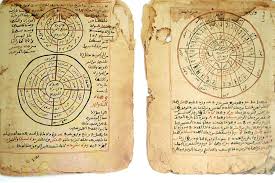
For centuries, the most important libraries in Timbuktu did not look like libraries at all. Their books sat in wooden chests, leather bags, storerooms, and family houses, protected less by monumental architecture than by generations of private trust. When armed groups occupied northern Mali in 2012, that quiet tradition of household custody became a form of cultural resistance. Manuscripts were concealed under clothes, packed into metal trunks, and carried away by road and river. The rescue captured worldwide attention, but it was only the newest chapter in a much older story.
The Timbuktu manuscripts are often presented as a miraculous discovery that proved medieval Africa could write. That description is both flattering and misleading. The manuscripts were never lost to the families who owned them, and West African written culture never needed outside validation to exist. Their real significance is richer: they preserve the work of scholars, jurists, merchants, students, physicians, poets, and copyists who connected the Niger bend to intellectual networks extending across the Sahara and the Islamic world.
Timbuktu Grew Where Desert and River Economies Met
Timbuktu stands near the northernmost bend of the Niger River, where the agricultural and commercial worlds of the Sahel approached the caravan routes of the Sahara. Its precise beginnings are uncertain. Oral traditions associate its name with a woman called Buktu, while historians generally place the settlement’s emergence around the eleventh or twelfth century. Neither a single foundation date nor the popular tale behind the name can be treated as securely documented fact.
What is clear is that location made the town useful. Salt arrived from Saharan mines; gold, grain, textiles, enslaved people, and other commodities circulated through West African markets. Boats linked the region to settlements along the Niger, while camel caravans connected it to North Africa. Under the Mali Empire, especially from the fourteenth century, Timbuktu became increasingly important. Its incorporation into the Songhai Empire in the fifteenth century brought another period of political and commercial strength.
A Scholarly City, Not a European-Style University
Timbuktu’s three celebrated mosques—Djingareyber, Sankore, and Sidi Yahia—anchored communities of worship and teaching. Sankore in particular is routinely called one of the world’s oldest universities. The phrase communicates the city’s prestige, but it can impose a modern institutional model on a very different system. There was no centralized university with a single administration, fixed departments, standardized admissions, or degrees equivalent to those of a contemporary campus.
Education was organized around individual masters, study circles, mosques, and private houses. A student sought a respected teacher, read particular texts, copied commentaries, discussed difficult passages, and could receive authorization to transmit a work or teach a subject. Different scholars had different reputations and specialties. Learning was personal, networked, and grounded in relationships rather than controlled by one corporate institution.
How Books Were Made, Bought, and Inherited
A manuscript was the result of skilled labor. Scribes copied texts by hand, usually in Arabic script, onto imported or locally available paper. Ink had to be prepared, pages ruled, quires assembled, and bindings fashioned from leather or other materials. Some volumes were elegant, but many were practical working books. Marginal notes, corrections, ownership statements, and stains reveal long use rather than museum-like isolation.
Collections accumulated across generations. Families inherited not merely objects but scholarly reputations and obligations of care. A volume might contain a famous treatise copied elsewhere, a local scholar’s commentary, a legal opinion, or records relevant only to a small community. This mixture explains why the phrase “the library of Timbuktu” is inaccurate. The surviving heritage consists of many public and private collections whose histories, cataloguing systems, and conditions differ.
What the Timbuktu Manuscripts Actually Contain
Religious learning occupies a central place. The collections include Qurans, Quranic commentary, hadith, theology, devotional works, Arabic grammar, and especially jurisprudence associated with the Maliki legal tradition dominant across much of North and West Africa. These subjects were not narrow additions to public life. Law shaped marriage, inheritance, commerce, property, education, and the resolution of disputes.
Yet the holdings extend well beyond religious doctrine. Researchers have identified works on astronomy, mathematics, medicine, logic, rhetoric, geography, history, poetry, and ethics. Letters document relationships among scholars and rulers. Commercial records, contracts, legal opinions, and notes preserve traces of prices, debts, enslavement, family negotiations, and political conflict. Some texts were copied versions of works known elsewhere in the Islamic world; others were composed or adapted in West Africa.
This variety is sometimes exaggerated into the claim that the manuscripts contain startlingly advanced scientific secrets unknown to everyone else. Such language replaces one myth with another. The collections demonstrate serious engagement with learned traditions and local problems, not a hidden technological civilization. Their value lies in the evidence they provide about how knowledge was taught, argued over, and applied. Like the clay tablets in the Library of Ashurbanipal, they preserve both canonical literature and the practical habits of a complex intellectual culture.
Arabic, Ajami, and the Languages Behind the Script
Many Timbuktu manuscripts are written in Arabic, the shared scholarly and religious language of a wide region. Arabic connected West African authors to texts and debates circulating from the Maghreb to Egypt and beyond. But using Arabic did not make their scholarship foreign. Authors addressed West African rulers, legal cases, social practices, markets, and intellectual disputes. A language can be transregional while the work produced in it remains deeply local.
African languages were also written in modified Arabic script, a practice generally called Ajami. Surviving collections from the wider region include material in languages such as Songhay, Fulfulde, Tamasheq, and others, sometimes embedded within Arabic texts as glosses or explanations. Identifying language and authorship is not always simple because cataloguing remains incomplete and scribal conventions vary.
Ahmed Baba and the Human Cost of Conquest
Ahmed Baba, born in 1556, became the best-known scholar associated with Timbuktu. Trained in a distinguished learned family, he wrote on law, biography, theology, grammar, and political ethics. His career illustrates the city’s scholarly connections, but also their vulnerability to imperial power. In 1591, forces sent by the Saadian ruler of Morocco defeated Songhai armies at Tondibi and extended control over the Niger bend.
Moroccan authorities arrested Ahmed Baba and other prominent scholars. He was taken across the Sahara to Marrakesh, and his book collection was confiscated. Later accounts describe a personal library of about 1,600 volumes, an impressive figure that should be treated as an estimate preserved in biographical tradition rather than a modern inventory. During exile he continued teaching and writing before eventually returning to Timbuktu, where he died in 1627.
The episode shows why books mattered politically. Scholars possessed authority, social networks, and legal expertise; removing them weakened local leadership. Ahmed Baba’s writings also resist simplistic celebration. Like other jurists of his time, he worked within a society that included slavery. His arguments distinguished lawful from unlawful enslavement and rejected the idea that skin color alone justified bondage, but they did not condemn slavery in every form. Reading him historically requires recognizing both the force and the limits of his positions.
1591 Was a Rupture, Not an Instant Ending
The Moroccan invasion is often described as the moment Timbuktu’s golden age ended. It was certainly a severe political rupture. Warfare damaged commerce, prominent scholars were deported, and the authority of the Songhai state collapsed. Trans-Saharan routes also changed over time as Atlantic commerce altered regional economies. Timbuktu never recovered the same combination of imperial support and international fame it had enjoyed at its height.
But the familiar story of sudden intellectual extinction is too neat. Teaching, copying, legal practice, and collecting continued after 1591. Many surviving manuscripts date from the seventeenth, eighteenth, and nineteenth centuries rather than from a single medieval zenith. Scholars worked in Timbuktu and other centers across the Sahel, including Djenné, Gao, Walata, Chinguetti, and later West African Islamic states.
Colonial Rule Changed What Counted as Knowledge
French forces occupied Timbuktu in 1893–1894 as part of the violent expansion of colonial rule in West Africa. Officials, soldiers, ethnographers, and collectors encountered manuscript traditions they often misunderstood. Some texts entered colonial archives or European collections through purchase, seizure, gift, or circumstances that are now difficult to reconstruct. Others remained with families that were wary of officials and outside researchers.
From Family Chests to Conservation Centers
Institutional preservation expanded after Mali became independent in 1960. A government manuscript center established in Timbuktu in 1973 later developed into the Ahmed Baba Institute. Malian scholars and international partners worked to locate, catalogue, photograph, conserve, and study collections. Private libraries, including the Mamma Haidara Memorial Library and others, created facilities while retaining family identities.
These efforts involved a difficult balance. Central storage can provide conservation equipment, trained staff, and research access, but owners may reasonably fear losing control. Private custody preserves community relationships yet can leave fragile paper exposed to insects, fire, dust, flooding, poor containers, and illicit sale. Successful projects therefore depend on agreements with families rather than treating manuscripts as objects to be extracted.
Digitization offers another layer of protection, not a complete solution. A digital image can preserve the content of a page and widen scholarly access, but it does not conserve the physical manuscript, explain its provenance, or automatically produce an accurate catalogue. Files require storage, migration, metadata, and long-term funding. The most useful preservation combines local ownership, physical care, description, digitization, and training.
Why No One Knows the Exact Number
Reports about the Timbuktu manuscripts offer totals ranging from tens of thousands to several hundred thousand, and sometimes even higher. These figures may refer to different things: items in one institute, volumes in named private libraries, manuscripts evacuated during conflict, or estimated holdings across Timbuktu and the broader region. A single bound volume may contain several texts, while loose documents may be counted separately.
Many collections have never been fully catalogued. Owners may move materials or choose not to disclose them. Duplicates, fragments, and changing definitions further complicate the count. Claims that exactly 700,000 ancient manuscripts sit in Timbuktu therefore create an illusion of precision. It is safer to say that the city and surrounding region preserve hundreds of thousands of manuscript items according to widely cited estimates, while acknowledging that the total remains unsettled.
Dates require the same caution. Some manuscripts or texts trace back to the thirteenth century, but large portions of the surviving material are later copies or later compositions. Calling every item “medieval” or “ancient” is incorrect. A nineteenth-century legal letter may be no less historically valuable than a much older theological volume. The collection’s strength comes from its chronological depth and diversity, not merely from the age of its earliest pages.
The 2012 Occupation Put Heritage in Immediate Danger
In 2012, a rebellion and military coup fractured Mali. Armed Islamist groups, including Ansar Dine and al-Qaeda in the Islamic Maghreb, took control of Timbuktu. They imposed severe rules, banned or restricted cultural practices, and attacked Sufi shrines they considered idolatrous. The destruction of mausoleums at the UNESCO-listed site demonstrated that cultural heritage had become an explicit target.
Librarians and families did not wait for a single rescue order. Networks associated with custodians such as Abdel Kader Haidara gathered manuscripts into trunks and moved them between houses. Many were then transported south toward government-held territory. Accounts describe boxes traveling by donkey cart, motorcycle, vehicle, and boat before reaching Bamako. The operation depended on drivers, boatmen, homeowners, donors, and numerous unnamed participants.
Different institutions report different evacuation totals because they tracked different collections. Figures commonly cited run into the hundreds of thousands for the wider network, while the Ahmed Baba Institute itself moved tens of thousands. The essential fact is not one dramatic number but the scale of coordinated local action. Custodians risked arrest, robbery, and violence to protect material that belonged to families and to Mali’s broader historical memory.
What Was Saved—and What Was Actually Lost
Early reports in January 2013 suggested that retreating militants had burned Timbuktu’s great manuscript libraries. The headlines implied near-total destruction. When researchers entered the Ahmed Baba Institute, they discovered that most of its holdings had already been removed or hidden. The apparent catastrophe was far smaller than first feared, a correction that became part of the celebrated rescue story.
Yet “all the manuscripts were saved” is also false. A United Nations expert assessment later counted more than 4,000 manuscripts burned or stolen during the conflict. Some were destroyed at the institute; others disappeared amid looting and insecurity. The loss is serious even if it represents a minority of the estimated total. Each missing item may have been unique, and exact reconstruction is impossible.
The heroic narrative can also obscure the long work before and after the evacuation. Families had preserved manuscripts for centuries before international cameras arrived. Once the boxes reached Bamako, they faced a different threat: the capital’s greater humidity could encourage mold and insect damage. Emergency storage had to become sustained conservation. Rescue was not a single night of smuggling but a chain of decisions extending across years.
Preservation Is About Context, Not Just Pages
Conservators must stabilize brittle paper and damaged bindings without erasing evidence of use. Cataloguers identify authors, titles, copyists, dates, ownership marks, and languages. Historians compare texts with other copies and read marginal notes that may record births, deaths, prices, disputes, droughts, or unusual events. A seemingly ordinary annotation can reveal how a book moved through a family or how a legal idea was applied locally.
Provenance is therefore as important as the words. Removing a manuscript from its collection without recording its owners and relationships can strip away meaning. Illicit trade poses a particular danger because conflict and poverty make portable objects easy to sell. Digital access, while valuable, must be designed with owners’ rights, religious sensitivities, and community priorities in mind.
Security remains part of conservation. Political instability in Mali has not disappeared, and heritage workers must weigh the dry climate of Timbuktu against threats of renewed violence. Some collections evacuated to Bamako have begun returning north, while preservation programs continue to assess safe storage. There is no permanently risk-free location. Protection requires redundancy: secure buildings, trained local staff, inventories, digital copies, and trusted evacuation plans.
What the Manuscripts Change About African History
The Timbuktu manuscripts refute a persistent misconception, but they should not be used to rank societies by how closely they resemble Europe. Written archives are not the only proof of historical complexity. Archaeology, oral traditions, art, architecture, environmental evidence, and material culture all reveal African pasts. The manuscripts matter because they add particular voices and records, not because writing grants a civilization permission to be taken seriously.
They also complicate the image of Africa as isolated. Timbuktu’s scholars participated in an Islamic intellectual world while producing knowledge rooted in the Sahel. Books, teachers, and ideas crossed the Sahara in several directions. West Africans were not passive recipients of imported learning: they wrote commentaries, issued legal judgments, taught foreign visitors, contested authorities, and built reputations recognized far beyond their city.
At the same time, the archive has silences. Most named authors were educated men, and the surviving texts often reflect elite concerns. Women participated in families of learning, owned property, transmitted knowledge, and appear in legal records, but their voices are less directly represented. Rural populations and non-Muslim communities are also unevenly visible. Responsible history uses the manuscripts as powerful evidence without pretending they speak for every West African.
How historians understand the story today
The enduring wonder of the Timbuktu manuscripts is not that outsiders eventually noticed them. It is that a dispersed system of scholarship and family custody survived conquest, economic change, colonial rule, environmental danger, theft, and war. The archive had no single door to close and no single shelf to burn. Its resilience came from thousands of individual acts: copying, teaching, inheriting, concealing, cataloguing, carrying, and repairing.
That resilience should not be romanticized. Manuscripts were lost in 2012–2013, many remain fragile, and much of the collection is still uncatalogued or inaccessible. Numbers repeated in popular accounts are estimates, Sankore was not a university in the modern administrative sense, and the scholarly city never represented all forms of West African knowledge. These qualifications strengthen the history rather than diminishing it.
Timbuktu’s written heritage reveals a place where local and global traditions met, where books were commodities and sacred objects, and where intellectual authority could survive the fall of empires. Its story is ultimately less about a mysterious desert treasure than about people who understood that pages carry relationships across time—and who repeatedly chose to protect them.
Research and further reading
For readers who want to verify details or continue researching this subject, these external reference collections provide useful starting points: