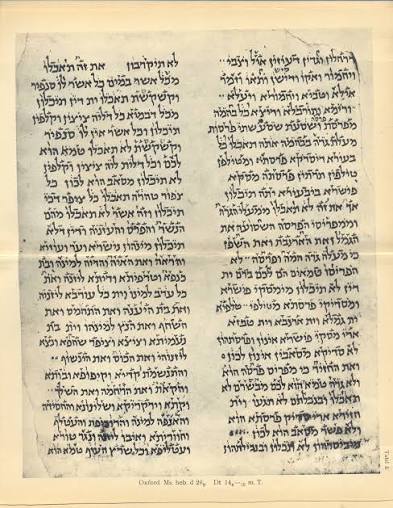
A medieval merchant writes that a shipment has gone wrong. A woman asks a relative for help. A court records a marriage settlement. Someone drafts a legal formula, practices handwriting, calculates a debt, or begins a letter and abandons it. None of these papers was created for historians. Yet centuries later, their survival transformed what scholars could know about everyday life across the medieval Mediterranean.
The Cairo Geniza is a vast, dispersed collection of manuscript fragments associated above all with the Ben Ezra Synagogue in Fustat, now part of Old Cairo. Its contents range from biblical and rabbinic texts to private correspondence, business accounts, petitions, contracts, poems, medical writings, shopping lists, and children’s exercises. The documentary core is especially rich for the period between about 950 and 1250.
Popular summaries often describe a sealed chamber suddenly discovered by one heroic scholar and filled entirely with mundane papers. The history is less tidy. Manuscripts had circulated before Solomon Schechter’s famous visit in 1896–1897; material came from more than one deposit; most fragments are literary rather than documentary; and modern totals vary according to what counts as an item. The Geniza is extraordinary not because every legend is true, but because its fragmented evidence is so unusually intimate.
What Is a Geniza?
A geniza is a place where Jewish communities set aside worn or unusable writings that should not simply be destroyed, especially texts containing the divine name. Such material might eventually receive respectful burial. The Hebrew root carries the sense of storing or hiding, but a geniza was not necessarily a secret archive assembled for future readers.
Religious books and fragments are therefore exactly what one would expect to find. Biblical manuscripts, prayer books, rabbinic works, liturgical poetry, commentaries, philosophy, and legal scholarship form the great majority of the Cairo material. Princeton’s Geniza Project estimates that roughly ninety percent of the fragments derive from long-form literary texts.
The puzzle is why so many apparently secular documents survived with them. Letters and contracts often used Hebrew script, invoked God, opened with blessings, or appeared on the reverse of sacred or learned texts. Community habit may also have encouraged broad preservation. No single explanation accounts for every discarded page.
Fustat, Ben Ezra, and the World Around the Synagogue
The collection is commonly called the Cairo Geniza, but its central setting was Fustat, the earlier Islamic capital of Egypt south of the later Fatimid city of Cairo. By the medieval period, Fustat was a major commercial and administrative center connected to the Mediterranean, Red Sea, and overland routes. Muslims, Christians, and Jews lived within the same urban economy while maintaining distinct institutions and legal traditions.
The Ben Ezra Synagogue became closely associated with a large manuscript deposit. The building’s history is complicated by rebuilding and later tradition, and not every fragment now labeled “Cairo Geniza” can be proven to have come from one attic or chamber. Dealers, collectors, and scholars acquired material from several Egyptian sources.
Even so, the Ben Ezra deposit remains the defining center of the story. The dry Egyptian climate helped preserve paper and parchment that would have decayed in wetter regions. Community practice created the accumulation; environmental conditions and limited disturbance allowed much of it to survive.
The Discovery Story Before Solomon Schechter
Solomon Schechter is often credited with discovering the Cairo Geniza. He was central to its scholarly transformation, but he was not the first collector to see or acquire its manuscripts. Travelers, dealers, rabbis, and European libraries had obtained Geniza fragments before his expedition. Oxford’s Bodleian Library, among other institutions, already held relevant material.
A decisive episode occurred in 1896 when the Scottish twin scholars Agnes Smith Lewis and Margaret Dunlop Gibson returned from Egypt with manuscript leaves. They showed them to Schechter at Cambridge. He recognized a Hebrew fragment of the wisdom book Ben Sira, a text long known mainly through later versions. The identification made clear that the neglected fragments could contain works of exceptional importance.
Schechter traveled to Cairo and, with the cooperation of the Jewish community, examined the Ben Ezra material. A very large body of fragments was transferred to Cambridge, where it became the Taylor-Schechter Collection, named for Schechter and his supporter Charles Taylor. Cambridge now holds the largest single collection associated with the Geniza.
How Large Is the Cairo Geniza?
Modern institutions give totals ranging from more than 300,000 folio pages to roughly 400,000 fragments. Cambridge alone holds an enormous portion, while the Jewish Theological Seminary, Bodleian Libraries, and numerous other collections preserve tens of thousands more. Princeton notes that material is distributed among dozens of libraries and private collections.
These figures are not directly interchangeable. A physical fragment may contain two pages; two pieces may once have belonged to one sheet; a catalogue record may group or divide objects differently. Newly recognized joins can reduce the number of original documents without changing the number of surviving pieces.
“Four hundred thousand documents” is therefore misleading. Many objects are fragments of books, some are blank or nearly illegible, and several pieces can derive from a single text. The documentary subset—letters, legal deeds, lists, accounts, and state papers—is smaller than the total manuscript mass.
Languages and Scripts in the Geniza
Much of the documentary material is written in Judeo-Arabic: Arabic language recorded in Hebrew characters. Medieval Jews across the Arabic-speaking world used it for letters, scholarship, commerce, and communal affairs. Readers should not mistake script for spoken language. A page that looks Hebrew to an untrained eye may preserve colloquial or formal Arabic.
Hebrew and Aramaic also appear extensively, particularly in religious, legal, and learned texts. Some documents use Arabic script, and the wider corpus contains additional languages from the communities and periods represented. A single writer might shift language or register according to audience and purpose.
The linguistic variety resists simple civilizational boxes. The documents are Jewish in communal context while deeply embedded in Arabic language and Islamic-period institutions. They preserve a Jewish history that is simultaneously part of the broader history of the medieval Middle East.
Why Everyday Papers Survived
Formal chronicles usually emphasize rulers, wars, scholars, and public crises. The Geniza preserves communications created at a lower level: a request for money, instructions to an agent, a complaint about a spouse, a list of donations, or a note about illness. These scraps bring ordinary pressures into historical view.
“Ordinary” does not mean statistically representative of everyone. Writing required access to literacy or a scribe. People who generated surviving documents often belonged to urban, commercial, learned, or institutionally connected groups. The extremely poor and people outside the Jewish community are less directly visible, though they appear in relationships and transactions.
Its value comes from density, not perfect representation. Letters can be compared with contracts, court deeds, account lists, and literary sources. Contradictions between them are often productive: what people promised in a legal formula may differ from what they admitted in private correspondence.
Merchants and Mediterranean Trade
Business letters show merchants coordinating partnerships across Egypt, North Africa, Sicily, the Levant, Yemen, and beyond. They discuss prices, credit, shipping, agents, delays, spoiled goods, political danger, and trust. Commerce appears as a chain of personal relationships rather than an anonymous market.
Jewish merchants traded with and alongside Muslim and Christian partners. Religious identity shaped networks and legal choices but did not seal communities into separate economies. A merchant could rely on relatives, coreligionists, local brokers, state officials, and partners of other faiths at different stages of one transaction.
This connected medieval world also appears from a different angle in the Catalan Atlas, produced much later in the western Mediterranean. The atlas organized reports of distant regions visually; Geniza letters capture the practical negotiations that made long-distance information and goods move.
The Indian Ocean Letters
A remarkable group of documents concerns trade through the Red Sea and Indian Ocean. Merchants linked Egypt with Aden and ports on the Indian subcontinent, moving goods and news across several maritime zones. These papers have helped historians place the medieval Mediterranean within a wider Afro-Eurasian economy.
The routes were not a single seamless “global trade network” in the modern sense. Voyages depended on monsoon winds, local shipping, multiple agents, political permissions, and transfers between sea and land. A trader rarely controlled an entire journey from one desk.
Nor were Geniza merchants the only or necessarily dominant actors in Indian Ocean commerce. The documents survive because of one community’s manuscript practices. They offer a detailed window onto Jewish participation within systems also shaped by Muslim, Christian, Hindu, and other merchants whose papers survived differently.
Marriage, Divorce, and Women’s Legal Strategies
Marriage contracts, court records, legal queries, dowry lists, and personal letters make women unusually visible for a medieval documentary corpus. They record property brought into marriage, maintenance obligations, inheritance disputes, separation, divorce, widowhood, and negotiations among relatives.
The documents do not show simple equality. Patriarchal authority structured family life, and women faced legal, economic, and social constraints. Access to a court or scribe varied. Surviving cases often record conflict precisely because ordinary arrangements had failed.
Within those limits, women acted strategically. They pursued debts, protected dowries, petitioned communal leaders, negotiated marriage terms, managed property, and mobilized family connections. A legal formula that appears restrictive in isolation may look different when paired with letters showing how a woman used it.
Poverty, Charity, Illness, and Community
Donation lists and institutional records show communities supporting the poor, widows, orphans, travelers, captives, and sick people. Charity was a religious obligation, a social expectation, and an administrative problem. Leaders had to gather resources, decide eligibility, and respond to urgent appeals.
Personal letters add emotional texture. Writers describe fevers, disability, failed treatments, hunger, loneliness, and dependence on relatives. Medical texts reveal learned traditions, while correspondence shows how illness disrupted work and travel in practice.
They nevertheless demonstrate organized care beyond the household. The medieval city contained networks of almsgiving and responsibility that crossed neighborhoods and sometimes long distances. Community was not merely an identity; it was a set of material obligations negotiated through lists, letters, and payments.
Jews, Muslims, and Christians in Shared Cities
The Geniza documents show constant interaction across religious boundaries. People rented property, traded, traveled, sought medical help, used courts, and dealt with government officials in a society governed by Muslim dynasties. Jewish communal autonomy existed within, not outside, the institutions of the Islamic state.
This evidence has corrected older histories that portrayed medieval communities as living in total isolation. It should not be converted into an equally simple story of uninterrupted tolerance. Legal inequality, taxation, political violence, prejudice, and periods of persecution were real. Conditions changed by ruler, place, and decade.
The documents are particularly useful because they capture relationships before later historians organize them into slogans. They show coexistence as practical and contingent: people needed one another, argued, negotiated, and adapted without dissolving the differences among their communities.
Famous Texts and the Danger of Treasure Hunting
The collection preserves celebrated items, including important witnesses to Ben Sira, writings connected with Maimonides, early biblical fragments, liturgical poetry, and works otherwise lost or poorly known. Such discoveries attracted scholarly and public attention for good reason.
But a focus on masterpieces can recreate the bias that makes the Geniza so valuable to overcome. A messy account or routine letter may be unique evidence for prices, handwriting, family structure, or a little-known town. Historical importance is not identical to literary beauty.
The best reading holds both scales together. Major intellectual texts illuminate scholarship and religion; disposable papers reconstruct lives rarely visible in formal literature. The Geniza changed history because it preserved canonical works and administrative debris in the same broad corpus.
S. D. Goitein and a Mediterranean Society
The historian S. D. Goitein devoted decades to reading Geniza documents and used them for his multi-volume A Mediterranean Society. His work reconstructed commerce, community, family, daily life, and individual experience across the Jewish communities of the Arabic-speaking world.
Goitein demonstrated that fragments could be connected through names, handwriting, places, and events. A merchant appearing in one contract might surface years later in a letter from another port. Prosopography—the reconstruction of people and relationships from scattered references—turned debris into social history.
His synthesis was foundational, not final. Later scholars have revised identifications, questioned categories, expanded the study of women and non-elite groups, and placed documents more fully within Islamic legal and administrative history. Digital databases now make connections at a scale unavailable to earlier researchers.
Fragments Scattered Across the World
The manuscripts are now divided among Cambridge, the Jewish Theological Seminary in New York, Oxford’s Bodleian Libraries, Manchester, St. Petersburg, Jerusalem, Princeton-linked digital collections, and many other repositories. This dispersal reflects nineteenth- and early twentieth-century collecting, scholarship, commerce, and unequal control over cultural heritage.
Physical separation makes research difficult. Two fragments from one letter may reside in different countries under unrelated catalogue numbers. Pieces may have been sorted by script, content, size, or collector rather than original document. Rejoining them requires paleography, material comparison, textual sense, and sometimes digital matching.
The term “discovery” can conceal extraction. European scholars benefited from local knowledge and from an antiquities market shaped by colonial power. At the same time, the surviving collections have supported preservation, cataloguing, and worldwide study. A responsible history recognizes both scholarly achievement and the conditions under which manuscripts moved.
Digital Reconstruction of a Broken Archive
Digitization allows researchers to compare high-resolution images from collections that remain physically dispersed. The Princeton Geniza Project provides descriptions, transcriptions, translations, documentary types, people, and places for tens of thousands of records. Cambridge and partner institutions continue to photograph and catalogue their holdings.
Computational methods can suggest joins, group handwriting, recognize names, and search recurring phrases. Crowdsourcing projects have also invited volunteers to classify scripts and layouts. These tools expand access, but an image cannot reveal every physical feature of paper, ink, ruling, or damage.
Artificial intelligence may accelerate transcription, especially when trained on expert-reviewed examples. It can also produce plausible errors in languages, scripts, and abbreviations that have few modern training resources. Human verification remains essential, particularly where one letter changes a name, date, or legal meaning.
What the Cairo Geniza Cannot Tell Us
The collection is richest for Jewish communities, particularly people connected to writing, commerce, courts, or institutions. Muslims and Christians appear frequently, but mostly through documents preserved by Jews. The result is a powerful angle on medieval society, not a neutral census of it.
Chronology is uneven. Although fragments span many centuries, the best-known documentary concentration lies roughly between 950 and 1250. Statements about “the Cairo Geniza period” can blur major political and economic changes from Fatimid to Ayyubid rule and beyond.
Private letters are not transparent truth. Writers exaggerated hardship, concealed failures, flattered patrons, and shaped stories to obtain a response. Legal documents used formulas and recorded settlements rather than every stage of a dispute. Accounts could contain mistakes.
Historians gain reliability through comparison: multiple documents, external sources, handwriting, dates, and institutional patterns. The Geniza’s intimacy makes it tempting to feel that we are hearing the medieval past unfiltered. We are not. We are reading purposeful texts that survived through an extraordinary chain of accidents and decisions.
Conclusion: History Preserved by Discarding
The central paradox of the Cairo Geniza is that preservation began with removal from use. Communities set papers aside because they were worn, outdated, damaged, or no longer needed. The chamber did not rank them by future importance. A learned commentary could rest beside a debt note or an unfinished plea.
That disorder gave historians a rare archive of human scale. Merchants worry about partners, spouses quarrel, parents arrange futures, travelers request help, officials draft orders, and charitable administrators count limited funds. Large structures—religion, law, trade, empire—become visible through individual acts.
The collection does not prove an ideal age of interfaith harmony, a fully global medieval economy, or universal literacy. Nor was it suddenly discovered intact by one scholar. Its fragments are dispersed, socially selective, and difficult to interpret.
Precisely because the evidence is incomplete, responsible scholarship has had to rebuild connections slowly. The Cairo Geniza matters not as a magical room containing the whole Middle Ages, but as hundreds of thousands of surviving pieces that allow forgotten people to re-enter history one line at a time.
Sources and Further Reading
- Cambridge University Library, “Taylor-Schechter Genizah — A Priceless Collection”, on the collection and its scholarly importance.
- Princeton Geniza Lab, “What Is the Cairo Geniza?”, on the deposit, discovery history, and documentary corpus.
- Princeton Geniza Project FAQ, on languages, document types, collection scale, and limitations.
- Jewish Theological Seminary Library Special Collections, on its Cairo Genizah holdings.
- Bodleian Libraries Digital Collections, including the Cairo Genizah manuscript catalogue and images.