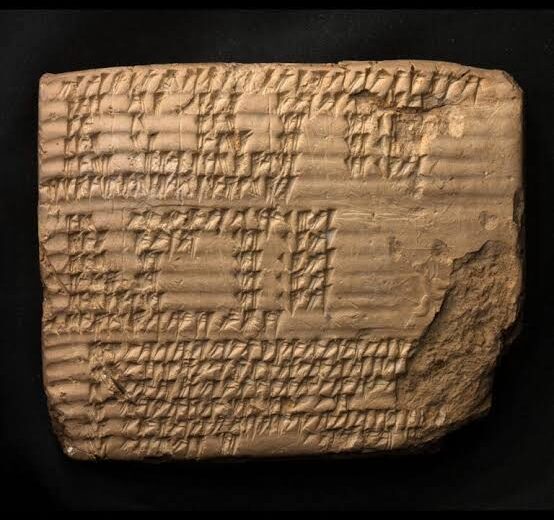
In 1933, archaeologists excavating the northeastern edge of Persepolis found something less spectacular than a golden throne and far more revealing about how an empire actually worked. Packed into rooms associated with the fortification wall were thousands upon thousands of clay tablets and fragments. Most were not royal proclamations. They recorded grain, wine, beer, fruit, livestock, workers, travelers, officials, and seals—the routine transactions that kept the Achaemenid heartland functioning.
The Persepolis Fortification Tablets transformed the study of ancient Persia because they preserve administration from inside the empire rather than describing it through Greek enemies or later traditions. Dating mainly from 509 to 493 BCE, during the reign of Darius I, the archive illuminates a regional economy centered on Persepolis. It names women and men, high officials and dependent workers, distant travelers and local storehouses.
Yet the archive is often oversold. It is not a complete census of the Achaemenid Empire, proof that all workers were free, or a transparent ledger from which every salary can be reconstructed. It is a damaged selection of records created for specific administrative purposes. Its power lies precisely in that combination of abundance and limitation: thousands of small entries, each narrow on its own, forming an unprecedented view of imperial life.
What Are the Persepolis Fortification Tablets?
The name describes where the archive was discovered, not the subject of its records. These were not construction plans for the walls of Persepolis. They were administrative documents found in rooms connected with the fortification system on the northeastern side of the palace terrace. Scholars therefore call the collection the Persepolis Fortification Archive, commonly abbreviated PFA.
The tablets concern the receipt, storage, movement, and distribution of commodities. Grain, flour, wine, beer, fruit, and animals appear repeatedly. Some texts authorize or document provisions for travelers. Others record rations for labor groups, officials, religious personnel, or animals. A short entry may identify a commodity, quantity, place, date, responsible administrator, and recipient without explaining the broader policy behind the transaction.
Most surviving texts are written in Elamite cuneiform, although the archive is multilingual and multiscript. Aramaic documents and notations are also present, along with rare evidence involving other languages. Many pieces bear seal impressions, and some uninscribed clay objects preserve seals without readable text. The archive is therefore both a textual collection and an enormous body of administrative art.
The 1933 Discovery Behind the Fortification Wall
The Oriental Institute of the University of Chicago began major excavations at Persepolis under Ernst Herzfeld in the early 1930s. In March 1933, work near the fortification wall exposed rooms containing masses of clay tablets, fragments, and sealings. Their archaeological context gave the archive its modern name. Contemporary estimates suggested tens of thousands of pieces, but the condition of the material makes a single precise total impossible.
“Thirty thousand tablets” is frequently repeated as though archaeologists found that many complete documents. In reality, the discovery included intact or nearly intact tablets, tiny fragments, pieces that join, uninscribed objects, and duplicate impressions. Depending on whether one counts physical fragments, original documents, or legible texts, the total changes. Responsible histories therefore describe an archive of roughly 15,000 to 30,000 tablets and fragments rather than presenting a false exact figure.
The tablets were made largely of unbaked clay. Their survival was not guaranteed. Debris from the destruction and collapse of structures at Persepolis appears to have sealed the deposit and protected it from later disturbance. Popular accounts sometimes say Alexander’s fire “baked” the archive like pottery. That is too simple: preservation resulted from the archaeological circumstances of burial, and the tablets did not all become uniformly fired objects.
Darius I and the Sixteen-Year Window
The main dated sequence covers sixteen years, from 509 to 493 BCE, corresponding to regnal years 13 through 28 of Darius I. Darius ruled an empire extending from Central Asia and the Indus region to Egypt and the Aegean approaches. At Persepolis, he developed a royal complex in the Persian heartland. The fortification records belong to this world of consolidation rather than the empire’s initial creation.
Darius presented kingship publicly through monumental inscriptions, palace reliefs, and architecture. The famous royal message emphasized divine favor, legitimate order, and the many peoples under his authority. The Fortification Archive shows a different register. Its scribes were concerned with deliveries, authorizations, account balances, and named personnel. The contrast between ideological monument and administrative memorandum is invaluable.
For the political language of Darius’s reign, the site’s article on the Behistun Inscription explains how the king narrated his rise and suppressed rebellions. The Persepolis tablets do not retell that story. Together, however, the sources reveal two dimensions of rule: the king’s public claim to restore order and the institutional routines through which resources were moved.
Why Elamite Dominates a Persian Royal Archive
One of the archive’s most important lessons is that “Persian Empire” did not mean administration conducted only in Old Persian. Most inscribed tablets use Elamite, a language with deep roots in southwestern Iran and a long scribal history. Achaemenid government did not erase every earlier tradition. It recruited existing expertise and adapted regional practices to imperial needs.
Old Persian is far more familiar from monumental royal inscriptions. Because kings used it prominently on stone, it is easy to imagine it as the everyday language of government. The fortification material corrects that assumption. Routine documentation around Persepolis depended heavily on Elamite scribes, while Aramaic served broader administrative functions across the empire. Linguistic practice was layered rather than nationally uniform.
A rare Old Persian administrative text identified among the archive’s fragments is therefore significant. It shows that Old Persian could appear in a practical record, challenging the strongest version of the claim that it was reserved exclusively for royal monuments. One exceptional piece, however, does not overturn the overwhelming Elamite character of the surviving written archive.
Food Was the Currency of Administration
The archive is dominated by food because food was a central instrument of administration. Grain, wine, beer, fruit, flour, and livestock could be collected, stored, processed, and redistributed. Rations sustained workers and travelers; offerings supported cultic activity; fodder maintained animals. These transactions linked royal estates, local producers, storehouses, officials, and dependent personnel.
Calling every allocation a “salary” risks imposing a modern concept. Some recipients may have received food as part of compensation, while others obtained travel provisions, maintenance allowances, or institutional distributions. Nor does a ration necessarily reveal a person’s full income. Households could have access to land, additional supplies, silver, private exchange, or resources absent from this particular archive.
Roads, Travelers, and Imperial Connectivity
Some fortification texts concern travelers carrying official authorization. They record provisions issued along routes, often naming the traveler, destination, origin, issuing authority, or size of a party. These compact documents help reconstruct movement through the imperial heartland. Officials, messengers, skilled personnel, and other authorized groups did not simply wander from village to village; their journeys could be supported through recognized administrative channels.
The tablets complement evidence for the Achaemenid road system, but they should not be converted into a complete map of the famous “Royal Road.” Many movements recorded in the archive were regional and connected Persepolis with surrounding settlements or routes. The documents capture nodes in a network rather than every mile of an empire-wide highway.
This is one reason the archive matters beyond economic history. Movement carried commands, information, labor, and expertise. A government that documented provisions for travelers was managing communication as well as food. The tablets show connectivity not as an abstract “Persian tolerance” or an effortless imperial unity, but as a succession of authorized material transactions.
Women in the Archive: Evidence Without Romanticism
Women appear throughout the records as members and sometimes leaders of labor groups. They received rations, and certain women obtained allocations larger than those of many men, probably reflecting rank, responsibility, skill, or group leadership. The texts also record provisions connected with childbirth. These details make women visible in an administrative corpus where modern readers might not expect them.
The evidence has rightly challenged older reconstructions that imagined the Achaemenid workforce as exclusively male. It does not prove modern workplace equality. Ration scales could differ by sex, status, age, and task. Some interpretations suggest that mothers of boys received more than mothers of girls in particular records, but fragmentary documentation and administrative categories require careful handling.
Nor can every person receiving rations be confidently labeled “free” or “enslaved.” The archive uses status terms whose social implications are debated, and dependence could take several forms. Workers might be organized through households, institutions, deported communities, or royal labor systems. The absence of one familiar word for slave is not proof that coercion was absent.
Workers, Rations, and the “Slave-Built Persepolis” Claim
A common contrast claims that Greek monuments were built by slaves while Persepolis was built entirely by paid workers. The tablets do undermine simplistic images of anonymous slave gangs. They document organized labor forces receiving rations, including women, children, specialists, and supervisors. The Treasury Archive later records some payments in silver. These are important corrections to older stereotypes.
But “paid workers” can be equally misleading if it suggests a modern voluntary labor market. Food allocations might support dependent personnel obligated to work. Communities could be relocated, service could be compulsory, and legal status may be impossible to determine from a ration text. An administrative system can be sophisticated and coercive at the same time.
What can be said securely is that Achaemenid authorities recorded and differentiated human labor rather than treating the workforce as an undivided mass. Occupation, status, sex, age, location, and administrative responsibility could affect distributions. The resulting picture is more complex than either brutal slave-gang caricature or celebratory story of enlightened employment.
Seals: The Archive’s Second Language
Many tablets carry impressions made by carved seals. These images authenticated transactions, identified offices or individuals, and connected documents to administrative responsibility. Some seals were used repeatedly across multiple texts, allowing scholars to trace officials and institutional relationships even when names are damaged or absent.
It is tempting to identify every crowned or heroic figure as a specific king or god. Seal imagery rarely supports such certainty. Many scenes are conventional, and the person using a seal was not necessarily the person originally depicted or the object’s first owner. Seals could be inherited, reassigned, or retained in office.
Because impressions repeat, the archive permits network analysis unavailable from isolated museum objects. A seal appearing on documents from different places or years may connect transactions to the same administrative actor. Text and image thus check and extend one another: the writing states what was issued, while the seal helps establish who authorized or witnessed it.
Religion in an Administrative Ledger
The tablets include allocations associated with religious personnel, ceremonies, and offerings to multiple divine recipients. This evidence complicates any attempt to reduce Achaemenid religion to a single standardized faith imposed from the royal center. Local and regional cults continued within an imperial framework, and administration could support their material needs.
Scholars debate how references in Elamite texts relate to Iranian religious concepts known from later Zoroastrian sources. Similar names do not guarantee unchanged beliefs across centuries, and modern labels can flatten regional variation. The tablets should be read in their late sixth- and early fifth-century setting.
What the Archive Does Not Tell Us
The surviving material represents an administrative selection. Records were created because commodities and authorizations needed accounting. Love, family conflict, oral storytelling, political dissent, and much private exchange barely appear unless they intersected with institutional business. Silence in the archive is not proof that an activity did not exist.
Geography is another limit. The documents illuminate Persepolis and a wider area of Fars, with connections extending farther through travel and personnel. They do not offer equal coverage of every satrapy. Using them to describe the whole empire without comparison to Babylonian, Egyptian, Anatolian, or Central Asian evidence would turn exceptional regional documentation into a false universal model.
Finally, the technical vocabulary is difficult. Elamite is imperfectly understood, and administrative terms do not always have simple English equivalents. Translations and social interpretations change as new joins, seal identifications, and comparative evidence emerge. Good history preserves that uncertainty instead of converting every debated term into a confident job title.
Richard Hallock and the Long Work of Decipherment
The tablets did not reveal their history immediately after excavation. Cleaning, joining, photographing, copying, transliterating, and interpreting thousands of fragile pieces demanded decades. Richard T. Hallock’s 1969 publication of 2,087 Elamite texts became a foundational scholarly achievement. It provided a large, systematic body of evidence on which later Achaemenid research could build.
Hallock’s edition was not the archive’s final word. Thousands of pieces remained unpublished, and later scholars revised readings, identified joins, studied seals, and connected personal and place names. Aramaic components required different expertise from Elamite texts. No single researcher could master every script, commodity system, seal style, and geographic problem.
The archive consequently became a collaborative project spanning Assyriology, Iranian studies, archaeology, art history, linguistics, and digital humanities. This interdisciplinary character is not academic decoration. A seal specialist may identify an administrative actor that a damaged inscription cannot name; a linguist may recover an Iranian word embedded in Elamite spelling; a database may connect fragments separated for decades.
Digitization, Imaging, and the Return to Iran
Modern imaging has changed how the archive can be studied. High-resolution photography and advanced reflectance techniques make shallow signs and seal impressions more visible under changing virtual light. Digital records allow researchers across the world to compare objects without repeatedly handling fragile clay.
Databases also help reconstruct the archive as a system. Names, commodities, dates, places, seals, and measurements can be searched across thousands of entries. Computational tools may assist with sign recognition and fragment matching, but they do not replace philological judgment. A plausible machine suggestion still has to be evaluated against grammar, handwriting, damage, and context.
The archive’s legal and ethical status remains fundamental. The tablets were excavated in Iran and loaned for study; they were not a permanent American acquisition. Groups have been returned to Iran over time, while documentation projects seek to preserve scholarly access to images and records. The history is a reminder that digitization does not transfer ownership.
How the Tablets Changed Achaemenid History
Before the archive was understood, modern narratives of ancient Persia leaned heavily on Greek authors, royal inscriptions, and monumental art. Each remains indispensable, but each has a perspective. Greek texts often explain Persia in relation to Greek conflict. Royal inscriptions present authorized ideology. Palace reliefs turn imperial diversity into a carefully ordered visual program.
The Fortification Archive introduces thousands of low-level observations created without an audience of future historians in mind. Its scribes did not set out to praise or condemn the empire. They needed to record a delivery, ration, seal, or journey. That practical purpose gives the evidence unusual immediacy, though not neutrality: administrative categories still reflect the state’s interests.
From the tablets emerge named administrators, women’s labor groups, storehouse networks, religious allocations, travel procedures, and multilingual scribal practice. Persia no longer appears only as a king surrounded by tribute-bearing nations. It becomes a landscape of institutions and people whose repeated transactions made royal power possible.
Conclusion: An Empire Written in Rations
The Persepolis Fortification Tablets are extraordinary because their subjects were ordinary. A jar of wine, a measure of grain, a group of workers, a traveler’s authorization, or a repeated seal impression seems small beside the palaces of Darius. Multiplied across thousands of records, those details reveal the infrastructure beneath imperial spectacle.
They show an administration that was multilingual, regionally rooted, and capable of tracking resources and movement with considerable precision. They make women, workers, religious personnel, officials, and travelers visible. They also expose inequalities and dependencies that triumphalist accounts can overlook.
The archive must still be used with discipline. It covers a particular region and period, survives in fragments, and speaks through specialized categories. It neither proves a uniformly benevolent empire nor reduces Achaemenid rule to exploitation. Its evidence is richer than either slogan.
Persepolis is famous for stone reliefs of delegations approaching the king. The clay tablets take us behind that image. They show that imperial order depended not only on ceremony and conquest, but on scribes who counted food, officials who sealed documents, communities that produced supplies, and workers whose daily rations entered the record.
Sources and Further Reading
- Institute for the Study of Ancient Cultures, Persepolis Fortification Archive Project report, on discovery, study, imaging, and publication.
- University of Southern California, West Semitic Research Project: Persepolis Fortification Archive, overview of the find and imaging work.
- Encyclopaedia Iranica, “Persepolis Elamite Tablets”, on the Fortification and Treasury archives.
- University of Chicago, “Ancient Persian archive digitized”, on the scale and digital preservation of the collection.
- UNESCO World Heritage Centre, “Persepolis”, on the site and its Achaemenid setting.