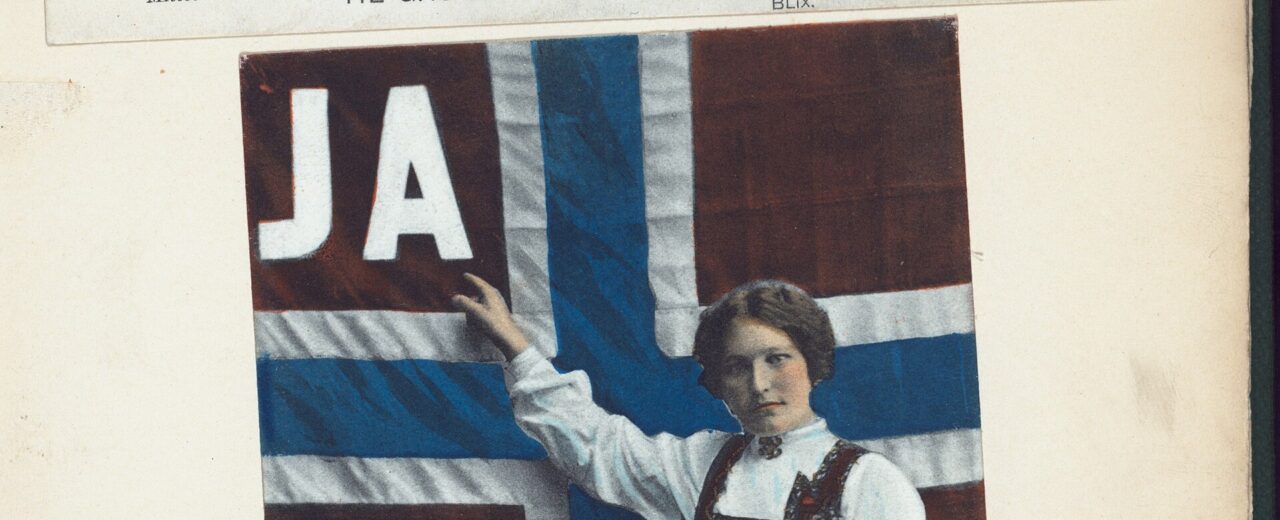
Norway Sweden union dissolution 1905 is a revealing historical subject because it opens a clear path into the people, events, and wider changes that shaped its era.
In European history, some of the most important national breakups were violent, dramatic, and soaked in blood. Norway’s separation from Sweden in 1905 was none of those things. It was tense, uncertain, and deeply political, but it ended without war. That alone makes it remarkable. A union that had lasted since 1814 came apart through constitutional maneuvering, public legitimacy, patient diplomacy, and an almost stubborn refusal to let the dispute become a battlefield contest.
For Norway, the union with Sweden had long been a source of frustration. The two kingdoms shared a monarch, but Norwegians increasingly wanted control over their own institutions, especially foreign affairs. By the early twentieth century, the question was no longer whether the union was under strain. It was whether it could survive at all. The answer came in 1905, when political leaders, parliament, the electorate, and negotiators all played a role in one of the most unusual peaceful state breakups in modern European history.
To understand how Norway broke peacefully from Sweden, it helps to see the crisis not as a single dramatic moment, but as a sequence of carefully chosen steps. Constitutional conflict created the opening, parliamentary action made the break official, a referendum gave it overwhelming popular backing, and the Karlstad negotiations removed the final danger of war. It was a process shaped by law as much as by politics, and by restraint as much as by force. That combination is what makes 1905 so enduringly fascinating in the history of political sovereignty.
The Roots of the Union Problem
The union between Norway and Sweden began in 1814, when the great reshuffling of Europe after the Napoleonic Wars left Norway in a compromised position. Norway kept its own constitution, adopted at Eidsvoll, but entered a personal union with Sweden under a shared king. On paper, Norway was not absorbed into Sweden. In practice, however, the union was always uneasy. Norwegians had their own parliament, their own laws, and a strong sense of separate national identity, yet foreign policy and diplomatic representation were controlled in ways many Norwegians found unsatisfactory.
Through the nineteenth century, this tension grew. As Norway became more self-confident economically and politically, demands for greater autonomy intensified. The issue of foreign affairs was especially sensitive because it touched the question of sovereignty itself. A country that could not fully manage its own diplomacy seemed only partly independent, even if it had domestic self-government. This is where the political conflict hardened into a constitutional one. The union could continue only if both sides accepted compromise, but the Swedish and Norwegian political cultures were not moving in the same direction.
By the 1890s and early 1900s, the union crisis had become one of the central issues in Norwegian politics. Supporters of full independence argued that the arrangement no longer reflected the realities of nationhood. Critics feared that pushing too hard would trigger conflict with Sweden. The fact that the dispute was handled in parliaments, cabinets, and press debates rather than through military escalation is significant in itself. It resembled other state crises that tested constitutional order, such as the Whiskey Rebellion: and the birth of federal authority, where legitimacy mattered as much as force. In Norway’s case, political legitimacy would eventually prove decisive.
As the twentieth century began, the old union was no longer supported by broad enthusiasm. It survived because it had legal form and historical habit, not because it inspired confidence. That meant one unresolved dispute could bring the entire structure down. The final rupture came in 1905, but the groundwork had been laid over decades of constitutional friction.
The Consular Crisis and the Break with Sweden
The immediate trigger for the collapse of the union was the consular issue. Norwegians wanted their own consular service so that the country could represent its commercial interests abroad independently. This may sound technical, but it was politically explosive. Foreign representation is one of the clearest symbols of statehood, and Norway’s insistence on a separate consular system reflected a broader demand for national autonomy. When the Swedish side resisted, the quarrel became far more than a bureaucratic disagreement.
In early 1905, the situation escalated rapidly. Norway’s political leadership, especially the government headed by Christian Michelsen, realized that the question could no longer be treated as an ordinary negotiation within the union framework. The Norwegian parliament supported a separate consular law, but King Oscar II refused to approve it. In a constitutional system, royal refusal was not just a personal objection; it was a crisis of governance. The Norwegian cabinet then made a stunning move: it resigned. When the king could not form a new Norwegian government, the union’s constitutional machinery effectively jammed.
Then came the decisive step. On 7 June 1905, the Storting declared that the king had ceased to function as king of Norway because he was no longer able to form a government. In the language of the time, the union was considered dissolved. This was an extraordinary act. Norway was not simply rebelling against Sweden; it was presenting the break as a constitutional conclusion to an unsolved political deadlock. That mattered enormously. By framing independence as a legal necessity rather than a revolutionary seizure, Norwegian leaders preserved a path to peaceful settlement.
There was, of course, serious danger. Sweden mobilized troops, and public emotion on both sides ran high. But the structure of the crisis encouraged caution. Neither government wanted to gamble on a war whose outcome and legitimacy were uncertain. The Norwegian declaration did not end the conflict, but it changed its nature. From that point on, the question was not whether the old union had collapsed. It had. The question was whether the collapse would produce war or be recognized through diplomacy.
June 7, 1905: Legal Separation as Political Strategy
The declaration of 7 June 1905 is often remembered as the moment Norway became independent, but the deeper significance lies in how the act was presented. The Storting did not proclaim a romantic revolution. It issued a constitutional argument. The union, Norwegian leaders said, had become impossible because the king was no longer able to fulfill his role in Norway. In effect, Norway claimed that the union had already failed on legal grounds, and that recognizing the fact was the responsible course. That subtle distinction helped prevent the crisis from becoming an all-or-nothing war over honor.
Christian Michelsen’s government played a crucial role in guiding the process. Michelsen was not simply a nationalist in a dramatic sense; he was a political strategist who understood that the strength of Norway’s position lay in order, discipline, and public legitimacy. His ministry, formed in 1905, became the vehicle through which the constitutional break was managed. The government’s choices gave the independence movement credibility at home and abroad. Instead of a factional uprising, the break looked like a state action carried out by lawful institutions. That was important in an era when the legitimacy of governments was judged not only by power but by procedure.
It is also worth noting how unusual this was in the broader history of nationalism. Many nineteenth-century unions and empires unraveled through war, civil conflict, or collapse under military pressure. Norway’s break with Sweden looked more like a constitutional divorce than a conquest. The state did not disappear into chaos; it asserted continuity while redefining its relationship to another state. That is a rare political achievement. In this respect, the 1905 crisis stands apart from more violent power struggles in European history, including episodes like the Kapp Putsch, where legality and force collided in a far less orderly fashion.
The declaration on 7 June did not magically settle the issue, but it created a framework within which settlement was possible. Norway had made its position unmistakable, while still leaving room for negotiation. That balance between firmness and restraint was one of the defining reasons the break remained peaceful.
The August Referendum and the Power of Popular Consent
If the June declaration gave Norway a constitutional basis for independence, the August referendum gave it democratic force. On 13 August 1905, Norwegian voters were asked whether they approved of the dissolution of the union. The result was overwhelming: 368,208 voted in favor, while only 184 voted against. Such a margin did more than demonstrate public enthusiasm. It transformed independence from a parliamentary act into a national mandate. The vote made it nearly impossible for Sweden or any foreign observer to claim that the separation was merely the project of a political elite.
This was crucial because legitimacy in 1905 was not just about constitutions; it was also about the popular will. Norway’s leaders understood that if independence were to endure, it had to appear as the clear choice of the people. The referendum therefore functioned as a political shield. It strengthened the government’s bargaining position and reduced the likelihood that Sweden would be able to portray the secession as reckless or unrepresentative. The vote also helped unify Norwegian society around a common goal at a moment when uncertainty could easily have split opinion.
The referendum was carefully staged within a constitutional and diplomatic framework. It was not an impulsive plebiscite held in a crisis vacuum. It followed the Storting’s declaration and supported the government’s claim that the union had already become impossible. This sequencing mattered. Law came first, then public consent, then negotiation. Together, they formed a chain of legitimacy that was difficult to challenge. Norway did not merely demand independence; it proved that independence had broad national support.
That popular mandate gave the Norwegian side confidence heading into talks with Sweden. It also sent a signal to other powers in Europe that Norway was not a fragile insurgent state but an organized political community capable of orderly decision-making. In this sense, the referendum was as important to the peaceful outcome as any military deterrent could have been. By choosing the ballot box, Norway made it easier for opponents to accept the verdict without losing face. Popular consent became the bridge between legal separation and diplomatic settlement.
Karlstad Negotiations and the Avoidance of War
Even after the referendum, the danger of war was real. Sweden did not simply shrug and accept the dissolution. Mobilization had taken place, and many Swedes considered the union’s collapse a serious national affront. Yet both governments recognized that war would be costly and uncertain. This is where the Karlstad negotiations became decisive. Held later in 1905, these talks gave both sides a face-saving way to step back from confrontation while securing core interests.
The negotiations addressed the practical security concerns that had fueled Swedish anxiety, especially the question of border fortifications and military vulnerability. By agreeing to dismantle certain fortifications near the border and accept other confidence-building measures, Norway helped reassure Sweden that independence would not become an immediate strategic threat. In return, Sweden accepted the dissolution of the union. The agreement was not sentimental; it was pragmatic. It recognized that peace often depends less on abstract principle than on finding arrangements both sides can live with.
The importance of Karlstad is hard to overstate. Without it, the situation might have drifted toward armed conflict, particularly given the military preparations already underway. Instead, the conference allowed each side to claim a measure of dignity. Sweden could say it had secured border protections. Norway could say it had gained sovereignty through lawful and diplomatic means. The result was a settlement that neither humiliated the other side nor undermined the stability of the region.
This kind of political resolution is one reason the Norwegian-Swedish separation continues to attract historians. It shows that even highly emotional national disputes can be managed without war if institutions, public support, and negotiation all align. The outcome was not inevitable. It depended on restraint by leaders, patience in talks, and a willingness to convert constitutional conflict into a negotiated end state. The peacefulness of the break was not accidental; it was achieved.
For political history, that makes 1905 a powerful case study. Like the best diplomatic resolutions, it succeeded because both sides understood that compromise was better than a pyrrhic victory. The Karlstad settlement ensured that the end of the union would be remembered not for battle, but for diplomacy.
Why 1905 Matters in Political History
Norway’s peaceful break from Sweden matters because it defies the assumption that nationalism must end in war. In 1905, an old union dissolved through a remarkable combination of constitutional action, popular vote, and careful negotiation. The result was a new sovereign Norway, recognized without a major war and without the collapse of political order. That makes the episode one of the clearest examples of orderly state separation in modern history.
It also shows the power of institutions. Norway did not secure independence by rejecting law; it used law as the framework for change. The Storting, the government, and the referendum all reinforced the same political message: the union had ceased to function, and Norwegian sovereignty should be restored. Once that argument was accepted by the public, the path to diplomacy opened. The June declaration and the August referendum were not isolated events, but linked stages in a broader constitutional strategy.
The peaceful outcome also depended on the quality of leadership. Christian Michelsen’s government understood that national independence would be more durable if it appeared legitimate, disciplined, and broadly supported. That lesson resonates far beyond Scandinavia. Political transitions are often most stable when leaders recognize that moral confidence alone is not enough; they must also build procedures that others can accept. In that sense, Norway’s 1905 separation belongs in the same broad history as other crises in which political authority was tested and redefined, much like the institutional challenges seen in episodes such as the Curragh Incident: the British Army crisis.
In the end, Norway’s peaceful independence was not a miracle. It was the product of political skill, legal argument, and disciplined diplomacy. The old union with Sweden ended not in a war of liberation, but in a sequence of decisions that persuaded enough people, at enough levels, that separation was the best possible outcome. That is why 1905 remains such a compelling story in political history: it proves that even when nations split apart, they do not always have to tear each other to pieces.