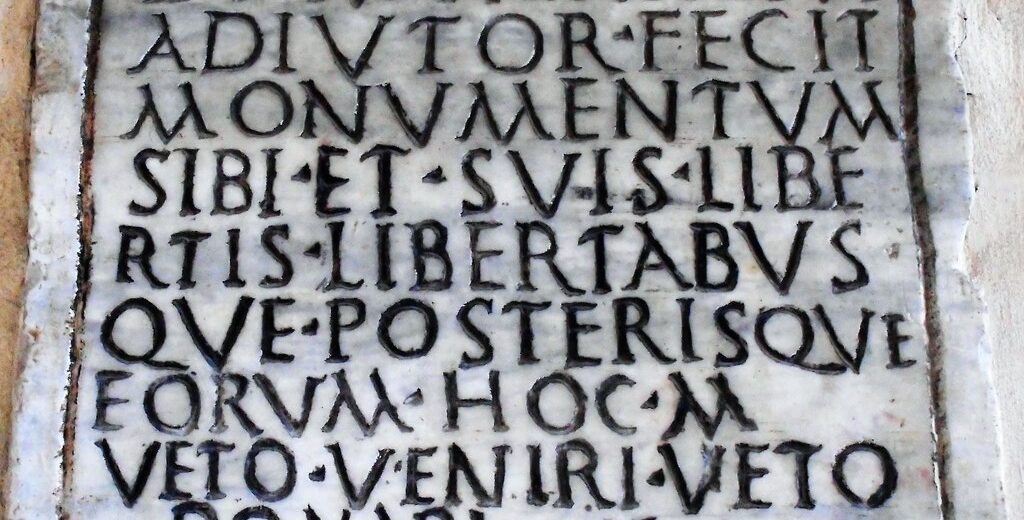
Roman grave marker is a revealing historical subject because it opens a clear path into the people, events, and wider changes that shaped its era.
It is not every day that a piece of ancient Rome appears in the dirt of modern New Orleans. Yet that is exactly what happened when a backyard in the city yielded a marble grave marker for a Roman sailor, a striking artifact whose journey spans the Mediterranean, an Italian museum, the shadowy world of antiquities trafficking, and the work of modern archaeologists and investigators. The object is compelling not only because it survived nearly two millennia, but because its long disappearance and unexpected reappearance reveal how fragile the record of the past can be once artifacts leave their original places of rest.
At first glance, the stone seems almost improbable in its setting. New Orleans is a city layered with history, but a Roman funerary inscription does not belong among its courtyards and back gardens. That dissonance is precisely what makes the discovery so powerful. Archaeology is often imagined as the recovery of objects from the ground, but this case shows that discoveries can also happen in the aftermath of loss: a stolen artifact turned up far from home, and in doing so exposed the hidden routes by which antiquities can travel across borders and through time.
The marker and the man it honored
The grave marker itself belonged to a Roman sailor, a man whose identity was preserved through the formulaic language of a funerary inscription. Such markers were more than simple memorials. In the Roman world, inscriptions announced lineage, status, occupation, and sometimes the affection of those left behind. For a sailor, that detail mattered. The sea was central to the empire’s military, commercial, and cultural life, and maritime labor connected distant provinces with the city of Rome and the broader Mediterranean network.
Although the exact wording of the inscription is best understood through the object’s recorded history, the important point is that it identified the deceased as a sailor and thus anchored his memory to a very specific vocation. Ancient Roman graves often combined practical information with emotional weight. The marker told passersby who had died, but also reminded them of the precariousness of life in a world of voyages, storms, and imperial service. A sailor’s tombstone could speak to the routines of transport and warfare, yet it could also echo the loneliness of death far from home.
That the stone survived at all is remarkable. Funerary monuments are not always preserved in place. They can be reused in later buildings, buried by urban growth, or removed in antiquity itself. In this case, the inscription became a relic not only of Roman personal commemoration but also of the modern tendency to collect, display, and sometimes misplace artifacts for their aesthetic or monetary value. Its journey from grave marker to museum object to missing item underscores how an inscription can function as both a historical source and a vulnerable commodity.
Viewed archaeologically, the marker is especially valuable because inscriptions are among the clearest voices from the ancient world. They are direct, if formulaic, and they can reveal names, social categories, and the language of remembrance. A funerary stone for a sailor is therefore not just a decorative object. It is evidence of how Rome organized its dead, how it recognized maritime life, and how personal identity was publicly performed in stone.
From Civitavecchia to a museum shelf
The marker’s original burial place was Civitavecchia, the port city on the Tyrrhenian coast north of Rome. That location is significant in itself. Civitavecchia has long served as a maritime gateway, and its ancient burial grounds reflected the movement of people tied to shipping, travel, and trade. A sailor’s grave marker found there would have made perfect sense within the wider Roman landscape of ports, cemeteries, and roads leading in and out of the capital.
In an ideal archaeological world, the stone would have remained documented in its precise context, allowing scholars to connect the inscription to nearby burials, burial practices, and the broader topography of the necropolis. Instead, the object eventually entered a museum collection, where it should have been protected and cataloged. Museums are meant to stabilize the past. They create accession records, preserve provenance, and make artifacts available for study and public education. When that system fails, the result is especially damaging because the object’s context can be lost even if the stone itself survives.
According to the research notes surrounding this case, the marker later vanished from the Italian museum where it had been held. That disappearance is central to the story. It suggests that the stone did not simply go missing through ordinary neglect but became entangled in the illicit antiquities market. Once an artifact leaves proper custody, the chain of evidence that gives it meaning starts to unravel. Who removed it? When did it disappear? Through what hands did it pass? In many cases, those questions never receive full answers.
What makes this case especially unsettling is that the object was not a random curio. It was a recorded antiquity with a traceable origin. In a well-functioning system, that should have made it easier to protect. Instead, the very thing that made it valuable to scholarship also made it attractive to traffickers. The marker’s trip from a documented burial in Civitavecchia to an American backyard is a reminder that ancient objects can be displaced many times over, and that each removal erodes the archaeological record a little further.
The New Orleans backyard discovery
The discovery in New Orleans reads almost like a scene from historical fiction: a homeowner, perhaps while tending a yard or moving earth, notices an object that clearly does not belong. Yet archaeology is full of such moments, when the ordinary landscape of the present unexpectedly yields a fragment of the ancient world. The difference here is that the object did not emerge from an organized excavation. It surfaced in a domestic space, in a city celebrated for its own rich past, but not as a Roman site.
That contrast is part of what made the find newsworthy. New Orleans has seen centuries of cultural layering, from colonial settlement to port expansion to modern neighborhood life, but a Roman grave marker is an intrusion from an entirely different historical horizon. Its appearance in a backyard immediately raised questions about how it got there and whether the owner of the property had any idea what it was. In the best cases, such discoveries lead to documentation, expert consultation, and, eventually, repatriation. The key first step is recognizing that an object is not just old, but historically meaningful.
Modern archaeology depends heavily on that recognition. A stone inscription lying in a yard is not merely a decorative oddity. It is evidence that can be identified, photographed, measured, and compared with museum records and scholarly databases. Specialists can often determine style, language, and provenance from a few clues. In this case, the marker’s inscription helped connect it back to Italy and to the broader story of the sailor it commemorated. Once that connection was made, the object ceased to be an isolated curiosity and became part of a larger investigation.
There is also something symbolically resonant about the discovery site. A backyard is a private space, intimate and domestic, while a Roman tombstone is a public memorial to the dead. The artifact had traveled from one form of public memory to another form of accidental concealment. That tension highlights one of archaeology’s deepest truths: the past is often hidden not in remote ruins, but in the middle of everyday life, waiting for the right moment and the right eyes to bring it back into view.
What the case tells us about antiquities trafficking
The marker’s disappearance from an Italian museum and its later appearance in the United States are not just sensational details; they are symptoms of a larger problem in the global antiquities trade. Illicit antiquities trafficking thrives on objects that can be detached from their archaeological context, moved quietly across borders, and sold to collectors who may know little or nothing about their origin. Once an artifact enters that shadow system, it becomes much harder to recover the information that gives it scholarly value.
As discussions of illicit antiquities have long emphasized, the harm is not limited to the loss of the object itself. The real damage often lies in the extraction process. When items are looted or diverted from collections, they are stripped of context, and that context is what allows archaeologists to understand how ancient people lived, buried their dead, traded, worshiped, and moved through the world. Without it, an artifact can still be admired, but it can no longer speak as fully as it once did.
This Roman sailor’s marker illustrates that problem clearly. Even though the inscription survived, its route through the antiquities market likely obscured parts of its history. Every transfer creates a gap. Every undocumented sale weakens the chain of custody. In a broader sense, the artifact becomes a case study in how cultural heritage can be transformed from evidence into property, and from property into evidence again only after law enforcement, scholars, and museum professionals reconstruct its path.
There is an ethical dimension as well. Antiquities trafficking often depends on a demand for ancient objects divorced from origin stories. Collectors may see a beautiful inscribed stone and not ask where it came from. But for archaeologists, the story is inseparable from the stone. Modern recovery efforts therefore do more than retrieve lost material. They try to restore historical accountability. That is why this New Orleans discovery matters so much: it exposes how a single object can illuminate an entire illicit system.
Why modern archaeology still depends on context
It is tempting to think of archaeology as the pursuit of rare objects, but the field has long moved beyond treasure hunting. The real goal is understanding human behavior through material evidence. That means context matters above almost everything else. A funerary inscription in its original cemetery can tell us about burial customs, local society, and the relationship between land use and the dead. The same inscription, pulled out of context and relocated across oceans, becomes harder to interpret, even if the words remain legible.
This is why finds like the Roman sailor’s grave marker are so instructive for the public. They show that archaeology does not end when an object is found. In many ways, the discovery begins a second life for the artifact, one defined by documentation, authentication, and ethical decision-making. Specialists may compare the marker against museum inventories, archival photographs, or catalog records, using the smallest details to reconstruct its past. In cases like this, science, art history, conservation, and law all intersect.
The story also reminds us that the modern world is full of accidental archives. A backyard, a storage room, or a museum shelf can conceal a history waiting to be recovered. That is true not only for Roman inscriptions but for countless other categories of material remains. Archaeology is often about patience, comparison, and the willingness to follow evidence wherever it leads. In that sense, this discovery belongs to the same broad tradition as famous finds in unexpected places, from ship burials to hidden skeletal remains unearthed in city basements. The past does not always announce itself politely; sometimes it turns up where no one expected it.
the marker’s reappearance in New Orleans offers a hopeful message alongside the troubling one. Yes, artifacts can be stolen, displaced, and concealed. But they can also be recognized, studied, and, in time, restored to the historical record. Each recovery strengthens the case for preservation and responsible collecting. Each repatriation or identification makes the archaeological map a little more complete. The sailor’s grave marker, once lost from Civitavecchia and nearly erased by illicit circulation, now stands as evidence that modern archaeology is not only about uncovering the ancient world, but about defending its integrity.
There is a certain poetic justice in the story. A Roman sailor, whose life was tied to movement across the sea, now speaks again after a voyage he never would have imagined. His stone has crossed the centuries and survived the dangers of both time and greed. Found in a New Orleans backyard, it has become more than an artifact. It is a warning, a clue, and a testament to the enduring power of material history when scholars and the public alike take its survival seriously.
Related reading: Sutton Hoo: the 1939 ship burial that reshaped, The first known artworks date back roughly 100,000 years ago.
Research and further reading
For readers who want to verify details or continue researching this subject, these external reference collections provide useful starting points: