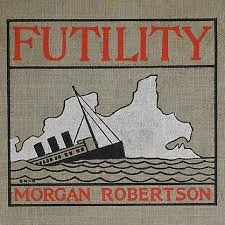
Fourteen years before the RMS Titanic struck an iceberg and disappeared beneath the icy waters of the North Atlantic, a little-known American author published a novella that seems, even today, uncomfortably prophetic. In 1898, Morgan Robertson released a short novel titled Futility, or the Wreck of the Titan. The story described a massive luxury liner named the Titan, touted as practically unsinkable, colliding with an iceberg during an April voyage in the North Atlantic. The ship carried far too few lifeboats for its passengers, resulting in catastrophic loss of life. When the Titanic sank in 1912 under eerily similar circumstances, readers and historians alike began to question whether Robertson’s story was a coincidence, a remarkable case of informed imagination, or something more unsettling. While the idea of prophecy captivates the public imagination, the true explanation lies at the intersection of late 19th-century maritime trends, technological optimism, and human hubris.
Morgan Robertson and the World That Shaped His Imagination
Morgan Robertson was born in 1861 and spent much of his early life at sea. He worked as a merchant sailor, gaining firsthand experience aboard ships during a period of rapid technological change in maritime engineering. By the late 19th century, shipbuilders were engaged in an arms race of size, speed, and luxury. Steel hulls, steam propulsion, and compartmentalized designs were transforming ocean travel. Robertson absorbed this world deeply, and when he turned to writing, he drew heavily on his maritime knowledge.
Robertson was not a mystic or visionary in the supernatural sense. He was a technically minded writer who believed strongly in realism. His fiction often focused on the limits of human engineering and the consequences of overconfidence. Futility was written as a cautionary tale, meant to criticize the growing arrogance of ship designers and owners who believed technology had conquered nature.
In the 1890s, the idea of an “unsinkable” ship was already circulating in engineering circles. Advances in watertight compartments made vessels far safer than their predecessors, and shipbuilders increasingly advertised this safety as near-infallibility. Robertson understood both the strengths and limitations of these systems. He knew that no ship was truly immune to catastrophe, particularly in dangerous waters like the North Atlantic, where icebergs posed a seasonal threat.
When Robertson imagined the Titan, he was extrapolating from existing trends. He envisioned what the ultimate expression of maritime ambition might look like if designers continued pushing boundaries without sufficient humility. The similarities to the Titanic were not the result of clairvoyance, but of informed speculation grounded in real-world developments that were already underway.
The Fictional Titan and the Real Titanic: An Unsettling Comparison
The parallels between Robertson’s fictional Titan and the real Titanic are undeniably striking. In Futility, the Titan was described as the largest ship ever built, measuring around 800 feet long—remarkably close to Titanic’s actual length of 882 feet. Both ships were luxury liners designed to dominate transatlantic travel, carrying wealthy passengers in unprecedented comfort while also transporting large numbers of emigrants below deck.
Both ships were declared virtually unsinkable due to advanced compartmentalization. The Titan was said to be incapable of sinking under ordinary circumstances, while the Titanic was famously marketed as “practically unsinkable.” This language reflected the same cultural mindset: confidence in engineering had outpaced respect for the unpredictability of nature.
The most chilling similarity lies in the circumstances of their destruction. In Robertson’s novella, the Titan strikes an iceberg in April while traveling at high speed through the North Atlantic. The Titanic struck an iceberg on April 14, 1912, under comparable conditions. Both ships were traveling quickly through known iceberg territory, driven by competitive pressure and belief in their own resilience.
Even the lifeboat shortage aligns disturbingly. In Futility, the Titan carries only 24 lifeboats—far too few for its thousands of passengers. The Titanic, while technically compliant with outdated maritime regulations, carried lifeboats for only about half of those on board. In both cases, the assumption that the ship would never need full evacuation led directly to mass fatalities.
These similarities have fueled decades of speculation, yet when examined closely, they reflect industry-wide practices rather than singular coincidence. The Titanic was not unique in its lack of lifeboats or its confidence in technology—it was simply the most famous example.
Lifeboats, Laws, and the Illusion of Safety
One of the most haunting connections between the Titan and the Titanic is the issue of lifeboats. To modern readers, the idea that a passenger ship could sail without enough lifeboats seems unthinkable. Yet in the late 19th and early 20th centuries, this was standard practice. Maritime safety demonstrated a dangerous lag between technological advancement and regulatory oversight.
At the time Titanic was built, lifeboat requirements were based on a ship’s tonnage rather than passenger capacity. These rules had not been meaningfully updated for decades, despite ships growing dramatically larger. Shipbuilders and operators argued that lifeboats cluttered decks, detracted from aesthetics, and were unnecessary given the perceived safety of modern ships.
Robertson criticized this mindset explicitly in Futility. His fictional disaster was meant to show how faith in unsinkability bred complacency. Lifeboats, in his view, were treated as optional rather than essential because ship designers believed evacuation would never be needed. This belief was not fictional—it was widespread.
When Titanic sailed, it technically exceeded legal requirements by carrying more lifeboats than mandated. Yet those requirements were profoundly inadequate. The tragedy revealed a regulatory system that had failed to keep pace with innovation, much like Robertson had warned.
The aftermath of Titanic’s sinking brought sweeping reforms. International maritime law was updated, lifeboat capacity requirements were increased, and safety drills became mandatory. In this sense, the disaster confirmed Robertson’s core message: technology without humility and oversight invites catastrophe.
Coincidence, Prediction, or Informed Critique?
The question often posed—was Futility prophetic?—reveals more about human psychology than historical reality. Humans are drawn to patterns, especially when tragedy is involved. The similarities between Titan and Titanic feel uncanny because we encounter them with hindsight, selectively focusing on what aligns while overlooking differences.
For example, Robertson’s Titan sank almost instantly after the collision, whereas Titanic took over two hours to disappear. The causes of failure differed in engineering detail. Robertson’s story was also not unique in depicting maritime disaster; shipwreck narratives were common in the 19th century, reflecting widespread anxiety about industrial progress.
What sets Futility apart is not supernatural foresight, but technical plausibility. Robertson understood ship design, iceberg risks, and corporate arrogance. He saw clearly where industry trends were leading and imagined the logical worst-case scenario. When Titanic later fulfilled that scenario, it was not because Robertson predicted the future, but because the industry failed to change course.
This distinction matters. Treating Futility as prophecy diminishes its real value as social critique. Robertson was warning readers about systemic flaws, not foretelling a specific event. The tragedy of Titanic validated his concerns in the most devastating way possible.
In retrospect, Futility reads less like a prediction and more like an indictment—one that history unfortunately confirmed.
The Cultural Obsession With Titanic and Forgotten Warnings
The Titanic disaster quickly became more than a maritime tragedy; it became a cultural symbol. It represented the collapse of human arrogance, the false promise of technological mastery, and the cost of ignoring warnings. In this narrative, Futility gained renewed attention as a haunting precursor.
Yet it is important to note that Robertson himself did not profit significantly from this association. He died in relative obscurity in 1915, only three years after Titanic sank. His broader body of work faded into near anonymity, overshadowed by the singular eeriness of Futility.
The fixation on coincidence has often overshadowed the deeper lesson. The Titanic was not undone by fate, prophecy, or inevitability—it was undone by decisions made within a cultural framework that prioritized prestige over precaution. Robertson identified that framework years earlier.
Modern audiences often treat Titanic as an isolated anomaly, but in reality it was the culmination of industry norms. Other ships before and after it faced similar risks. What made Titanic unique was the scale of loss and the symbolic moment at which it occurred—on the eve of World War I, as faith in progress began to fracture.
The enduring fascination with Robertson’s novella reflects our discomfort with ignored warnings. We are unsettled not because the story predicted Titanic, but because it reminds us how often disasters are foreseeable—and preventable.
Why the Story Still Resonates Today
More than a century later, the story of Futility and the Titanic remains deeply relevant. Modern society continues to grapple with technological overconfidence, from nuclear power to artificial intelligence. Engineers and institutions often believe safeguards are sufficient—until they are tested by reality.
Robertson’s message echoes across time: systems built by humans are vulnerable to human assumptions. When safety measures are compromised for efficiency, profit, or prestige, consequences follow. The Titan and Titanic are cautionary symbols of this pattern.
The comparison also reminds us of the importance of regulation keeping pace with innovation. Titanic did not violate the law—it exposed its inadequacy. This dynamic repeats across history, from industrial accidents to financial crises.
the real question is not whether Futility was prophetic, but why its warnings were ignored. The tragedy lies not in coincidence, but in complacency.
A Warning, Not a Prophecy
Morgan Robertson did not foresee the Titanic in a mystical sense. He understood ships, human nature, and the dangerous marriage of ambition and certainty. In Futility, he imagined what would happen if those forces collided—quite literally—with nature.
Fourteen years later, reality followed fiction with devastating precision. Not because the future was written, but because the conditions Robertson critiqued remained unchanged.
The similarities between the Titan and the Titanic are unsettling, but they are not supernatural. They are a reminder that when warnings are dismissed, history has a way of repeating itself.
Research and further reading
For readers who want to verify details or continue researching this subject, these external reference collections provide useful starting points: