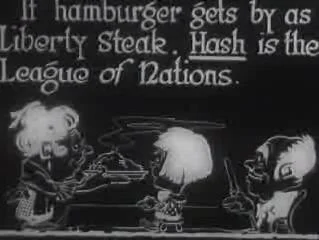
When the United States entered the Second World War, the battlefield was not the only place where patriotism surged. It appeared on factory floors, in school classrooms, in movie theaters—and even on dinner plates. In a curious twist of culinary history, everyday foods were caught up in the fervor of wartime nationalism. Hamburgers briefly became known as “liberty steaks,” and sauerkraut was rechristened “liberty cabbage.” These changes were not driven by new recipes or agricultural reforms, but by language. The word “hamburger” sounded unmistakably German, and in a moment when Germany was the enemy, that was enough to make Americans uncomfortable.
This seemingly small linguistic shift reveals something much larger about American culture during global conflict. It tells a story about identity, fear, propaganda, assimilation, and the power of words. Food has always carried emotional meaning, but during wartime, it can become symbolic terrain. The renaming of familiar dishes was not simply a joke or a novelty. It reflected deep currents of suspicion toward anything associated with the enemy and showed how even the most ordinary parts of life can be reshaped by geopolitics.
Wartime Patriotism and the Policing of Language
When the United States entered the Second World War in 1941, the nation mobilized at an extraordinary pace. Factories shifted from consumer goods to tanks and aircraft. Rationing programs regulated sugar, gasoline, and meat. Millions of men enlisted or were drafted, and women entered the workforce in record numbers. Alongside these tangible changes came a powerful surge of patriotic sentiment. Americans were encouraged to buy war bonds, conserve resources, and demonstrate loyalty in visible ways.
Language became one of the subtle tools through which patriotism was expressed. Words matter deeply in times of crisis. They shape how people think about allies and enemies, about belonging and threat. Anything that sounded too German could raise eyebrows. The term “hamburger” derives from Hamburg, a major German port city. Although the hamburger as Americans knew it had evolved largely in the United States, its name pointed directly to Germany. In a moment when German forces were associated with aggression and devastation in Europe, the word itself felt discordant.
Renaming the hamburger as “liberty steak” served as a linguistic cleansing. It allowed Americans to keep enjoying a beloved food without invoking the enemy in everyday speech. The same logic applied to sauerkraut, a fermented cabbage dish with deep roots in German cuisine. Rebranding it as “liberty cabbage” symbolically detached it from its origins and attached it to American ideals instead. “Liberty” was a powerful word—one that evoked the Revolutionary War and democratic values. By inserting that term into food names, Americans asserted moral contrast with the Axis powers.
This was not a government mandate enforced by law. Rather, it emerged from a mixture of media influence, local initiatives, and cultural pressure. Restaurants, newspapers, and communities experimented with the new names. The changes reflected an atmosphere in which symbolic gestures carried weight. In wartime, even language could feel like a battleground.
Echoes from the First World War
The renaming of hamburgers during the Second World War was not an isolated phenomenon. In fact, it had a clear historical precedent in the First World War. When the United States fought Germany between 1917 and 1918, anti-German sentiment reached dramatic levels. German-language newspapers were shut down, German music was removed from concert programs, and schools dropped German language instruction. Sauerkraut had already been renamed “liberty cabbage” during that earlier conflict.
By the time the Second World War began, the pattern was familiar. In the First World War, some communities went so far as to change the names of towns with German-sounding titles. Dachshunds were called “liberty pups.” Even the composer Beethoven, who had died long before the wars, was temporarily sidelined in some cultural circles because of his German heritage. These reactions reveal how quickly suspicion can spill over into daily life.
The reuse of “liberty cabbage” during the Second World War shows how cultural memory operates. Americans remembered the earlier period of renaming and revived it almost instinctively. It demonstrates that wartime nationalism tends to follow predictable paths. When facing an external enemy, societies often seek to draw clear symbolic boundaries between “us” and “them.” Language becomes a tool to enforce those boundaries.
However, it is important to recognize that these reactions were not universally embraced. Many Americans of German descent had been living in the United States for generations. They considered themselves fully American and often served in the military with distinction. For them, the suspicion directed at German culture could feel unfair or painful. The renaming of foods might have seemed trivial to some, but it occurred within a broader atmosphere that sometimes included discrimination and mistrust.
By examining these earlier echoes, we can see that “liberty steak” was not merely a quirky footnote. It was part of a recurring pattern in American history, one in which global conflict reshaped domestic culture in subtle yet revealing ways.
The Hamburger: From Immigrant Food to American Icon
To understand why renaming the hamburger mattered, we must appreciate how deeply embedded it had become in American culture. Though its name references Hamburg, the modern hamburger was largely developed and popularized in the United States in the late nineteenth and early twentieth centuries. German immigrants brought minced beef traditions with them, but American cooks adapted the concept into the sandwich form we recognize today.
By the 1930s and 1940s, the hamburger was already a staple of diners, roadside stands, and lunch counters. It was affordable, filling, and easy to prepare. During the Great Depression, it offered working families a relatively inexpensive source of protein. As automobile culture expanded, drive-ins and casual eateries made the hamburger synonymous with modern American life.
Because the hamburger had become such a powerful cultural symbol, its German-sounding name posed an awkward contradiction during wartime. It felt strange for a quintessentially American food to carry the linguistic imprint of the enemy. Renaming it “liberty steak” attempted to resolve that tension. The new name emphasized its beef content and reframed it as something robust and patriotic.
Interestingly, the alternative name never fully replaced “hamburger.” Unlike some wartime adjustments, this one had limited staying power. Americans continued to use the original term widely, suggesting that the cultural attachment to the established name was too strong to dislodge. The hamburger had already undergone a process of Americanization so complete that most people no longer thought of it as foreign.
This outcome highlights the complexity of cultural identity. Food traditions often begin in one place and evolve elsewhere. By the mid-twentieth century, the hamburger had become less a symbol of Germany and more an emblem of American ingenuity and industrial efficiency. The attempt to rename it reveals anxiety, but its limited success reveals confidence. Americans may have been wary of German associations, yet they ultimately claimed the hamburger as their own.
Sauerkraut and the Immigrant Experience
Sauerkraut’s journey in American society offers a slightly different perspective. Unlike the hamburger, sauerkraut remained more visibly tied to its Central European roots. It was widely consumed in German-American communities and featured prominently in traditional dishes. In cities with large immigrant populations, such as those in the Midwest and Northeast, sauerkraut was part of everyday cuisine.
During wartime, however, visible markers of German heritage could draw suspicion. The renaming of sauerkraut as “liberty cabbage” symbolized a broader pressure on immigrant communities to demonstrate loyalty. Many German-Americans had already faced hostility during the First World War, and the Second World War revived some of those anxieties. While the scale of repression was not as severe as during the earlier conflict, the cultural climate still encouraged overt displays of patriotism.
Food can serve as a bridge between old and new identities. For immigrant families, preparing traditional dishes is often a way to maintain connection with ancestral roots while adapting to a new homeland. When those dishes become politically charged, the emotional stakes rise. Calling sauerkraut “liberty cabbage” was a way to keep the food on the table without inviting criticism.
At the same time, sauerkraut also had practical value during wartime. As a fermented food, it stored well and provided essential nutrients, including vitamin C. In an era of rationing, preserving vegetables was both economical and necessary. Its continued consumption, regardless of name, demonstrates how practicality often outweighs symbolism.
The story of sauerkraut underscores how wartime language shifts intersect with questions of belonging. Immigrant communities were not passive observers; they actively participated in the renaming process as a way to signal allegiance. In doing so, they navigated the delicate balance between cultural heritage and national loyalty.
Propaganda, Media, and the Power of Symbolism
Wartime governments rely heavily on propaganda to maintain morale and unity. Posters, radio broadcasts, films, and newspapers all carried messages encouraging citizens to contribute to the war effort. While there was no federal decree mandating the renaming of hamburgers or sauerkraut, the broader propaganda environment encouraged symbolic acts of solidarity.
Newspapers occasionally used the terms “liberty steak” and “liberty cabbage,” amplifying their visibility. Local restaurants sometimes adopted the names as promotional gestures. These changes fit neatly into a larger pattern of symbolic patriotism, which included everything from victory gardens to scrap metal drives.
The word “liberty” itself carried enormous rhetorical weight. It connected the contemporary struggle against fascism with the nation’s founding ideals. By inserting “liberty” into everyday vocabulary, Americans reinforced a narrative of moral clarity: they were fighting for freedom against tyranny. The renaming of foods, though minor in practical terms, contributed to that narrative.
Symbolism can have real psychological effects. When citizens feel that every aspect of life is aligned with a national cause, it strengthens social cohesion. Even small acts, like choosing certain words, can foster a sense of participation. In this way, the language of food became part of a much larger cultural mobilization.
Yet symbolism also has limits. Once the war ended, the urgency that fueled such changes dissipated. The old names returned effortlessly, suggesting that the wartime labels were more performative than permanent. They served their purpose in a specific historical context and then faded into memory.
The Legacy of “Liberty” Foods in American Memory
Today, the idea of calling hamburgers “liberty steaks” may sound quaint or even humorous. It is often cited as a curious anecdote in discussions of wartime culture. However, its legacy extends beyond trivia. It invites reflection on how societies respond to fear and how language can both unite and exclude.
The episode also reminds us that American identity has always been shaped by immigration. Foods that once seemed foreign have become central to national cuisine. The hamburger, now recognized globally as a symbol of American culture, began as a culinary hybrid. Sauerkraut, too, remains part of many regional food traditions. Their temporary renaming did not erase their origins; it simply revealed the tensions of a particular moment.
In later decades, similar patterns have reappeared. During times of political tension, products and cultural symbols associated with rival nations sometimes face scrutiny. These recurring episodes suggest that the impulse to rename or rebrand is less about the objects themselves and more about collective emotion.
the story of “liberty steak” and “liberty cabbage” highlights the resilience of cultural exchange. Despite wartime anxieties, the United States continued to absorb and adapt influences from around the world. The temporary discomfort with German-sounding names did not prevent the long-term integration of German culinary traditions into American life.
As we look back, we can appreciate the episode as both a reflection of genuine wartime fear and a testament to the fluidity of culture. Language changed, but appetites remained. The foods endured, and their stories enrich our understanding of how global conflict shapes domestic life in unexpected ways.
In the end, hamburgers never stopped being hamburgers for long. Sauerkraut reclaimed its original name. The brief era of “liberty” foods stands as a reminder that words can shift quickly under pressure, but cultural traditions are often far more durable than wartime rhetoric.
Research and further reading
For readers who want to verify details or continue researching this subject, these external reference collections provide useful starting points: