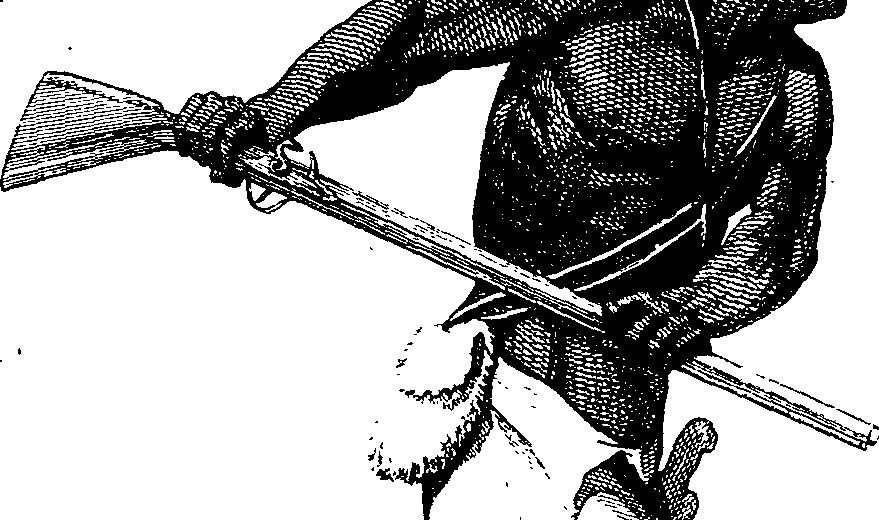
In 1739, the government of Britain’s most profitable Caribbean colony did something colonial officials had resisted for decades: it negotiated with people who had escaped slavery and built communities beyond plantation control. Jamaican Maroon fighters had survived repeated campaigns, defended mountain settlements, and made permanent victory too costly for the colonial regime. Their treaties did not end slavery in Jamaica, but they acknowledged that armed Black communities could force an imperial government to bargain.
The conflict now called the First Maroon War grew from a longer struggle that began when England seized Jamaica from Spain in 1655. It was not one continuous campaign with neat front lines, fixed armies, or a universally agreed starting date. Western and eastern Maroon communities had distinct leaders and histories. Colonial sources recorded them as enemies; Maroon oral traditions preserved different memories.
The war is often compressed into a heroic tale of guerrilla resistance or a story of betrayal after peace. Both themes are present, but neither is sufficient. The Maroons won recognized freedom and land. The same agreements required them to return future runaways and assist the colony against rebellions and invasions. Their achievement and the treaty’s moral cost must be understood together.
Maroon communities grew from conquest and escape
Spain began colonizing Jamaica after European arrival, subjecting Indigenous Taíno people to violence, forced labor, disease, and displacement while importing enslaved Africans. When English forces invaded in 1655, Spanish authority collapsed over several years. Some Africans who had escaped or been freed during the fighting withdrew into the interior, where they joined or formed communities beyond English control.
These early groups were not the only ancestors of the Jamaican Maroons. As the English plantation economy expanded, additional enslaved Africans escaped. Some joined existing settlements; others created new bands. People brought military experience, agricultural knowledge, languages, religious practices, and political traditions from different parts of Africa, while adapting to Jamaica’s landscape and colonial conditions.
The word “Maroon” is generally connected to the Spanish cimarrón, a term applied to people or animals who escaped control. Colonial usage could be contemptuous, but Maroon became the name of communities defined by collective freedom, territory, kinship, and defense. Marronage existed wherever slavery created opportunities and reasons to flee, from Brazil and Suriname to North America and the Indian Ocean.
It is misleading to imagine a single Maroon nation covering Jamaica. Communities developed in different regions. The Leeward Maroons were based in the west, especially the difficult Cockpit Country; Windward groups operated in the east, including communities associated with Nanny, Quao, and other leaders. They could cooperate, communicate, or pursue separate strategies.
Nor were these societies simply camps of unattached warriors. They needed farms, water, shelter, families, ritual life, intelligence, and exchange. Their survival depended on social organization as much as combat. By building durable settlements, they challenged the plantation system’s claim that Africans in Jamaica could exist only under enslavement or colonial permission.
Jamaica’s plantation boom made conflict inevitable
After taking Jamaica, English colonists transformed the island into a major producer of sugar. Plantations required capital, land, mills, shipping, and the coerced labor of a rapidly growing enslaved population. Wealth flowed to planters and merchants while mortality, punishment, and forced work defined life for enslaved people.
Maroon settlements threatened this order in several ways. They demonstrated that escape could lead to sustained freedom. They sometimes raided plantations for weapons, food, tools, and other supplies. They could receive new runaways or exchange information with enslaved workers, although the nature of these relationships varied by place and time.
Colonial leaders feared more than property loss. Jamaica had a white minority ruling a much larger enslaved population. Officials worried that Maroon warfare might encourage plantation revolt, combine with foreign invasion, or make inland districts impossible to settle. The island’s mountains became a strategic problem inside a colony oriented toward coastal estates.
The African background of Jamaica’s enslaved population also mattered. Many captives came from societies with military traditions and recent experience of warfare. The Atlantic slave trade did not strip people of all previous knowledge when they crossed the ocean. Maroon leaders and fighters adapted skills to local conditions while developing new tactics through decades of conflict.
The broader Atlantic system linked Jamaican slavery to African political history, including the transformations discussed in the site’s article on the Kingdom of Kongo. Yet no single African origin explains Maroon society. These were new Caribbean communities formed by people with varied backgrounds under the pressure of conquest and enslavement.
The mountains favored defense, movement, and intelligence
Western Jamaica’s Cockpit Country is a landscape of steep limestone hills, sinkholes, caves, narrow paths, and dense vegetation. In the east, rugged ridges and forests offered different but equally difficult terrain. Colonial troops trained for formations and open movement struggled where visibility was short and routes were unfamiliar.
Maroon fighters exploited that imbalance. They used ambush, concealment, rapid withdrawal, and dispersed positions rather than offering the decisive open battle colonial commanders wanted. Marksmen could fire from cover and disappear along paths known to local guides. Defensive works and concealed settlements reduced the advantage of larger forces.
Communication was equally important. The abeng, a horn associated with Maroon signaling, became a powerful symbol of warning and mobilization. Drums, runners, observation posts, and intelligence from people outside the settlements could alert communities to approaching troops. The precise historical use of particular signals is difficult to reconstruct, but organized communication was essential.
Food strategy shaped the war. Maroon communities cultivated crops, hunted wild hogs, and acquired supplies through trade or raids. Colonial expeditions tried to destroy provision grounds, while Maroons targeted estates and transport. A campaign could fail without a major battle if troops became sick, hungry, lost, or exhausted.
“Guerrilla warfare” is a useful modern description, but it should not suggest random hit-and-run attacks. Maroon strategy joined terrain, settlement design, intelligence, food production, and political leadership. Their objective was not necessarily to capture Spanish Town or govern the entire island. It was to preserve communities the plantation colony could not absorb.
There was no single Maroon army or commander
Popular history often organizes the war around two famous figures: Cudjoe in the west and Nanny in the east. Both are central to Jamaican memory, but reducing the conflict to two biographies obscures collective leadership and the differences among Maroon communities.
Cudjoe is associated with the Leeward Maroons and settlements in western Jamaica. Colonial accounts portray him as a formidable commander who negotiated the 1739 treaty. Those sources were written by enemies or later observers and often used racial stereotypes. They confirm his political importance but do not provide a transparent portrait of his personality or motives.
Nanny, now recognized as a National Hero of Jamaica, is associated with Windward resistance and Nanny Town in the Blue Mountains. Oral tradition remembers her as a military and spiritual leader with extraordinary powers. Written colonial records mention “Nanny” less fully than modern readers might expect, and historians debate how particular references fit the remembered leader.
The uncertainty does not justify dismissing oral tradition, nor does tradition make every later detail independently verifiable. Oral histories preserve community meanings and knowledge neglected by hostile archives. The responsible approach is to identify what different sources establish, where they conflict, and why colonial paperwork might minimize a Black woman’s authority.
Quao, Accompong, Johnny, and other leaders also shaped strategy and diplomacy. Leadership likely combined military reputation, kinship, spiritual authority, and persuasion. Maroon politics were not frozen: factions could disagree about war, settlement, and treaty terms. The peace process itself exposed those differences.
Colonial campaigns repeatedly failed to produce victory
The conventional date for the First Maroon War’s beginning is around 1728, when Governor Robert Hunter intensified colonial operations, though armed conflict had a much longer history. Jamaica’s government mobilized militia, regular soldiers, enslaved auxiliaries, and Indigenous trackers brought from the Americas. It spent money on roads, forts, rewards, and expeditions into the interior.
Colonial numerical superiority did not translate into control. Large columns were visible and slow. Tropical disease and difficult supply lines weakened forces before they reached Maroon positions. Guides could mislead troops, and unfamiliar terrain created fear. Even the destruction of a settlement did not end resistance if residents escaped and rebuilt elsewhere.
Maroon raids imposed costs on frontier plantations and discouraged expansion into vulnerable areas. The colony responded with harsh laws, bounties, and collective punishment. Surviving reports often exaggerate enemy casualties while minimizing colonial losses, a common problem in military records written to defend commanders and budgets.
Neither side was untouched by the long war. Maroons faced deaths, displacement, crop destruction, and constant pressure. Their smaller population limited their capacity to absorb losses. Colonial authorities could draw on greater resources, yet planters resented taxes and military service for campaigns that produced no final result.
By the late 1730s, negotiation became rational for both parties. Colonial officials could convert a dangerous enemy into a buffer force and reduce military spending. Maroon leaders could gain recognized land and freedom before exhaustion or division weakened their position. The treaties emerged from stalemate and calculation, not from simple colonial generosity.
The 1739–1740 agreements recognized freedom with conditions
The best-known agreement was concluded in 1739 between colonial representatives and Cudjoe’s Leeward Maroons. A separate agreement followed with Windward leaders, commonly associated with Quao, while Nanny later received a land patent. The dates and relationships among these arrangements can differ in historical accounts, partly because written colonial documents and Maroon memories organize events differently.
The Leeward treaty declared an end to hostilities and recognized Cudjoe’s people as free. It granted land—usually given as 1,500 acres—along with rights to cultivate crops, raise animals, hunt, and trade under specified conditions. It also provided for internal leadership while placing a colonial superintendent among the community.
These provisions represented an extraordinary concession within a slave society. The colonial government acknowledged that a community of formerly enslaved people possessed collective freedom it could not eliminate by force. Maroon descendants have treated the agreements as foundational charters, not favors revocable at a governor’s convenience.
The documents also restricted that freedom. Maroons were required to return future runaways, assist in suppressing rebellions, and defend the island against invasion. Limits on harboring newcomers separated treaty communities from people who continued escaping plantations. British officials hoped to turn independent resistance into an instrument of colonial security.
Calling the agreements either complete sovereignty or unconditional surrender distorts their ambiguity. They recognized territory and self-government while embedding Maroon communities within a colonial framework. University of the West Indies scholarship describes this disputed legal inheritance: the same clauses have been read as reciprocal recognition, limited autonomy, pacification, or subordination.
The runaway clause created a lasting moral conflict
The treaty obligation to capture and return future runaways is the most painful part of the settlement’s legacy. Later Maroon forces helped colonial authorities suppress revolts, including Tacky’s Revolt in 1760. This history has fueled accusations that the Maroons exchanged solidarity with the enslaved majority for their own security.
The criticism cannot be answered by pretending the clause did not exist. People fleeing slavery after 1739 could encounter Maroon communities bound by agreements to return them. Captured rebels experienced the consequences directly. The treaties helped stabilize the plantation system even though Maroon resistance had earlier exposed its weakness.
Context does not erase responsibility, but it explains the choice. Maroon leaders negotiated for specific communities after decades of warfare, under threat from a colony with greater manpower and resources. They did not possess the capacity to abolish Atlantic slavery. Refusing peace might have preserved moral independence while risking land, families, and survival.
Practice was not always identical to treaty language. Some runaways continued to reach or pass through Maroon territory, and relations differed among communities and individuals. Colonial officials complained when obligations were not fulfilled to their satisfaction. The post-treaty world remained negotiated rather than perfectly controlled.
The contradiction is historically important because resistance under slavery rarely produced pure choices. A community could be both a symbol of Black freedom and an armed partner of the colonial state. Recognizing both roles avoids turning Maroons into flawless heroes or dismissing their achievement as betrayal.
Life after the treaty was neither isolated nor fully independent
After 1739–1740, recognized Maroon towns developed under their own leaders while interacting with colonial officials, neighboring estates, markets, and other free and enslaved Jamaicans. Communities farmed, hunted, traded, raised families, practiced religion, and maintained military organization. Their populations grew despite the island’s harsh disease environment.
Colonial superintendents were intended to observe and influence the towns. Disputes arose over leadership, criminal jurisdiction, land boundaries, trade, and the meaning of treaty rights. Internal opposition also existed. Not every Maroon accepted the settlement or the authority of leaders who enforced it.
The treaties did not prevent later war. In 1795, conflict erupted between Trelawny Town Maroons and the colonial government after accumulated grievances and the humiliating flogging of two Maroon men. The Second Maroon War ended with the deportation of hundreds of Trelawny Town Maroons, first to Nova Scotia and later to Sierra Leone. The episode showed how fragile colonial respect for negotiated rights could be.
Other treaty communities remained in Jamaica. Accompong, Moore Town, Charles Town, and Scott’s Hall are not ruins of extinct societies; Maroon identity and institutions continue. Land, leadership, cultural heritage, and legal status remain subjects of debate within independent Jamaica.
This continuity is why the war cannot be treated only as an eighteenth-century military curiosity. The agreements still shape claims about communal land and political authority. Modern disagreements do not have easy answers because the original documents combined recognition with control and because Maroon understandings were never limited to the colonial text.
What historians can—and cannot—recover
Much written evidence for the war came from governors, militia officers, planters, and colonial legislators. They recorded expenses, expeditions, laws, casualties, and negotiations, but they viewed Maroon freedom as a threat. Their language often dehumanized opponents and justified violent policy. Such records must be used critically rather than discarded, because they still preserve dates and actions unavailable elsewhere.
Maroon oral traditions offer perspectives the colonial archive excluded: genealogies, sacred places, leaders, tactics, and meanings attached to freedom. Oral accounts can change across generations, just as written histories do. Variation does not make them worthless. It reveals how communities remember and interpret the past.
Archaeology adds evidence from settlements, provision grounds, defensive landscapes, pottery, weapons, and trade goods. Material remains can show that communities were more permanent and connected than colonial descriptions admitted. Yet objects do not identify every person or settle every dispute about leadership.
The strongest reconstruction combines these sources without forcing them into artificial agreement. We can confirm sustained armed resistance, distinct eastern and western communities, costly colonial campaigns, and treaty recognition of land and freedom. We cannot verify every dramatic story attached to an individual leader or assume that one treaty expressed the views of all Maroons.
The First Maroon War changed the politics of slavery
The Maroons did not overthrow British rule or emancipate Jamaica’s enslaved majority. Their victory was narrower and still remarkable: they made the colony recognize permanent communities of free Black people inside an island organized around racial slavery. Military survival became political leverage.
The peace also strengthened colonial rule. By assigning Maroons responsibility for returning runaways and fighting rebellions, the government reduced one threat and gained experienced forces against another. The agreements demonstrate how empires survive by negotiation and division as well as battlefield victory.
For Maroon communities, however, treaty freedom was not merely a colonial strategy. It protected families, territory, and institutions created through generations of resistance. The people who accepted peace were not surrendering a theoretical cause from safety; they were deciding how a vulnerable society might endure.
The war’s meaning therefore lies in tension. It is a history of liberation achieved within a slave society, autonomy bounded by colonial supervision, and survival purchased through obligations that harmed later fugitives. A mature account should not resolve those contradictions into a slogan.
Jamaica’s Maroons forced Britain to negotiate because the plantation colony could not defeat them at an acceptable cost. Their settlements endured because military skill was joined to farming, intelligence, leadership, spiritual life, and political compromise. The First Maroon War was not a footnote to empire. It exposed the limits of imperial power from inside one of its richest colonies.
Sources and further reading
University of the West Indies, “The Maroons of Jamaica: A Socio-Legal Exposition”
University of the West Indies, “A Search for Understanding about the Jamaican Maroons”
National Library of Jamaica, “The Jamaican Maroons”
UNESCO Intangible Cultural Heritage, “Maroon Heritage of Moore Town”
Cambridge University Press, Michael Craton, Testing the Chains