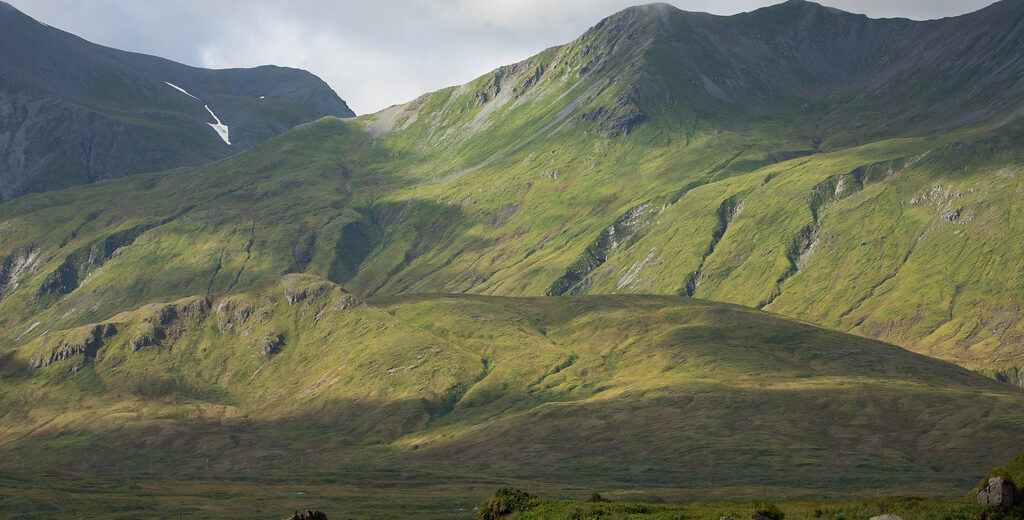
When people picture World War II, they usually think of Normandy beaches, Pacific island hopping, or the rubble of European cities. Far fewer imagine American soil becoming a battlefield in a war against Imperial Japan. Yet in the far North Pacific, on the remote Aleutian island of Attu, U.S. and Japanese troops fought a brutal land battle in 1943 that stands alone in American memory. The Battle of Attu was not just a military engagement in a remote corner of Alaska; it was a fight shaped by geography, weather, desperation, and the harsh reality that war can reach even the most isolated places.
Attu mattered because of where it sat. It was the westernmost point of the Aleutian chain, a string of windswept islands stretching like stepping stones toward Asia. In a war increasingly defined by control of the Pacific, even a cold, fog-covered island could become strategically valuable. The battle that unfolded there was short compared with many campaigns, but it was devastating. American forces eventually retook the island, yet the victory came at a terrible cost. Cold injuries, illness, exhaustion, and the island’s miserable terrain claimed as much attention as bullets and artillery. At the same time, the campaign tore apart the lives of the island’s Unangax̂ residents, who were forcibly removed and sent into exile.
Today, the Battle of Attu remains one of the least remembered major battles of World War II, despite being the only land battle fought on American soil during the war. Understanding it offers a fuller picture of the Pacific conflict: not just the grand offensives and famous turning points, but also the small, remote, and deeply human struggles that shaped the war’s outcome.
Why Attu Mattered in the North Pacific
The Battle of Attu cannot be understood without first understanding the strategic anxiety that gripped U.S. leaders in 1942. After Japanese forces attacked Dutch Harbor and raided the Aleutians in June of that year, the North Pacific suddenly looked vulnerable. The Aleutian chain was not a direct route to the American mainland, but it was close enough to Alaska to raise fears of bombing raids, reconnaissance flights, and the possibility that Japan might use the islands as outposts. In wartime, perception could be as important as actual military capability, and the idea of Japanese troops sitting on American territory was politically and psychologically alarming.
Attu’s location gave it outsized significance. From a map, it appears remote and almost abstract, but in military terms it could serve as a forward base for air and naval operations. Control of the island meant denying the enemy a foothold in the western Aleutians and protecting the approaches to Alaska. It also signaled that the United States would not tolerate occupation of its territory, however distant or inhospitable that territory might be. That symbolic dimension mattered, especially in a war that demanded public confidence as much as military power.
The Japanese occupation of Attu followed the 1942 Aleutian raids and formed part of a broader effort to threaten the northern Pacific. While it never became a staging ground for a massive invasion of the United States, the occupation forced American planners to divert men, aircraft, ships, and supplies to a region with terrible weather and very little infrastructure. In that sense, Attu was not a side issue. It was a pressure point. The island’s value lay less in its resources than in its position, and in wartime a position can be enough to justify a fight.
The battle also fits into a larger pattern of global military history: remote places can become central when empires and nations project power across oceans. Much like how Greek fire: and the Byzantine naval defense shaped warfare by exploiting environment and technology, the Battle of Attu showed how geography itself could become a weapon, a barrier, and a strategic asset all at once.
The Japanese Occupation and the Fate of Attu’s Unangax̂ Residents
Long before the battle became a line in military history books, Attu was home to Unangax̂ people whose lives were upended by war. The Japanese occupation did not simply place soldiers on an empty island. It disrupted a living community with its own traditions, family ties, and relationship to the land and sea. When Japanese forces took control, the island’s residents were forced from their homes and sent to Japan as prisoners. Their removal was one of the most tragic and least discussed aspects of the campaign, because it reveals that military occupation is never only about terrain or supply lines. It is also about human beings uprooted from the places that define them.
The Unangax̂ people of Attu endured the war in a profoundly unequal way. Removed from their homeland, they were exposed to harsh conditions, insecurity, and separation from the cultural world they had known. Their story is essential to any honest account of the Battle of Attu, because battlefield narratives often erase the civilians caught between armies. In the Aleutians, however, that human cost is impossible to ignore. The island changed hands not through diplomacy or negotiation but through invasion and displacement.
For American commanders, the presence of Japanese troops on Attu meant that recapture would have both strategic and emotional significance. It was not only about restoring a line on the map. It was about ending an enemy occupation on U.S. territory. The decision to mount an assault was therefore shaped by military necessity and national pride, but also by the grim recognition that every day the island remained occupied, the region remained unstable.
The occupation also left a long shadow over the postwar years. Families displaced from Attu faced permanent loss, and the war altered the demographic and cultural landscape of the Aleutians. In military history, it is easy to focus on troop movements and casualty totals, but the Battle of Attu reminds us that the consequences of occupation can outlast the combat by generations. For the Unangax̂ community, the island was not simply terrain to be fought over. It was home.
The 1943 Recapture: Fighting in Fog, Ice, and Mud
When American forces launched the recapture of Attu in May 1943, they entered one of the most punishing environments of the war. The campaign unfolded in subarctic conditions that made every step difficult. Fog could obscure visibility almost completely, making coordination between units a nightmare. Rain, sleet, and snow turned the ground into mud or ice. Hills, ridges, and ravines created a landscape that was exhausting even before the enemy fired a shot. In the Aleutians, the terrain was not just the setting for battle; it was an active participant in the violence.
The Japanese defenders used the island’s features to their advantage. They dug in, occupied strong positions, and forced the Americans to advance through difficult approaches. Fighting became a grinding matter of small-unit attacks, close combat, and painstaking movement across broken ground. Unlike the more famous amphibious assaults in the central and southern Pacific, Attu did not offer bright beaches, clear skies, or easy momentum. It was a war of attrition in a place where the weather itself felt hostile.
American troops were often inadequately prepared for the climate. Many had to learn quickly how dangerous exposure could be. Cold injuries, trench foot, and illness spread through the ranks. Men who were not killed by gunfire or shelling could be taken out of action by weather and fatigue. In some sectors, the island’s conditions proved more efficient than the enemy at weakening the assault. That is one reason the Battle of Attu is remembered by military historians as one of the deadliest and least appreciated Pacific battles: the environment magnified every mistake and every delay.
Although the recapture of Attu ultimately succeeded, it was not a clean or easy victory. American forces had to grind down determined resistance in terrain that resisted every movement. The campaign showed that even when a force has the advantage in men and material, victory can still feel brutal and uncertain when nature is aligned against it. It also demonstrated a hard lesson of Pacific warfare: logistics and weather could be as decisive as firepower.
Casualties, Cold Injuries, and a Battle Defined by Suffering
One of the most striking things about the Battle of Attu is how often the environment competed with direct combat as a cause of casualties. In many World War II campaigns, historians can point to a major tank battle, air strike, or artillery barrage as the central source of loss. On Attu, by contrast, cold injuries, exposure, and disease became major threats. The island’s subarctic climate punished both sides, and American soldiers sometimes found themselves incapacitated not because they were shot, but because they could no longer withstand the conditions.
This does not make the battle less military; it makes it more revealing. War is often imagined as a contest of weapons and tactics, but Attu shows how profoundly environmental factors can shape an outcome. Men struggled to sleep, move, and stay dry. Equipment failed. Visibility collapsed. Fatigue accumulated. In such conditions, command decisions had to account for the fact that every mile forward might cost more than expected. The battle became a test not only of courage, but of endurance.
Casualty figures also reflected the ferocity of the Japanese defense. The defenders fought tenaciously and often to the death, which meant that the Americans could not simply overrun the island with ease. The final actions on Attu were especially grim, culminating in desperate last stands and mass death among the Japanese garrison. The result was a victory, but one achieved through a level of attrition that shocked many who took part in it.
Because the battle took place in such a remote part of the war, it never acquired the same public memory as Midway, Guadalcanal, or Normandy. Yet its human cost was real and severe. In some ways, the obscurity of the battle makes its suffering even more striking. The men who fought there endured conditions that were extreme even by World War II standards, and many of the losses came from forces that left little visual drama but enormous physical damage. The Battle of Attu remains a reminder that some of history’s fiercest battles are also its most overlooked.
The Legacy of the Battle of Attu in Military History
The Battle of Attu ended as a tactical American victory, but its legacy is larger and more complicated than a simple recapture of territory. Strategically, it helped secure the Aleutians and removed the immediate Japanese threat to the western edge of American territory. Politically, it demonstrated that the United States would reclaim even the most remote occupied ground. Militarily, it offered lessons in Arctic and subarctic warfare, amphibious logistics, and the dangers of underestimating terrain and weather. These lessons mattered, even if they were not always remembered in public conversation after the war.
Attu’s importance also lies in what it reveals about the broader Pacific War. The conflict was not fought only on famous tropical islands or in massive fleet engagements. It also reached the far North Pacific, where geography, climate, and human endurance decided the shape of operations. The island’s story complicates the popular image of World War II as a war fought in familiar theaters with clear front lines. Instead, it shows a conflict that stretched into remote and unforgiving places, where victory could look painfully ordinary: a slow advance, a cold camp, a ruined landscape, and survivors trying to make sense of what they had endured.
For the Unangax̂ people, the legacy is even more personal. The wartime displacement of Attu’s residents remains central to the island’s history and memory. Any meaningful account of the battle must include their forced removal and the long-term consequences that followed. Military history is strongest when it preserves that human dimension rather than flattening it into maps and dates.
Remembering Attu also broadens how we understand “American soil” in wartime. The phrase can sound abstract, but on Attu it meant a real place, with real people, where foreign troops once stood and where American soldiers had to fight to restore control. The island’s battle was isolated, bitter, and costly. It deserves to be remembered not only because it was the only World War II land battle fought on American soil, but because it shows how war reaches the margins, and how those margins can become central in a single terrible season.
In the end, the Battle of Attu is a story of strategic fear, occupation, recapture, and sacrifice. It is also a story of weather, isolation, and the stubborn human will to endure in one of the harshest battlefields of the Second World War. That combination makes it more than a forgotten campaign. It makes it one of the clearest reminders that military history is not only written in capitals and command centers, but also on frozen ridgelines far from the places most people think the war touched.
Related reading: Greek fire: and the Byzantine naval defense, Adolf Hitler’s nephew fought against the Nazis in World War II.
Research and further reading
For readers who want to verify details or continue researching this subject, these external reference collections provide useful starting points: