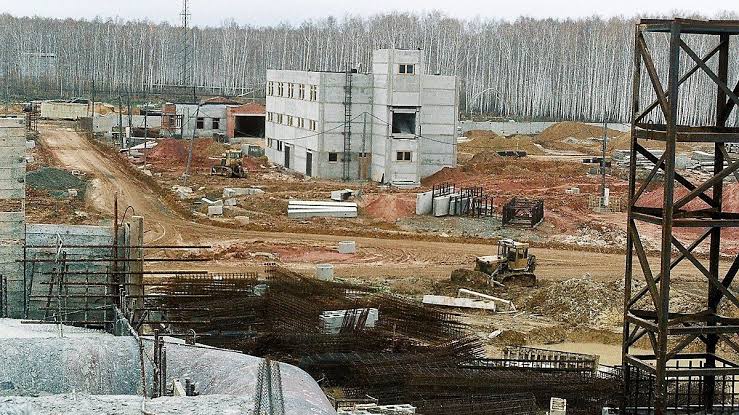
On 29 September 1957, a tank containing high-activity radioactive waste exploded at the Mayak nuclear complex in the Soviet Union. The blast was chemical rather than a nuclear detonation, but it lofted radioactive material into the atmosphere and contaminated a long corridor of the southern Urals. The surrounding public was not given a prompt, transparent account of what had happened.
That distinction is important. The Kyshtym Disaster is often described with the language of a reactor accident, yet the failure began in the waste-management system of a plutonium-production complex. The International Atomic Energy Agency describes the event as the explosion of a tank holding highly active waste solution, while UNSCEAR reports that the accident created the East Urals Radioactive Trace and exposed large surrounding populations to varying levels of contamination.
The accident is therefore best understood through three connected histories: the technical failure at Mayak, the human consequences of evacuation and environmental exposure, and the secrecy that made reconstruction difficult for both residents and later researchers. Exact death totals are especially contentious because the affected population experienced different doses, other Mayak releases occurred before and after 1957, and epidemiological effects cannot be reduced to one dramatic number.
Mayak, plutonium production and the waste problem
Mayak was created in the late 1940s as the Soviet Union rushed to break the United States’ atomic monopoly. Built near the industrial city of Chelyabinsk, the complex included plutonium-producing reactors and chemical plants that separated plutonium from irradiated fuel. Its workers and the neighboring closed city formed part of an immense military program governed by urgency, secrecy, and severe political pressure.
The Soviet Union tested its first atomic bomb in August 1949, far sooner than many Western observers expected. That achievement was scientifically and strategically significant, but the production system behind it imposed enormous environmental costs. Reactor operation and fuel reprocessing generated large volumes of liquid waste containing radioactive fission products. Engineers had to manage materials that produced both penetrating radiation and substantial decay heat long after they left a reactor.
At Mayak, production goals repeatedly outran the infrastructure available for safe waste treatment. Highly contaminated liquids were stored in tanks, while other wastes entered the local environment through practices that later created separate exposure episodes. The problem was not merely that early nuclear science was immature. Officials understood that radiation could injure workers and communities, but military secrecy and production deadlines shaped which risks were tolerated, documented, or disclosed.
The Waste Tank Beneath the Ground
The tank that failed was part of a storage complex for high-level liquid waste from fuel reprocessing. Such waste continued to release heat as unstable isotopes decayed. It therefore required cooling and monitoring even when no active nuclear reaction was occurring. The tanks were buried and shielded because their contents were lethally radioactive at close range.
Investigations reconstructed a failure of the cooling system in one tank. Without adequate cooling, water gradually evaporated and the remaining chemicals became increasingly concentrated and dry. The waste included nitrate and acetate compounds capable of supporting a powerful chemical reaction under the wrong conditions. Heat accumulated over many months while the tank’s condition was not corrected.
On September 29, the dried chemical mixture detonated. Estimates commonly place the force in the range of tens of tons of TNT, often around 70 to 100 tons. The explosion tore through the heavy structure above the tank and projected radioactive material into the atmosphere. The exact mechanical details have been refined through later technical study, but the central sequence—cooling failure, evaporation, chemical concentration, and explosion—is well established.
It was a preventable industrial failure involving nuclear waste. Calling it simply a “nuclear explosion” is misleading because that phrase suggests an atomic-bomb detonation. The energy came from a chemical explosion; the extraordinary danger came from the radioactive inventory that the blast dispersed.
What Was Released into the Air
Later scientific assessments estimate that the explosion released roughly 20 million curies, or about 740 petabecquerels, of radioactive material from the tank. Much of it settled near the Mayak site. Approximately two million curies, about 74 petabecquerels, were carried beyond the complex and deposited across the countryside. These are reconstructed estimates, not measurements announced to the public in 1957.
Wind drove the airborne material generally northeast. Fallout continued for roughly ten to eleven hours, producing what researchers later called the East Urals Radioactive Trace, or EURT. The contaminated zone stretched for hundreds of kilometers, but it was not a neat, uniformly poisoned rectangle. Deposition varied with distance, weather, terrain, and the behavior of different radionuclides.
Strontium-90 became especially important in long-term assessments because it has a half-life of about 29 years and can enter food chains. Chemically similar to calcium, it can accumulate in bone. Shorter-lived radionuclides contributed more heavily to early doses, while longer-lived contaminants shaped land-use restrictions and prolonged monitoring.
What happened to communities downwind
People in nearby settlements saw unusual dust and, according to later recollections, sometimes noticed colored light or haze. They were not promptly told that a radioactive accident had occurred. Authorities began measurements and imposed selected controls, but evacuation unfolded in stages rather than through one immediate removal of everyone at risk.
The most contaminated village was evacuated about a week after the explosion. Other communities waited months, and some removals occurred much later. Across the program, roughly 10,000 to 11,000 residents were eventually relocated from the most affected settlements, although totals vary with the dates and boundaries used by different studies. Houses were dismantled or destroyed in some abandoned villages to discourage return.
Delay mattered because exposure did not end when the plume passed. Radioactive particles settled on soil, crops, roofs, water sources, and grazing land. Residents could inhale resuspended dust or ingest radionuclides through locally produced food. Cows eating contaminated forage could transfer radioactivity into milk, an important pathway for children.
What Residents Were Told—and Not Told
Soviet secrecy operated at several levels. Mayak itself belonged to the weapons establishment; the adjacent city had a numerical designation and was excluded from public maps. Workers were bound by security rules, medical information was restricted, and official explanations for evacuation avoided an open account of radioactive fallout.
Some residents were told that an unspecified industrial problem or local health concern required action. Restrictions could appear arbitrary when authorities did not explain radiation, contamination pathways, or long-term uncertainty. Families lost homes, fields, livestock, and community ties while being denied the basic facts that would have allowed informed decisions.
Secrecy also affected medicine. Doctors and researchers gathered valuable data, but diagnoses, study results, and institutional records were controlled by the state. The exposed population became an object of observation without the transparency and consent expected in ethical human research today. Medical surveillance could provide treatment and produce scientific knowledge, yet it existed within a coercive political system that concealed the reason for surveillance.
Cleanup in a Radioactive Landscape
Workers and soldiers decontaminated buildings, roads, fields, and equipment. Tasks included removing soil, washing surfaces, burying contaminated materials, destroying crops, and restricting the use of forest and agricultural products. The effectiveness of such measures varied, and many workers operated under conditions that would later be recognized as inadequately protective.
In 1968, authorities established the East Ural State Reserve over part of the most contaminated territory. The reserve restricted public access and enabled long-term radioecological research. It also transformed damaged inhabited land into a controlled scientific landscape. Describing it only as a wildlife refuge obscures the history of displaced communities beneath that new status.
Cleanup did not restore the region to its pre-accident condition. It reduced selected exposure pathways and removed people from dangerous locations, but it also redistributed contaminated material and left a legacy requiring decades of monitoring. Like the engineering failures behind California’s St. Francis Dam disaster, Kyshtym demonstrates that the decisive history of a technological catastrophe often begins long before the moment of structural failure.
What health studies can—and cannot—tell us
There is no single, securely established death toll for the Kyshtym accident. Claims that a precise number of people died directly or that hundreds of thousands suffered identical harm usually compress several different questions into one dramatic figure. Acute radiation injury, later cancer risk, chronic illness, psychological harm, forced displacement, and exposure from other Mayak releases are not interchangeable categories.
Most people exposed in the EURT did not receive the extreme whole-body doses associated with rapid death from acute radiation syndrome. Long-term concern focused instead on elevated probabilities of cancers and other effects that can be difficult to distinguish from diseases occurring naturally in a large population. Researchers have followed exposed cohorts for decades, refining estimates of external and internal dose.
Those studies are valuable but constrained. Individual doses often had to be reconstructed from settlement measurements, dietary models, residence histories, and later biological data. Some residents had already encountered contamination from the Techa River, while others experienced occupational exposure. Migration, incomplete records, changes in diagnostic practice, and the secrecy surrounding early research further complicate causal conclusions.
Evidence supports real radiation-related health risks among groups exposed through Mayak operations and releases. It does not justify converting every later illness into a confirmed consequence of the 1957 explosion. The honest conclusion is less tidy: the accident exposed thousands, increased risk unevenly, and left uncertainties that no retrospective calculation can eliminate.
Three Mayak Contamination Episodes, Not One
The Kyshtym disaster is frequently blended with other environmental damage caused by Mayak. Separating the episodes is essential for accurate history. From 1949 into the 1950s and, at reduced levels, afterward, radioactive liquid waste was discharged into the Techa River system. More than 30,000 people in riverside communities were exposed to varying degrees through water, food, sediments, and daily use of the river.
The 1957 tank explosion created the East Urals Radioactive Trace along a different pathway. Then, in 1967, drought and wind lifted contaminated sediments from the exposed shores of Lake Karachay, another waste-affected location, and spread them over surrounding territory. Each event involved different mixtures of radionuclides, geographic patterns, and exposure periods.
Lumping the three episodes together can exaggerate or minimize Kyshtym, depending on which numbers are borrowed. More importantly, it hides the systemic nature of the problem. Mayak’s environmental history was not one freak explosion followed by safety. It was a sequence of waste-management decisions and accidents produced by an institution operating behind a national-security barrier.
Why the accident became known as Kyshtym
The name itself is evidence of the secrecy surrounding the complex. Mayak stood near Ozyorsk, but the closed settlement was known at different times by postal designations including Chelyabinsk-40 and Chelyabinsk-65. It was absent from ordinary maps, and outsiders could not freely visit it. Kyshtym was a visible town in the wider area, so its name became attached to the accident.
This geographical displacement can create a false impression that the explosion occurred in Kyshtym or that the town alone suffered the consequences. The actual pattern followed the Mayak site and the wind-driven EURT. Historians retain “Kyshtym Disaster” because the term is internationally established, but a precise account should identify Mayak and the secret city.
How the Story Reached the Outside World
Rumors of a major radioactive event circulated beyond the region, and foreign intelligence agencies acquired indications that something serious had happened. But classified knowledge is not the same as public confirmation. For years, scholars, journalists, and ordinary citizens lacked documentation sufficient to reconstruct the accident confidently.
A decisive figure was Zhores Medvedev, a Soviet biologist living in exile in Britain. In 1976 he published an account arguing that a major nuclear waste accident had occurred in the Urals. Some Western nuclear experts doubted him, in part because his description challenged confidence in waste-storage technology and relied on indirect evidence available outside the secret Soviet system.
Medvedev responded by assembling clues from Soviet scientific literature. Papers about radiation ecology, contaminated landscapes, and unusual experimental zones did not openly name the catastrophe, but together they revealed a major event. His work showed how published fragments could expose a truth that formal censorship tried to hide.
The Soviet government did not publicly acknowledge the accident in a meaningful way until the era of glasnost in the late 1980s. Official confirmation opened more records and allowed fuller scientific exchange, although access and interpretation remained contested. The long delay demonstrates why “hidden” should not mean that absolutely nobody knew. Specialists, officials, residents, and intelligence services possessed pieces of the story; what was denied was open, verifiable public knowledge.
A Level 6 Accident—Classified Retrospectively
Kyshtym is widely listed at Level 6, a “serious accident,” on the seven-point International Nuclear and Radiological Event Scale. Only Chernobyl in 1986 and Fukushima Daiichi in 2011 are classified at Level 7. The comparison communicates the scale of radioactive release and off-site consequences, but it needs context.
The scale was developed decades after 1957, so Kyshtym’s rating is retrospective. It does not mean Soviet authorities assigned a Level 6 at the time, nor does it produce a direct ranking of fatalities. INES combines factors such as releases, radiation effects, and failures of control; events with the same number can unfold in very different ways.
Chernobyl involved a reactor explosion and fire that lofted radionuclides over much of Europe. Fukushima followed an earthquake and tsunami that disabled cooling at several reactors. Kyshtym began in a high-level waste tank at a military production complex. Treating all three as generic “nuclear explosions” erases the engineering lessons specific to each.
The useful comparison is institutional. Complex technologies can fail when warning systems, maintenance, emergency planning, and honest communication are subordinated to production or political reputation. Britain’s response to the Great Smog of London likewise shows how an invisible hazard becomes a historical turning point only when evidence is converted into public policy. At Mayak, secrecy delayed that conversion for decades.
Where the evidence remains uncertain
One oversimplification portrays the disaster as unknown until a courageous outsider revealed it. Medvedev’s role was crucial, but residents had lived the consequences, Soviet researchers had studied them, and foreign governments had gathered intelligence. The historical problem was not absence of knowledge; it was unequal access to knowledge and the inability to challenge official decisions openly.
Finally, estimates should not be mistaken for certainties merely because they appear as precise numbers. Release inventories, affected populations, evacuation totals, and excess disease risks depend on definitions and models. Good history reports the best-supported ranges and explains why they vary instead of choosing the largest available figure.
The legacy of an accident hidden from public view
The Kyshtym disaster changed international understanding of nuclear waste. It proved that a catastrophic radiological release could originate outside a power reactor and long after fuel had left the core. High-level waste remained thermally active and chemically dangerous; safe storage required reliable cooling, monitoring, redundancy, and an institutional culture prepared to act on failure.
Its political lesson is equally durable. Secret facilities may protect military information, but secrecy can also hide unsafe practices, prevent communities from recognizing exposure, and obstruct independent science. Emergency response depends on trust. When authorities refuse to explain hazards, even technically sound restrictions can deepen fear and resentment.
Why Kyshtym still matters
The explosion at Mayak lasted moments; its history stretches across generations. A failed cooling system allowed radioactive waste to dry and chemically detonate. The resulting plume formed the East Urals Radioactive Trace, contaminated settlements, and led to delayed evacuations, land restrictions, cleanup campaigns, and prolonged medical observation.
What transformed an industrial accident into a profound historical warning was the surrounding silence. Residents bore risk without informed consent. Researchers worked with evidence they could not freely publish. Outsiders assembled fragments for nearly two decades before the story gained wide credibility, and official acknowledgment came later still.
The most responsible account avoids both comforting minimization and sensational certainty. Kyshtym was not an atomic-bomb blast, not a reactor meltdown, and not the sole source of radioactive harm around Mayak. It was a severe, preventable waste-management accident whose exact health toll cannot be reduced to one reliable number. Its confirmed facts are alarming enough.
Remembering the Kyshtym disaster accurately means treating technical safety and public truth as inseparable. Cooling systems, radiation monitors, and containment structures matter. So do transparent records, independent scrutiny, and the right of exposed communities to know what happened. Mayak failed on both sides of that equation, and its legacy remains a warning wherever hazardous technology operates behind closed doors.
Sources and further reading
This article was reviewed against institutional, academic, or primary-source material. These links are provided so readers can check the evidence and explore the subject in greater depth.
- International Atomic Energy Agency – historical nuclear accidents, including Kyshtym/Mayak
- UNSCEAR 1994 – epidemiological studies of populations exposed in the southern Urals
- UNSCEAR 2008 – review of radiation exposures and historical accidents
Related reading on Top History Facts: Radium Girls and Great Smog of London