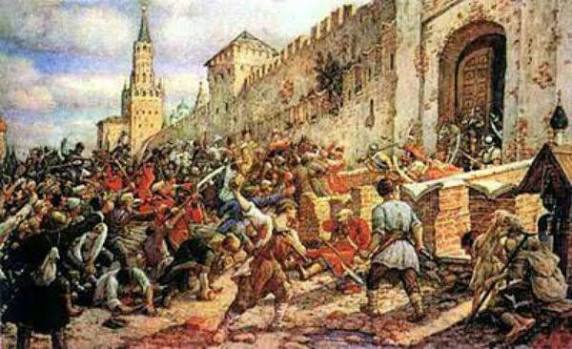
For five days in January 532, the center of Constantinople burned while a crowd in its great chariot stadium demanded the fall of Emperor Justinian I. The Blues and Greens—usually bitter rivals—shouted the same word: “Nika,” meaning “Conquer” or “Win.” Ministers were dismissed, prisoners were freed, an alternative emperor was proclaimed, and Justinian reportedly prepared to flee. When imperial troops finally entered the Hippodrome, the uprising ended in a massacre.
The Nika Riots are often described as the deadliest sports riot in history. That label offers an easy modern comparison, but it hides the event’s political depth. Chariot factions were not simply fan clubs, the rebels did not share one program, and the famous details come from authors with different loyalties and agendas. The revolt grew from sport, punishment, taxation, elite rivalry, urban anger, and the dangerous intimacy between emperor and crowd in the Byzantine capital.
Constantinople, Justinian, and a city built for spectacle
Constantinople in 532 was the capital of the eastern Roman Empire, known to modern historians as the Byzantine Empire. Founded as an imperial capital by Constantine I two centuries earlier, it occupied a strategic position between Europe and Asia. Its harbors, palaces, churches, baths, markets, and defensive walls made it one of the Mediterranean world’s richest cities. It was also a place where enormous crowds could gather within sight and hearing of the ruler.
The Hippodrome stood beside the imperial palace and near the cathedral of Hagia Sophia. Its long track hosted chariot racing, ceremonial displays, punishments, and public celebrations. The emperor watched from the kathisma, a royal box linked directly to the palace. This architectural arrangement turned entertainment into political theater. The crowd could acclaim the emperor, petition him, insult officials, or expose discontent before tens of thousands of spectators.
Justinian had ruled since 527, initially after serving alongside his uncle Justin I. He pursued an ambitious vision of Roman renewal through law, warfare, religious policy, taxation, and monumental building. Later achievements would include the codification associated with the Corpus Juris Civilis and campaigns to recover former western provinces. In 532, however, much of that program was incomplete. The regime needed money, faced conflict with Persia, and depended on officials whose methods generated resentment.
Who were the Blues and Greens?
Chariot racing centered on color factions. By the sixth century, the Blues and Greens dominated, absorbing or overshadowing the older Reds and Whites. Teams organized horses, drivers, equipment, and supporters. Successful charioteers became celebrities, while spectators expressed intense loyalty to a color. Violence between faction members was real and sometimes lethal.
Calling the factions modern political parties goes too far. They had no stable manifestos, formal national membership, or consistent policies comparable to later parties. Nor can Blues and Greens be mapped neatly onto fixed religious classes or social groups. Ancient authors and modern historians have associated them with competing theological, regional, or economic interests, but the evidence does not support a permanent one-to-one alignment.
They nevertheless mattered politically. Faction networks could organize crowds, carry petitions, transmit rumors, and connect sporting identity with neighborhood solidarity and elite patronage. Emperors favored one color at different moments, creating expectations of protection. Justinian and Empress Theodora were traditionally associated with the Blues, though Theodora’s family background was linked to the Greens in stories about her youth. During the Nika crisis, shared anger temporarily outweighed the rivalry between the two camps.
The failed executions that triggered the revolt
The immediate crisis began before the races. Authorities had arrested several faction members after earlier violence and sentenced them to death. At an execution on January 10, the apparatus reportedly failed for two condemned men, one Blue and one Green. Monks helped the survivors reach sanctuary in a church near the Golden Horn, where soldiers kept them under guard.
The failed hanging was easily interpreted as a sign of divine favor or at least as grounds for clemency. Supporters appealed to Justinian to spare the two men. On January 13, a race day in the Hippodrome, faction voices repeatedly petitioned the emperor. He did not grant the pardon the crowd demanded. Hostility escalated as Blues and Greens discovered a common grievance against imperial justice.
Near the end of the races, the factions joined in the cry “Nika.” Rioters attacked officials and the city prison, freeing inmates. Fires spread through central Constantinople. The disturbance had moved beyond an argument over two convicts, but their fate provided the spark. A public execution had exposed the relationship among factional violence, imperial punishment, religious sanctuary, and the ruler’s willingness—or refusal—to show mercy.
Why anger spread beyond the Hippodrome
The speed of the uprising cannot be explained by racing passion alone. Justinian’s government demanded substantial revenue for war, administration, diplomacy, and construction. The praetorian prefect John the Cappadocian became notorious in hostile accounts for aggressive taxation. Tribonian, the chief legal official, was accused of corruption and of manipulating law for profit. Eudaemon, the urban prefect responsible for order, was associated with the disputed executions.
Ancient descriptions of these men are shaped by political hostility and literary convention. Officials who collect taxes or reform law rarely receive sympathetic treatment from those who pay or lose influence. Yet the crowd’s demands show that resentment was not invented afterward. Justinian dismissed John, Tribonian, and Eudaemon during the revolt, hoping that sacrificing prominent ministers would calm the city.
The concession failed because the crisis had widened. Arson and looting created their own momentum. Prisoners and opportunists joined faction supporters. Senators who disliked Justinian’s government saw danger and possibility in the same streets. Some participants wanted pardons or dismissals, others revenge, and others a new emperor. The Nika Riots became a coalition of grievances without becoming a disciplined revolution. That lack of unity would ultimately help Justinian survive.
Five days of fire in the imperial capital
Fighting and fire consumed the ceremonial heart of Constantinople. The earlier Hagia Sophia—built before the present structure—burned, as did the church of Hagia Eirene. Flames damaged the Senate house, the Baths of Zeuxippus, the Chalke entrance to the palace complex, and surrounding residences and colonnades. Ancient reports do not permit a precise modern damage map, but they agree that destruction was extensive.
Fire was especially dangerous in a dense city where wooden roofs and structures stood among monumental stone buildings. Rioters used it as a weapon, while attempts by troops or loyalists to restore order could provoke further burning. Once multiple fires began, motive became difficult to assign. Some destruction was targeted at symbols of government; some followed the uncontrolled logic of an urban conflagration.
Justinian tried negotiation and force. He appeared before the crowd with the Gospels and promised concessions, according to the chronicler John Malalas, but failed to regain trust. Troops sent against rioters could intensify resistance. The palace remained defensible, yet its position beside the Hippodrome also trapped the court near the center of rebellion. Every day that disorder continued made a change of regime more imaginable.
Hypatius becomes a reluctant rival emperor
The rebels eventually turned toward Hypatius, a nephew of the former emperor Anastasius I. His family offered an alternative dynastic connection and a recognizable candidate around whom Justinian’s opponents could unite. Hypatius and his brother Pompeius were senators, not faction leaders. Ancient narratives portray Hypatius as reluctant, although that claim may partly reflect later attempts to explain or excuse his conduct.
Justinian had ordered the brothers to leave the palace, perhaps because he distrusted them or wished to remove potential claimants. Outside imperial protection, Hypatius was taken up by the crowd and proclaimed emperor. He was brought to the Hippodrome and seated in the imperial box. A riot that began over condemned faction members had now produced open usurpation.
Whether senior senators deliberately engineered the rebellion remains disputed. Procopius suggests that some elites hostile to Justinian encouraged events, but the evidence does not reveal a single conspiracy directing the week from the start. Senators had reasons to resent the emperor, yet they also risked execution if the revolt failed. Hypatius’s elevation looks less like the execution of a prepared plan than an improvised attempt to give a fragmented uprising legitimate leadership.
Theodora’s speech and the decision not to flee
With Hypatius acclaimed and much of the city hostile, Justinian’s court discussed escape by sea. Procopius presents Empress Theodora as the decisive voice against flight. In his account, she argues that exile is intolerable for rulers and concludes with the famous idea that imperial purple makes a noble burial shroud. Justinian stays, and the regime prepares its counterattack.
Theodora’s courage is plausible. She possessed political influence, and Justinian did not flee. The speech itself cannot be treated as a transcript. Procopius wrote a polished history shaped by classical literary models in which authors composed speeches expressing what a character might appropriately have said. The surviving words reveal how he framed the turning point, not what a secretary recorded verbatim in the palace.
Later legend sometimes makes Theodora single-handedly save the empire while every man urges surrender. That is too theatrical. Justinian’s advisers included experienced commanders, and practical calculations about ships, troops, money, and the rebels’ cohesion also mattered. Still, Procopius’s narrative preserves a significant truth: the court faced a genuine choice between flight and resistance, and Theodora’s reputation became inseparable from the decision to remain.
Narses, Belisarius, and the trap inside the Hippodrome
The imperial response combined division and overwhelming force. Narses, a palace official and eunuch who later became a successful general, reportedly entered the Hippodrome area carrying money. He reminded Blues of Justinian’s past favor and of Hypatius’s association with the rival Greens. Some Blue supporters then withdrew or ceased active resistance. Historians debate the exact effect, but the factional coalition was fragile enough to split.
Generals Belisarius and Mundus led loyal troops toward different entrances of the Hippodrome. Belisarius was already known from the war against Persia; Mundus commanded troops from the Balkans. Once soldiers entered, the enclosed stadium that had given the crowd collective power became a killing ground. People packed into the stands and arena had limited routes of escape.
Procopius reports that approximately 30,000 people died. The number is possible in a vast and crowded venue, but ancient casualty totals often serve rhetorical purposes and cannot be independently verified. What is certain is that the suppression was exceptionally bloody and included people whose individual roles could not have been investigated amid the assault. Calling it a battle understates the imbalance: disciplined troops killed a trapped urban crowd after the rebel coalition had begun to fracture.
The execution of Hypatius and Justinian’s victory
Hypatius and Pompeius were captured. They pleaded that their elevation had been forced upon them, but Justinian ordered their execution. Their bodies were thrown into the sea, and their property was confiscated, though some assets were later restored to relatives. Other senators faced punishment, exile, or confiscation. The emperor had survived the gravest domestic threat of his reign.
Justinian initially removed hated ministers to appease the rebels, but John the Cappadocian and Tribonian later returned to important positions. That restoration demonstrated how completely the balance had changed. The factions continued to exist, and chariot racing remained central to Constantinopolitan life, yet the memory of the massacre limited their capacity to challenge the emperor in the same way.
The revolt did not turn Justinian into an absolute ruler free of every constraint. He still depended on officials, soldiers, churchmen, taxpayers, and provincial elites. Nevertheless, the destruction of an alternative claimant and the intimidation of urban opposition strengthened his hand. Within years, his armies launched western campaigns, while his legal and religious programs continued. A week that nearly ended his reign became the prelude to its most famous achievements.
From ruins to the present Hagia Sophia
The burning of the previous Hagia Sophia gave Justinian an opportunity to rebuild on a far greater scale. He commissioned Anthemius of Tralles and Isidore of Miletus to design a new cathedral. Construction moved with extraordinary speed, and the building was dedicated in December 537, less than six years after the revolt. Its immense dome and innovative structural system made it one of the most influential monuments in architectural history.
The familiar claim that Justinian built Hagia Sophia simply to celebrate victory over the rioters is incomplete. The cathedral served worship, imperial representation, urban reconstruction, and the emperor’s theology of rule. Rebuilding also employed labor and restored the ceremonial center after devastation. Monumental architecture converted a visible sign of governmental failure into evidence of renewed imperial capacity.
The wider Byzantine state would survive for centuries through adaptation, diplomacy, commerce, fortification, and military technologies such as the famous Greek fire used in Byzantine naval defense. Hagia Sophia’s survival makes the Nika destruction feel remote, but the present building is one of the revolt’s most direct consequences. The landmark admired today occupies a site where imperial power was nearly overthrown.
How reliable are the accounts of the Nika Riots?
The principal narratives include Procopius of Caesarea, John Malalas, the Chronicon Paschale, and later chroniclers. Procopius was close to power as an adviser to Belisarius and wrote a major history of Justinian’s wars. His public works praise imperial construction, while his notorious Secret History attacks Justinian and Theodora with sensational allegations. His proximity gives him knowledge, not neutrality.
Malalas wrote in a chronicle tradition and provides a valuable urban perspective, dates, proclamations, and details absent elsewhere. The Chronicon Paschale offers another sequence of events. Where independent traditions converge—on the factional alliance, fires, Hypatius’s acclamation, and violent suppression—confidence is relatively high. Where only one author supplies a dramatic scene, caution is necessary.
Three famous elements deserve qualification. Theodora probably opposed flight, but her polished speech is literary. Narses may have used money and faction loyalty to divide the crowd, but the exact operation is uncertain. Procopius’s 30,000 dead conveys enormous slaughter without functioning as a modern audited total. Distinguishing event from narrative does not empty the story of drama; it prevents memorable details from becoming false certainty.
Why “sports riot” is an inadequate label
The Nika uprising began in the world of chariot racing, and faction identity made rapid mobilization possible. In that sense, sport was essential. Yet the Hippodrome was also a public assembly space in a political system without elections, mass newspapers, or a representative city council. Acclamations allowed residents to communicate approval and anger directly to the ruler. Separating sport from politics would have made little sense to participants.
Nor were the riots a coherent democratic revolution. The crowd demanded mercy and official dismissals, then accepted an aristocratic imperial candidate. Some senators pursued their own interests, while many participants probably sought no constitutional transformation. The alliance of Blues and Greens was tactical and short-lived. Once it divided, the rebellion lacked an organization capable of governing the capital or resisting professional troops.
The episode is best understood as an urban revolt emerging from the institutions available to Constantinople’s population. Faction networks supplied identity; the races supplied a gathering; disputed punishment supplied the spark; taxes and officials supplied accumulated anger; dynastic rivals supplied an alternative; and the Hippodrome supplied both a throne and a trap. No single one of those factors explains the catastrophe alone.
What survives beyond the popular version
The Nika Riots were far more than fan violence after a chariot race. They began with two condemned men and a refused pardon, but grew because Justinian’s government already faced resentment over taxation, justice, and powerful ministers. Five days of fire transformed factional protest into a bid to replace the emperor. Only the rebels’ weak unity, the court’s decision to remain, and ruthless military force preserved the regime.
The most famous details require restraint. Theodora’s speech comes through literary composition, Hypatius’s reluctance cannot be measured, and the reported 30,000 deaths are an ancient estimate. The destruction, usurpation, executions, and mass killing themselves are not in doubt.
Justinian emerged stronger and rebuilt the capital around a new Hagia Sophia, but his victory rested on thousands of bodies in the Hippodrome. That contrast explains why the uprising remains so revealing. Constantinople’s greatest arena allowed ordinary people to make themselves heard before an emperor; it also allowed that emperor to surround and destroy them when acclamation turned into rebellion.
Research and further reading
For readers who want to verify details or continue researching this subject, these external reference collections provide useful starting points: