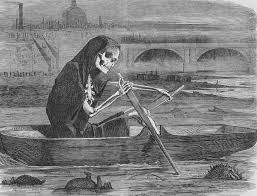
In the summer of 1858, London was not simply dirty, crowded, or inconveniently hot. It became, for a few unforgettable weeks, a city overpowered by the smell of its own waste. The event later remembered as the Great Stink of London turned the River Thames into a public health warning that could no longer be ignored. For anyone interested in top history facts, it is one of the clearest examples of how a crisis can force a major city to reinvent itself. The stink was not just a nuisance; it was a political emergency, a medical fear, and a turning point in the history of urban infrastructure.
What makes the Great Stink so remarkable is that it was not caused by a single disaster. It was the result of years of unchecked population growth, industrial pollution, poor sanitation, and outdated ideas about disease. London’s waste flowed into the Thames, and the Thames, in turn, supplied water to millions of people. In the heat of 1858, the river became so foul that members of Parliament reportedly could not ignore the smell even inside the Houses of Parliament. The city’s leaders finally had to act, and the solution they backed would transform London for generations.
Why the Thames Became So Foul in 1858
The Thames smelled so badly in 1858 because London had outgrown the sanitation system it relied on. By the mid-19th century, the city’s population had exploded, but waste removal had not kept pace. Most household waste, human sewage, and industrial runoff ended up in drains that emptied straight into the river or nearby waterways. Instead of acting like a life source, the Thames had become an open sewer carrying the leftovers of a densely packed metropolis.
The problem was made far worse by the weather. The summer of 1858 was unusually hot, and the heat intensified the decay of organic waste in the river. As water levels dropped, the mudbanks and filth along the Thames were exposed to the sun, releasing an unbearable stench into the air. People who lived near the river, worked on it, or traveled across it were confronted with the smell daily. The odor was so strong that curtains at public buildings were soaked in chemicals in an attempt to reduce it. None of that could disguise the reality: the river was contaminated, stagnant in parts, and overloaded with human waste.
At the time, many people still did not fully understand how diseases spread. The dominant belief was often that foul smells themselves caused illness, a theory known as miasma. While that idea was not scientifically accurate in the way later germ theory would be, the sense that bad air was dangerous was powerful enough to shape public policy. The Great Stink therefore hit London at exactly the point when fear of disease, disgust at pollution, and frustration over government inaction all came together. It was not only a smell; it was a symptom of a city reaching the limit of its old habits.
The crisis also reflected the wider conditions of Victorian urban life. London was the center of an empire, but its basic sanitary systems lagged behind its ambitions. In an age when even details of daily life could carry cultural meaning, such as the fashion reflected in Victorian mustache cups, the contrast between refinement and filth in the capital was stark. The Great Stink exposed that contradiction in the harshest possible way.
How the Great Stink Shook Parliament
By 1858, the smell from the Thames had become impossible for lawmakers to ignore. The Houses of Parliament stood directly beside the river, so the odor entered the very rooms where decisions were made. Curtains were reportedly treated with disinfectants, and attempts were made to improve the atmosphere, but the heat made matters worse. Debate in Parliament was interrupted by the stench itself, turning an environmental problem into a political crisis. In a government famous for delay and argument, this was one issue that could not be pushed aside for long.
The Great Stink forced legislators to confront a problem they had long avoided: London’s sanitation was not simply inefficient, it was dangerous. For years, proposals to modernize the city’s sewers had stalled because the work was expensive and disruptive. Public works of this scale required political will, and political will often appeared only when crisis stripped away the excuses. The summer of 1858 did exactly that. The smell was so intense, and public frustration so widespread, that Parliament moved with a speed unusual for the period.
This is one reason the Great Stink matters so much in history. It shows how a sensory shock can alter policy. It was not a scientific report or a carefully reasoned committee paper that finally galvanized lawmakers; it was the inability to breathe comfortably in the nation’s center of power. The river’s stench made the cost of inaction feel immediate. When that happens, even large and reluctant institutions can be pushed into reform.
The episode also highlights the pressure created by public opinion in Victorian Britain. Newspapers, social commentators, and city residents all contributed to a climate in which Parliament could not simply dismiss the issue. The stench was not abstract. It affected trade, travel, health, and everyday life. By making sanitation a shared political embarrassment, the Great Stink helped turn urban reform from a technical discussion into a moral responsibility. In the process, it revealed how closely the quality of life in a modern city depends on systems that most people never notice until they fail.
Joseph Bazalgette and the Engineering Solution
The man who transformed London’s response to the Great Stink was Joseph Bazalgette, chief engineer to the Metropolitan Board of Works. Bazalgette had already been working on plans for a modern sewer network, but the summer of 1858 gave his proposals the urgency they needed. Instead of allowing waste to drain directly into the Thames, his system would intercept sewage in large brick sewers and carry it eastward away from the center of London. From there, the waste could be released farther downstream, where it would do less immediate harm.
His design was not a minor patch. It was an ambitious piece of urban engineering that reshaped the way the city functioned. Bazalgette’s sewers included major intercepting lines, pumping stations, embankments, and improvements to the river’s edges. The system helped control flooding, reduced the amount of sewage reaching central London, and made the city far healthier over time. It was one of the most important public works of the 19th century, and it was born out of a public health catastrophe that no one could smell away.
One of the most impressive features of Bazalgette’s work was its scale and foresight. He built for a city that was already enormous, but he also anticipated growth. His tunnels were designed to cope not just with London as it existed then, but with London as it was likely to become. That kind of long-term planning is part of why his legacy still stands out. In a city where so many systems are buried underground and taken for granted, Bazalgette’s sewer network became one of the hidden foundations of modern life.
The engineering itself changed more than sanitation. It helped redefine what people expected from a city. Londoners began to see clean water, reliable drainage, and managed waste disposal as essential features of urban civilization rather than luxuries. That shift in expectation would influence other cities in Britain and beyond. The Great Stink was miserable, but the solution it inspired was transformative. In a sense, the city’s future was built beneath its feet.
The Great Stink and the Birth of Modern Public Health
The Great Stink is often remembered as a story about smell, but its deeper significance lies in public health. The Thames had been contaminated for years, and the city’s water supplies were closely linked to the river. At a time when disease outbreaks such as cholera had already devastated London, the condition of the river was more than unpleasant. It was a serious threat to life. People may not have understood exactly how disease spread, but they had learned enough from repeated outbreaks to know that something was badly wrong.
This helped push public health into the center of political life. The crisis showed that sanitation could not be left to private arrangements, local patchwork fixes, or wishful thinking. It required coordinated investment and civic planning. That lesson would become one of the defining principles of modern urban governance. Clean water systems, waste removal, and sewage disposal gradually came to be seen as public responsibilities because the alternative was visible in the river itself.
The Great Stink also changed attitudes toward the relationship between environment and health. Victorian reformers, engineers, doctors, and politicians increasingly understood that the built environment shaped life expectancy and quality of life. The city could not be treated as a collection of isolated homes and streets; it had to be managed as a connected system. That idea sounds obvious now, but it was a major shift at the time. In the mid-19th century, the notion that a giant city required equally giant infrastructure was still being learned the hard way.
There is also a broader historical lesson here. Some of the most important changes in history are sparked by conditions that feel intolerable to ordinary people before they become fully legible to experts. The Great Stink was exactly that kind of event. It was disgusting, but it was also clarifying. It revealed the cost of neglect in a way no report or speech could match. London’s response helped create the modern expectation that cities should protect residents from their own waste, not drown them in it.
What the Great Stink Changed for Londoners
The long-term effects of the Great Stink were profound. Once Bazalgette’s sewer system began to operate, central London became far less vulnerable to the worst sanitary failures that had plagued the city for decades. The immediate smell disappeared, but the greater change was structural. Streets, homes, businesses, and public buildings all benefited from a cleaner urban environment. Fewer waste overflows meant a safer, more functional city, and that improved daily life in ways many Londoners would not have fully appreciated until the old problems began to fade.
The embankments connected to the project also altered the landscape of the riverfront. These were not just practical works; they became part of the shape of the modern city. London’s relationship with the Thames changed from one of direct contamination to one of managed proximity. The river remained central to the capital, but it was no longer treated as a convenient dumping ground in the same way. That shift matters because it marks the moment when London began to move toward the urban standards expected in later industrial society.
There was, of course, no sudden perfection. Sanitation reforms took time, and the city continued to grow, bringing new challenges with it. But the Great Stink established a model: infrastructure should anticipate the realities of dense urban living, not merely react to collapse. In that sense, the episode is a key fact in the history of modern cities. It is not only about one summer of terrible smell. It is about the birth of an approach to urban life that values planning, engineering, and public responsibility.
That is why the Great Stink remains so memorable in historical storytelling. It offers drama, disgust, and reform in one episode, but it also reveals something larger: cities are fragile when they ignore invisible systems. London learned that lesson in the most unpleasant way possible. Yet from that failure came a cleaner, healthier capital and a landmark example of how crisis can drive innovation. For a history website, it is one of the most powerful reminders that even the worst moments can leave behind lasting improvements.
In the end, the Great Stink of London was more than a bad summer smell. It was a turning point when filth became politically unbearable, when lawmakers were forced to pay attention, and when Joseph Bazalgette’s engineering vision changed the city’s future. The Thames had once symbolized London’s life and commerce; in 1858, it symbolized its neglect. The response to that crisis helped make modern London possible, and that is why the Great Stink still deserves its place among the most striking top history facts.
Related reading: 46 BC was 445 days long and is the longest year in human history, In the Victorian era, men with mustaches used mustache cups.
Research and further reading
For readers who want to verify details or continue researching this subject, these external reference collections provide useful starting points: