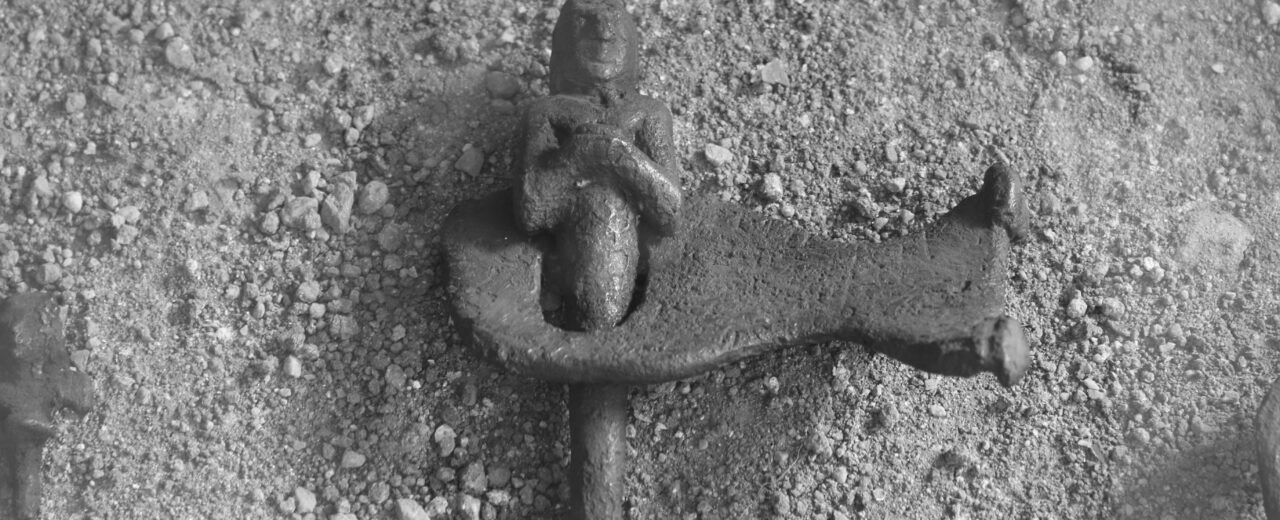
Girsu archaeology is a revealing historical subject because it opens a clear path into the people, events, and wider changes that shaped its era.
In the dry, wind-scoured plains of southern Iraq, where the landscape can seem to erase history as quickly as it reveals it, one ancient city has quietly returned to the story of archaeology. Girsu, once a powerful Sumerian urban center and now identified with the mound at Telloh, was not rediscovered in a dramatic single moment so much as gradually recovered from the sands, tablets, and broken walls of Mesopotamia. Its resurrection mattered not only because it brought one of the world’s earliest cities back into view, but because it changed what archaeologists thought they knew about early civilization itself.
For decades, Girsu sat in the shadow of better-known ancient sites, yet the city was once central to political power, religion, administration, and writing in early Sumer. The British Museum’s Girsu Project has helped turn attention back to this forgotten place, revisiting old excavations and searching for what earlier generations could not yet fully understand. In the process, archaeologists have identified new evidence of a palace, temple remains, and thousands of administrative tablets that speak to a highly organized society with a deep appetite for record-keeping. As a result, Girsu has become much more than another Mesopotamian ruin. It is now a case study in how archaeology itself evolves, how old finds can yield new meanings, and how a site buried for millennia can still reshape the historical record.
The rediscovery of Girsu at Telloh and the first shock of modern excavation
Girsu’s modern story begins in the late 19th century at Telloh, also spelled Tello, in southern Iraq. At that time, the site was not yet recognized for what it really was: a vast Sumerian city that had once anchored the state of Lagash. Instead, explorers and excavators encountered a landscape of mounds and ruins that hinted at lost antiquity. What they uncovered was astonishing. The digs at Telloh yielded sculptures, inscriptions, architectural fragments, and thousands of clay tablets, placing the site among the most important archaeological discoveries in Mesopotamia.
In a period when archaeology was still developing its methods, Telloh became a proving ground for how ancient Near Eastern history could be reconstructed from scattered remains. The French excavator Ernest de Sarzec and his successors pulled from the earth objects that made scholars rethink the scale and sophistication of early Sumerian civilization. Girsu was not a small provincial settlement, but a city with institutions, temples, rulers, and archives. Its rediscovery showed that southern Mesopotamia had preserved a deeper, more complex urban history than many Europeans had imagined before the systematic excavation of the region.
The importance of Telloh also lies in what it represented for archaeological practice. Early excavations often focused on spectacular objects, but the material recovered from Girsu forced scholars to pay attention to records, administrative texts, and architectural context. In other words, the site helped move archaeology away from treasure-hunting and toward historical reconstruction. It is no exaggeration to say that Girsu helped define how ancient Mesopotamia would be studied thereafter. Like other landmark discoveries that transformed public understanding of the ancient world, such as Sutton Hoo: the 1939 ship burial that reshaped ideas about early medieval Britain, Girsu revealed that a single site could alter the narrative of a civilization.
Why Girsu mattered so much to early Sumerian civilization
To understand why Girsu matters, it helps to picture the city not as a ruin but as a functioning political and religious center. Located in the heart of Sumer, Girsu was tied to the power of Lagash and played a crucial role in the administration of land, labor, offerings, and temple life. It was a place where kings, priests, scribes, and workers interacted through an elaborate system of records and obligations. This was one of the earliest urban societies in human history, and Girsu offers a rare window into how it actually worked.
The city is especially important because it preserves evidence of bureaucracy at an early stage of civilization. The tablets found at the site reveal lists of commodities, ration distributions, deliveries, and institutional transactions. Far from being a marginal feature of state formation, bureaucracy appears to have been central to the Sumerian way of governing. For historians, this is vital. It shows that writing in Mesopotamia was not merely a literary breakthrough, but an administrative technology that helped manage cities, territories, and people. A similar fascination with the archaeological record as a key to social organization can be seen in studies of finds like the Nebra Sky Disc, where an object’s meaning extends well beyond its material form.
Girsu also matters because it was a religious landscape as much as a political one. Temples at the site were tied to the cult of Ningirsu, the city’s major deity, and religious institutions shaped daily life. This blend of sacred and administrative power is one of the defining features of early Mesopotamian urbanism. The city’s remains demonstrate that ancient Sumer was not a loose collection of villages but a sophisticated world of interlocking institutions. Through Girsu, archaeologists can trace how authority was organized, how offerings were processed, and how the economy of a city-state functioned in practice. That makes the site essential not only for Mesopotamian history, but for the broader history of complex society.
What the British Museum’s Girsu Project changed about the site
The modern revival of interest in Girsu owes much to the British Museum’s Girsu Project, which set out to reassess one of archaeology’s most important yet underexplored landscapes. Rather than treating the site as a finished discovery from the 19th century, the project approached it as an unfinished historical puzzle. By revisiting old excavation records, reexamining artifacts, and conducting new fieldwork, researchers have been able to extract fresh insights from material that had long been in museums, archives, and storerooms.
This approach matters because older excavations often left behind incomplete documentation. Finds were removed, catalogued unevenly, or separated from their original contexts. The Girsu Project has tried to repair some of that damage by combining archival research with modern archaeological techniques. As a result, the site is no longer understood only through the lens of early dig reports. Instead, scholars are reconstructing the city’s layout, institutions, and chronology with a much clearer sense of how different structures related to one another.
One of the most exciting results has been the identification of a palace and temple remains, evidence that expands the picture of Girsu as a center of elite residence and religious authority. These discoveries support the idea that the city was not simply a religious settlement attached to a temple complex. It was a fully developed urban environment with multiple zones of power. The project has also brought renewed attention to the city’s administrative tablets, which remain among the most revealing sources for understanding the daily mechanics of Sumerian life. In archaeology, such reanalysis can be as transformative as a new excavation, much as fresh scholarship on older finds can transform the meaning of an artifact like a Roman grave marker or a reinterpreted burial discovery.
In this sense, the Girsu Project is not only recovering an ancient city; it is also recovering the history of how that city was studied. It shows that archaeology is cumulative, self-correcting, and often dependent on revisiting the past with better questions than earlier generations could ask.
Palaces, temples, and tablets: what new discoveries reveal
The recent work at Girsu has made the site feel newly alive. The reported palace and temple remains suggest a city with sharply defined centers of authority, where political and religious functions overlapped but did not fully collapse into one another. Such remains help archaeologists map how urban space was organized in early Sumer. They also reinforce the idea that monumental architecture was integral to the expression of power, legitimacy, and divine connection in the ancient city.
Perhaps even more revealing are the administrative tablets. These small clay documents may not look impressive at first glance, but they are among the most valuable sources ever recovered from early Mesopotamia. They record the routines of governance: inventories, deliveries, labor assignments, and institutional control. In one sense, they are the paperwork of a city-state. In another, they are among the earliest surviving traces of large-scale bureaucracy in world history. A Smithsonian report on clay tablets from the region has highlighted how strongly ancient Sumerians depended on record-keeping, and Girsu provides some of the richest evidence for that obsession with administration.
What makes these discoveries especially important is that they connect physical remains with written evidence. Architecture tells archaeologists where power was exercised; tablets show how it was administered. Together, they reveal a city that was both ceremonial and practical, ideologically charged and relentlessly organized. This combination is central to the rise of civilization in Mesopotamia. It also helps explain why Girsu has become so valuable to historians of writing, government, and urbanism.
There is another lesson here as well: the past is not frozen. A site excavated more than a century ago can still yield new knowledge when examined through modern techniques and questions. That principle lies at the heart of archaeology, and Girsu demonstrates it beautifully. The city’s rediscovery has not ended with the first spadeful of soil. It continues in archives, laboratories, and field trenches, where every tablet or wall fragment may still alter the story.
Girsu’s legacy for archaeology and why the forgotten city still matters
Girsu’s significance reaches beyond ancient Iraq. It is a landmark in the history of archaeology because it shows how the discipline grows through rediscovery, reinterpretation, and patience. The site began as a late 19th-century excavation that astonished scholars with its wealth of Sumerian remains. It then became, for a time, one of those places known mainly to specialists. Now it is back in the spotlight because researchers have returned to it with new tools and a broader historical vision. That arc is a reminder that archaeology is never just about finding objects. It is about making sense of them in changing intellectual and technological contexts.
For the general public, Girsu may not be as immediately familiar as other famous ancient discoveries, but its impact is profound. It helps explain how one of the world’s earliest cities organized itself, how scribes turned administration into a written system, and how temples and palaces structured urban life. It also illustrates the value of looking again at sites long thought to be understood. Many of archaeology’s most important breakthroughs come not from brand-new ground, but from rethinking material already in hand.
That is why Girsu still matters so much. It is a forgotten city only in the sense that time buried it, and modern memory moved on. In reality, it remains one of the foundational sites for understanding early civilization. Its rediscovery has shown that the sands of Iraq still hold major historical revelations, and that the story of archaeology itself is shaped by persistence as much as by excavation. Girsu reminds us that the ancient world is not a closed chapter. Sometimes, it waits quietly beneath the ground until scholars are ready to ask the right questions again.
In the end, the return of Girsu is both a Mesopotamian story and an archaeological one. It is about Sumerian kings and temple economies, but also about the historians, excavators, and curators who kept coming back to the evidence. That is what makes the city so compelling today. It is not merely a ruin in the desert. It is a lesson in how the past resurfaces, how memory is rebuilt, and how archaeology can bring a lost city back into the living world of history.
Research and further reading
For readers who want to verify details or continue researching this subject, these external reference collections provide useful starting points: