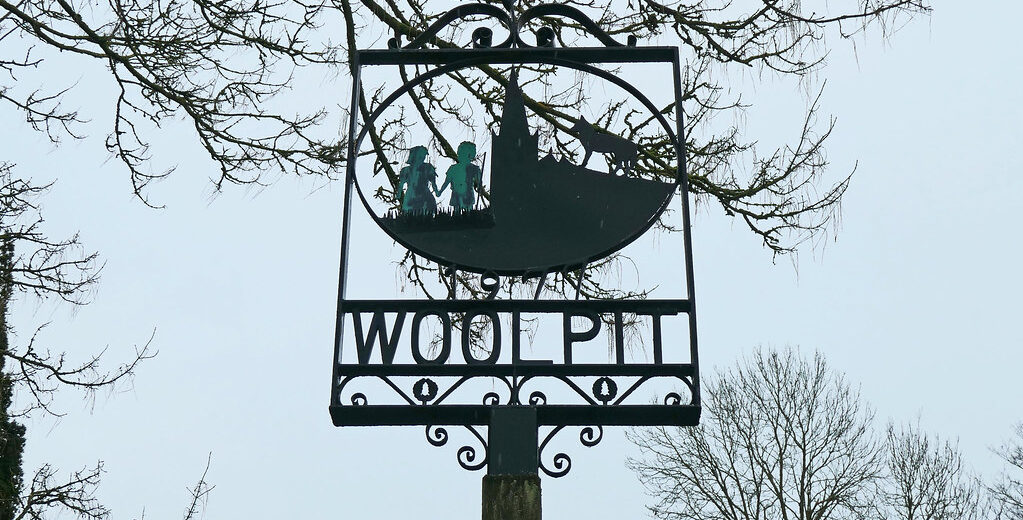
Few medieval stories have endured as stubbornly as the tale of the Green Children of Woolpit: two strange children, appearing out of nowhere in rural Suffolk, speaking an unknown language, wearing unfamiliar clothes, and marked by an eerie green hue. For centuries, the story has lived somewhere between chronicle, folklore, and historical puzzle, inviting explanations ranging from famine and migration to symbolism, misremembered trauma, and outright wonder. What makes the account especially compelling is not just its oddness, but the fact that it was recorded by writers who clearly believed they were describing something worth preserving.
The Green Children of Woolpit belong squarely in the world of historical mysteries & unexplained events, where the surviving evidence is fragmentary and the gap between fact and interpretation is where the legend grows. The earliest versions of the story come from two medieval chroniclers, William of Newburgh and Ralph of Coggeshall, whose accounts do not match perfectly but do overlap in important ways. Later writers would embellish the episode, turning it into a supernatural enigma, a fairy tale, a moral lesson, or a disguised record of real people caught in a hard medieval world.
To understand the mystery, it helps to begin not with fantasy but with the historical setting: 12th-century Suffolk, a landscape of manors, fields, seasonal labor, and precarious survival. The Green Children’s story emerged from this world, and the question is not only where the children came from, but why their appearance struck contemporaries as so extraordinary. The answer may lie in the medieval mind as much as in the event itself.
The strange case of Woolpit in medieval Suffolk
Woolpit was a real village in Suffolk, and that matters because legends often become more persuasive when they are attached to a place people can still visit. In the 12th century, Suffolk was a patchwork of agricultural communities shaped by lordship, harvest cycles, and the practical concerns of survival. England at the time was not a stable or sentimental landscape. It was a world still adjusting to the aftermath of the Norman Conquest, with local communities vulnerable to poor harvests, social upheaval, and occasional violence. In such a setting, a story about mysterious children arriving from nowhere would not feel entirely out of place; it would feel uncanny precisely because everyday life was so dependent on order and familiarity.
The name Woolpit itself is often said to come from “wolf pits,” traps dug to catch wolves, though the etymology is less important than the image it evokes: a rural settlement at the edge of danger. The children’s alleged appearance in this village was preserved not in a single isolated tale but through chroniclers who treated it as worthy of record. That is a crucial point. Medieval chroniclers were not modern journalists, but they were not simply storytellers either. They often collected reports, testimonies, and rumors, trying to make sense of the world through a mix of observation, moral interpretation, and inherited learning.
The children were said to have appeared during harvest time near pits used for trapping wolves or possibly for other purposes associated with local labor. Their arrival was immediately marked by difference: they did not speak English, their clothes were unfamiliar, and their skin was green. The villagers brought them into their care, and the mystery began not with a ghostly vanishing act, but with the practical problem of how to feed, communicate with, and understand them. That practical detail is one reason the story has lasted. It sounds less like an invented fairy tale than a troubling report from the edge of the known world.
For modern readers, the temptation is to ask whether the whole thing “really happened.” Medieval accounts rarely offer that kind of certainty. What they do offer is a window into how people described unexplained events, and Woolpit gives us an unusually vivid example of a community encountering what seemed to be the impossible. Like other famous puzzles of the past, from the Roanoke Colony disappearance to the Tunguska event, the power of the story lies in the space between the record and the explanation.
William of Newburgh and the first recorded version of the story
The earliest surviving account of the Green Children appears in the writings of William of Newburgh, a 12th-century English chronicler whose work is one of the most important sources for medieval English history. William recorded the children as a curious and memorable event from his own era, not as a distant legend. His version describes two children who emerged from a pit, wearing strange clothing and speaking an incomprehensible language. They were brought to the house of a local landowner, where they initially refused food until they discovered beans in the field. Once they tasted them, they ate eagerly. Over time, the children adapted, and the green color of their skin reportedly faded.
William’s account is careful in its own medieval way. He did not present the story as a simple miracle, nor did he fully dismiss it. Instead, he framed it as something difficult to classify. That caution matters. Chroniclers like William often balanced skepticism and credulity in ways that modern readers may find inconsistent, but they were navigating a world where unusual testimony could be interpreted through theology, natural philosophy, and local rumor all at once. His narrative suggests that the children were real enough to be discussed, remembered, and explained by those who encountered them.
One of the most famous elements in William’s version is the children’s explanation of their origin. They reportedly said they came from a place where the sun did not shine as brightly, and everyone there was green. The description is vague, yet it is also one of the reasons the story moved so powerfully into legend. The children seemed to speak of a different land, perhaps underground, perhaps distant, perhaps imagined. William did not claim to know what that meant. Instead, he preserved the mystery.
As a source, William of Newburgh is significant because he shows us how a learned medieval observer handled a strange report. His chronicle does not solve the mystery; it records it in a form that later generations could rework. That is often how historical mysteries survive. They begin as local events, are stabilized by a textual account, and then become mutable cultural objects. The Green Children of Woolpit are a perfect example: once William wrote them down, the story gained a life beyond the village and beyond the moment.
Ralph of Coggeshall and the story’s wider medieval resonance
Another important early source is Ralph of Coggeshall, whose version adds depth and complexity to the narrative. Ralph was also a medieval chronicler, and his account confirms that the Green Children story was circulating beyond a single author’s imagination. His retelling differs in details but supports the core elements: the arrival of the children, their strange appearance, their unfamiliar speech, and the gradual fading of their green skin. Because two independent chroniclers mention the event, historians have long treated the story as more than a later folk invention.
Ralph’s account is especially valuable because it helps place the tale within the broader medieval habit of interpreting unusual people and events. The Middle Ages were full of stories about marvels, monsters, lost peoples, and hidden lands. Such stories were not merely entertainment. They reflected a world in which boundaries were porous: between the known and unknown, the natural and supernatural, the Christian and the foreign. A child with green skin did not automatically belong to one category. Depending on the listener, the story could be a sign, a curiosity, a warning, or evidence of a secret geography.
Ralph also allows historians to compare versions and notice what remains stable. The children are consistently described as physically fragile, linguistically isolated, and socially disoriented. Their green color is not simply decorative; it becomes the central oddity that demands explanation. Yet the chroniclers’ most revealing detail may be the children’s adaptation after they are fed. The green fades, the children learn to eat local food, and one of them integrates more fully into the community. This pattern strongly suggests that the story may preserve a memory of real children whose condition changed after arrival, rather than a purely supernatural visitation.
For that reason, Ralph of Coggeshall matters not because he “proves” the mystery, but because he anchors it in a literary culture that valued such accounts enough to preserve them. He also shows why the Green Children have remained such fertile material for later writers. The story is structured like an enigma, but it is also rooted in the everyday concerns of feeding, language, and belonging. That combination of wonder and practicality is precisely what keeps it alive in historical memory, much like the unsettling atmosphere found in accounts of the Mad Gasser of Mattoon or the communal panic of the Dancing Plague of 1518.
What could explain the green skin?
Among the many theories proposed over the years, the most persuasive are not supernatural at all. The green color, which gives the story its enduring title, may have had a medical explanation. One commonly discussed possibility is chlorosis, a form of anemia that can produce a pale or greenish tint in the skin, especially in malnourished children. Medieval chroniclers had no modern medical vocabulary for such a condition, so what they saw may have been interpreted through the language of strangeness rather than illness. If the children were undernourished, stressed, and recovering, their skin tone could have changed as they were fed and cared for in Woolpit.
Another possibility is that the children were refugees or migrants from a nearby region with a different language and dress, perhaps Flemish. In the 12th century, eastern England had connections to migrant communities, and a pair of disoriented children who did not speak English might easily have seemed otherworldly to villagers. If they had arrived during a period of hardship, separation from family, or local conflict, the result could have looked mysterious to observers who had no framework for explaining cultural difference. The “green” color may then have emerged from illness, malnutrition, or even symbolic embellishment layered onto a real encounter.
Some historians have also noted that medieval writers sometimes used color symbolically. Green could suggest immaturity, sickness, or strangeness rather than a literal hue. But this does not mean the color was invented out of nothing. The strongest reading is probably a combination of reality and interpretation: children who were visibly unwell, whose appearance changed over time, and whose difference was heightened by the chroniclers’ desire to preserve a remarkable tale.
That is one reason modern scholarship often favors grounded explanations over supernatural ones. The children’s fear, hunger, unfamiliar speech, and rapid adjustment all make sense in a human context. So does the fading of the green skin once they were better nourished. The account becomes less like a visitation from another world and more like a medieval report of displaced, traumatized, and probably malnourished children whose condition was unusual enough to become legendary. The mystery does not disappear under this explanation, but it shifts. What needs explaining is not a fairy entrance through a hidden realm, but how a real human experience became a story of marvel.
How later writers turned a medieval report into legend
Once the Green Children of Woolpit entered the historical record, later writers had centuries in which to reinterpret them. Some treated the story as evidence of fairy lore, imagining the children as inhabitants of an underground or enchanted land. Others saw them as symbols of innocence, foreignness, or divine mystery. In the Victorian period especially, antiquarians and folklorists were fascinated by the tale, eager to fold it into broader discussions about folk belief, medieval credulity, and lost traditions. Each retelling added texture, but also drifted farther from the original chroniclers.
This process is familiar in historical mystery. A report survives, then a legend grows around it, and eventually the legend becomes more widely known than the source. That happened with the Green Children in much the same way as with other enigmatic events that still attract speculation today. When a story resists easy resolution, later audiences often project their own concerns onto it. In the nineteenth and twentieth centuries, some writers read the children as allegory, while others transformed them into proof of hidden worlds or ancient Celtic survivals. Such interpretations are imaginative, but they tell us more about the interpreters than about the twelfth-century children themselves.
Modern historians tend to focus instead on the earliest accounts and the social context that produced them. This does not make the story less interesting; if anything, it makes it richer. The Green Children of Woolpit endure because they sit at the intersection of chronicled history and folkloric imagination. They remind us that medieval people lived in a world where unexplained experiences were not immediately dismissed, but studied, repeated, and woven into memory. They also show how a single odd event can outlive its original setting, becoming a reusable container for ideas about outsiders, illness, famine, survival, and wonder.
In the end, the most convincing explanation may be the least dramatic: two vulnerable children, seen through the lens of medieval expectation, became the center of a story that the chroniclers could not quite explain and later generations could not quite forget. That is not a disappointing answer. It is the reason the Green Children remain fascinating. Their story asks us to look carefully at what the past preserves, what it leaves out, and how easily a human encounter can cross the line into legend. Woolpit’s mystery has never entirely vanished; it has simply changed shape, remaining one of England’s most evocative historical enigmas.
Research and further reading
For readers who want to verify details or continue researching this subject, these external reference collections provide useful starting points: