Few lost treasures have captured the imagination quite like the Amber Room. Part imperial showpiece, part political prize, and part wartime ghost story, it has become one of history’s most enduring mysteries. Built to dazzle the Russian court with walls that glowed like fire, the room vanished during the chaos of World War II and has never been conclusively recovered. That disappearance has left behind a trail of clues, theories, rumors, and half-answers that still fascinate historians and treasure hunters alike.
What makes the Amber Room so compelling is that it was never just a beautiful interior. It was a masterpiece of craft, diplomacy, theft, loss, and memory. Its story begins in the early eighteenth century, moves through the opulence of imperial Russia, and then plunges into the devastation of war, when one of the most extraordinary artistic spaces ever created was dismantled and carried away by the Nazis. Since then, the room has existed in a strange double life: as a real artifact once installed in Catherine Palace, and as an unresolved mystery that refuses to fade. The question of what happened to it remains one of the great unanswered puzzles of the modern era.
The creation of the Amber Room: a masterpiece in light
The Amber Room began not in Russia but in Prussia, where it was commissioned in the early 1700s as an ambitious decorative scheme for King Frederick I. Amber was an unusual and costly material for an interior, prized not only for its beauty but also for the skill required to shape it into panels, ornament, and intricate mosaic-like surfaces. The work was carried out by artisans associated with the court workshop, and over time it became a dazzling ensemble of amber panels, gold leaf, mirrors, and fine details that reflected candlelight in warm, shimmering tones. Even before it entered Russian hands, it stood apart as a symbol of courtly wealth and technical ingenuity.
The room’s fate changed through diplomacy. In 1716, Frederick William I of Prussia presented the Amber Room panels to Peter the Great of Russia as a gift, part political gesture and part attempt to cultivate favor between monarchs. For years, the panels were kept and reworked, and the installation was eventually completed in Catherine Palace at Tsarskoye Selo near Saint Petersburg. There, the room expanded into something even more magnificent than its original form, adapted to Russian tastes and imperial ambition. By the mid-eighteenth century, it was widely admired as one of the most astonishing decorative interiors in Europe.
The room’s allure came from the way it transformed a material associated with nature and antiquity into a grand architectural environment. Amber, when polished, can seem to glow from within; in a fully enclosed room, the effect would have been almost theatrical. Visitors described it with a mix of astonishment and reverence, as though they were entering a treasure chest made habitable. That reputation is essential to understanding why the room mattered so much later. It was not merely a palace decoration. It represented artistry, power, and a fragile cultural inheritance, all of which would be tested brutally in the twentieth century.
How the Nazis found and removed the Amber Room
When Nazi Germany invaded the Soviet Union in 1941, the Amber Room was in Catherine Palace, where officials tried to protect it by covering the panels with paper, gauze, and other materials intended to disguise the amber surfaces. The effort failed. German troops and specialists identified the room, dismantled it with extraordinary speed, packed the panels into crates, and shipped them to Königsberg, then part of East Prussia. In wartime Europe, where museums, churches, and palaces were being stripped of art and relics, the Amber Room became one of the most famous trophies seized by the Nazis.
The removal was not a casual act of looting. It was tied to Nazi cultural policy and the wider machinery of plunder that accompanied occupation. The regime sought to collect, classify, and relocate works it considered valuable or ideologically useful. The Amber Room, already legendary, made a potent symbol. Its movement to Königsberg placed it in the city’s castle museum, where it was reportedly displayed for a time before the war situation became increasingly unstable. As Soviet forces advanced and Allied bombing intensified, the room’s trail grew faint.
The last confirmed sightings remain maddeningly limited. Some accounts suggest that parts of the room stayed in Königsberg until the final months of the war; others hint that it was disassembled again and evacuated as the city faced destruction. What is certain is that the room ceased to be publicly traceable after the war. The history of the seizure is documented, but the history of what happened next is where the mystery begins. This is one reason the Amber Room has endured in public memory: unlike objects hidden by accident, it was removed in plain sight, recorded by the logic of war, and then swallowed by the chaos that followed. The theft was seen; the disappearance was not.
War’s end, destruction, and the first searches
The closing months of World War II were catastrophic for Königsberg. Heavy fighting, bombing, fires, and the collapse of German control created conditions in which records vanished and buildings were destroyed. The castle museum and surrounding structures suffered severe damage, leading many to believe the Amber Room was either burned, buried beneath rubble, or lost in the destruction of the city. Because amber is combustible and fragile, some historians have argued that the most likely outcome was total destruction during the fighting or in the fires that followed. Yet no definitive remains have ever been identified, leaving room for doubt.
In the decades after the war, Soviet and later international investigators searched for evidence of the room’s whereabouts. The searches took many forms: examination of wartime documents, interviews with former German personnel, exploration of bunker systems, castle ruins, mines, and hidden storage sites, and public appeals for information. Over time, rumors proliferated. Some said the room had been packed onto a train and lost in transit. Others claimed it was hidden in a mine, sunk with a ship, or buried in a secret bunker. Still others argued that fragments survived and were scattered among private collections or obscure depots.
The problem was always the same: the historical record was fragmentary, and wartime destruction erased much of the physical evidence. Königsberg’s own ruins became a maze of possibility and speculation. Search teams explored basements, tunnels, and sealed chambers, but no complete Amber Room emerged. Fragments of amber decoration have occasionally surfaced, yet nothing has ended the debate. This is the stage at which the Amber Room shifted from being a missing artwork to becoming a classic historical mystery. Like the Mary Celeste mystery, it became famous not just for what happened, but for the stubborn absence of a final answer.
Theories, clues, and why the evidence remains elusive
There are several major theories about the Amber Room’s fate, and each has its own strengths and weaknesses. The most dramatic claims place the room in hidden locations such as underground bunkers, mines, or shipwrecks evacuated from East Prussia during the Soviet advance. Some stories point to amber-paneled crates that were supposedly moved out of Königsberg in the confusion of retreat. Other theories suggest that portions of the room were destroyed by fire before they could be evacuated, leaving only ashes and warped metal fittings. The competing explanations have created a long-running historical debate with no universally accepted resolution.
What keeps the mystery alive is the uneven nature of the evidence. Wartime documents were lost or deliberately destroyed. Witness testimony, while valuable, is often contradictory and shaped by memory, rumor, or later retellings. Soviet-era searches were sometimes constrained by politics, secrecy, and the sheer difficulty of excavating ruined war zones. Meanwhile, treasure-hunting culture encouraged speculation that was not always grounded in archival reality. The result is a puzzle in which every clue seems to generate two more questions.
There have been moments when the case seemed to move forward. Reports of amber panels, decorative fragments, or references in private papers periodically reignite interest. Yet each promising lead seems to dissolve on closer inspection. That may be because the room was destroyed more thoroughly than many hope, or because its remains are still concealed in a place not yet convincingly identified. Historians must live with uncertainty, but the public often prefers a more dramatic ending. That tension helps explain why the Amber Room remains so compelling. It sits at the intersection of art history, wartime devastation, and detective story. It also resembles other vanishing acts from history, where absence itself becomes the central evidence, much like the enigmas surrounding the Norse Greenland disappearance.
Reconstruction, memory, and the mystery that endures
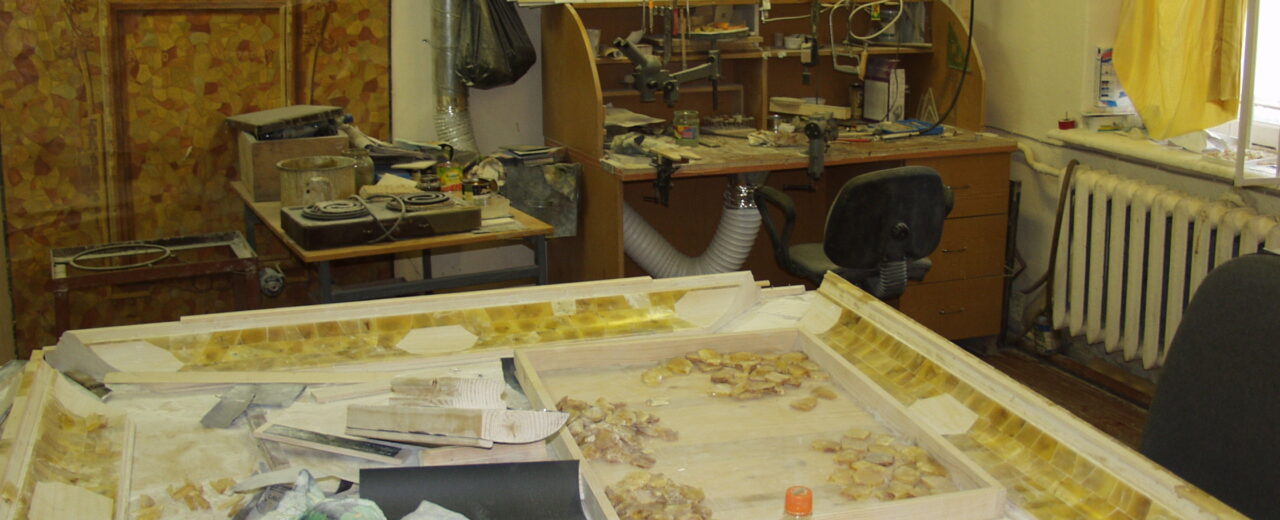
Although the original Amber Room has never been recovered, its story did not end with loss. In the 1970s, efforts began in Russia to reconstruct the chamber using traditional methods, archival photographs, surviving descriptions, and the painstaking work of artisans who recreated the amber panels and decorative details. The rebuilt room was eventually completed at Catherine Palace, offering visitors a chance to experience something close to the original atmosphere. Yet the reconstruction, impressive as it is, has only sharpened public awareness of the original’s disappearance. It stands as both memorial and reminder: the masterpiece was gone long before it was recreated.
Why does the mystery still endure so powerfully? Part of the answer lies in the room’s beauty. People are naturally drawn to objects that seem almost impossible to make, and the Amber Room belonged to that category. Another part is the wartime context. The Second World War produced vast destruction, but the disappearance of a single, unique masterpiece feels especially haunting because it combines human violence with cultural loss. If the room was destroyed, then a great work of art was lost forever. If it survives somewhere in fragments, then there remains a chance, however remote, that history has not yet spoken its last word.
That unresolved possibility gives the Amber Room its special place in historical memory. It is neither simply a theft case nor merely a missing artifact. It is a drama of empire, invasion, fire, secrecy, and longing. Like the enduring uncertainty of the SS Baychimo, it reminds us that some disappearances outlive the people who witnessed them. The room’s wartime vanishing continues to invite research because it touches something deeper than treasure hunting: the human desire to recover what violence has taken away. Whether hidden, destroyed, or still waiting in some forgotten chamber, the Amber Room remains one of history’s great unanswered questions, and that may be why it has never lost its power to fascinate.