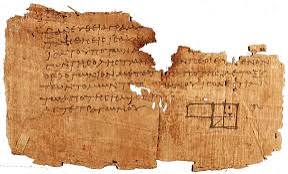
In the winter of 1896–97, two young Oxford scholars began digging into mounds of ancient refuse outside a ruined Egyptian city. Bernard Grenfell and Arthur Hunt hoped that Egypt’s dry soil might have preserved writing, but the scale of what emerged exceeded any reasonable expectation. Scraps of tax accounts, private letters, petitions, poems, contracts and sacred texts appeared by the basketful. A municipal dumping ground had become the largest archive of papyrus manuscripts ever found.
The Oxyrhynchus Papyri are not one book, one library or one spectacular treasure chest. They are more than 500,000 fragments accumulated across centuries, principally in Greek but also in Egyptian languages, Coptic, Latin, Arabic and others. Only a fraction are literary. Most are the paperwork of ordinary administration and private life: receipts, invitations, complaints, lists, school exercises and messages that their owners no longer needed.
That apparent ordinariness is precisely their value. Classical literature usually survives through medieval copies selected by generations of scribes. Monumental inscriptions preserve rulers and public claims. Oxyrhynchus preserves what people discarded. Its fragments have restored lost works of poetry and drama, supplied early witnesses to biblical texts, and—more importantly—made residents of a provincial city visible in their own words.
Where Was Oxyrhynchus?
Oxyrhynchus stood beside the Bahr Yussef, a canal running west of the Nile, near the modern Egyptian town of al-Bahnasa. The site lies roughly 160 kilometres southwest of Cairo. Its Greek name means “sharp-nosed fish,” referring to a fish associated with local religious tradition and represented in the city’s ancient imagery.
The settlement was already important before Alexander the Great’s conquest, but it flourished under the Ptolemies and then the Roman Empire. A large Greek-speaking population participated in municipal and provincial government while living within a thoroughly Egyptian landscape. Later centuries brought a major Christian community and, after the Arab conquest, new languages and institutions.
This long occupation matters because the papyri span about a millennium, from the last centuries BCE into the early Islamic period. Oxyrhynchus was not a frozen “Roman town.” Its documents record political, religious and linguistic change across Hellenistic, Roman, Byzantine and early Arab Egypt.
Why Papyrus Survived in the Rubbish Mounds
Papyrus was made from strips cut from the pith of the papyrus plant, layered, pressed and dried into sheets. It was strong enough for letters, rolls and codices, but organic writing material normally decays. In the damp climates of Greece and Italy, most everyday papyrus vanished long ago.
Oxyrhynchus offered unusually favorable conditions. Its refuse mounds lay on dry ground beyond the cultivated and regularly irrigated zone. Rainfall was scarce, and sand covered discarded documents. Separation from the Nile’s annual flooding protected material that water, mold and insects would otherwise have destroyed.
The familiar phrase “ancient rubbish dump” is broadly accurate, but it can be misleading. The finds came from numerous mounds and depositional contexts accumulated over long periods, not from one neatly sealed landfill. Documents could be discarded individually, dumped from offices, reused as wrapping or mixed with later waste. Each fragment’s context has to be reconstructed cautiously.
Grenfell and Hunt Begin Excavating
Bernard Pyne Grenfell and Arthur Surridge Hunt arrived on behalf of the Egypt Exploration Fund, now the Egypt Exploration Society. Both were trained classicists and papyrologists rather than treasure hunters seeking gold. They began work at Oxyrhynchus late in 1896 and returned for repeated seasons through 1907.
The excavators employed a large local workforce to move enormous quantities of soil and rubbish. Finds emerged in numbers that made immediate scholarly processing impossible. Grenfell and Hunt could identify some striking pieces in the field, but most fragments had to be cleaned, sorted, flattened, joined, transcribed and studied later.
Their methods belonged to the archaeology of their time, not ours. Recording standards were less exact, and the drive to recover texts often mattered more than documenting every layer. Their achievement was extraordinary, yet the loss of detailed context limits some questions modern archaeologists would ask about where particular documents were deposited and how separate groups related to one another.
A Discovery Measured in Fragments
The Egypt Exploration Society describes its collection as containing more than 500,000 fragments. “Fragment” is the essential word. Many pieces preserve only a few letters; others belong to separate parts of the same document. A published text may be assembled from several scraps, while an apparently blank piece can reveal writing under different light.
The first volume of The Oxyrhynchus Papyri appeared in 1898. Publication has continued for more than a century, making the project one of the longest-running enterprises in classical scholarship. By 2026, about 6,000 texts had been published with English translations and commentary—an impressive total that is still only a small proportion of the physical fragments.
This does not mean hundreds of thousands of complete masterpieces remain unopened. Much of the backlog consists of tiny, damaged, repetitive or difficult pieces. Nevertheless, joins, improved imaging and new scholarly questions can transform material once considered unpromising. The collection is not exhausted because interpretation, not merely storage, is the real work.
The Paperwork of Everyday Life
Most Oxyrhynchus texts are documentary rather than literary. They include tax receipts, land leases, loan agreements, census declarations, court petitions, wills, accounts, horoscopes, official orders and lists of people who owed money. Such records reveal how imperial administration reached into households and how residents negotiated with it.
Private writing supplies smaller but vivid encounters. One surviving invitation asks a recipient to attend a wedding at a stated hour. Letters discuss money, family disputes, travel, illness, supplies and favors. A widow petitions a judge; a baker receives an order involving fenugreek; workers account for bricks. These are not representative surveys, but individual traces within larger social patterns.
Administrative documents also expose inequality. Status, gender, occupation, taxation and legal privilege shaped who could make claims and whose names entered official files. Enslaved people appear, though rarely in voices unconstrained by owners or officials. The archive brings ordinary life closer while still reflecting the institutions that produced and preserved paperwork.
Lost Greek Literature Returns in Pieces
Literary papyri form a minority, but they attracted immediate attention. Fragments preserve Homer, Euripides, Thucydides and other authors already known through medieval manuscripts. Even a familiar text matters when the papyrus is many centuries older than the standard surviving copies, because differences can reveal how wording changed through transmission.
More dramatic discoveries restored works that had largely disappeared. Oxyrhynchus greatly expanded knowledge of the Athenian comic playwright Menander, whose plays were admired in antiquity but survived poorly. It also yielded substantial fragments of poems by Sappho and texts by other authors known previously only through quotations or titles.
“Lost work” does not necessarily mean a complete lost book. Often a fragment preserves several lines, part of a column or isolated sentences. Scholars must identify meter, dialect, handwriting and verbal parallels before assigning authorship. Some attributions remain debated, and responsible publication distinguishes secure identification from informed conjecture.
Early Christian Texts and Sensational Claims
Oxyrhynchus produced many early Christian manuscripts, including fragments of New Testament books, apocryphal works, prayers and theological writing. Some are among the oldest physical witnesses to particular biblical passages. They are crucial for studying how Christian texts circulated, were copied and varied in Roman Egypt.
The first excavation season produced a collection of sayings attributed to Jesus, later recognized as material related to the Gospel of Thomas. Other pieces preserve canonical and non-canonical traditions. These finds show that early Christian readers encountered a wider textual landscape than a single standardized Bible might suggest.
Popular headlines sometimes claim that a newly read scrap “rewrites Christianity.” Most do not. A fragment’s date is usually the date of that copy, not necessarily the composition of the underlying work. Variant wording can be historically important without overturning an entire religious tradition. The papyri provide evidence for gradual transmission, diversity and selection—not a hidden master text waiting to settle every debate.
What the Papyri Reveal About Women and Families
Women appear in marriage documents, divorce agreements, property transactions, petitions, tax records and private letters. These sources show women acting within legal and economic systems, sometimes owning property or pursuing disputes. The extent of agency depended on status, wealth, family structure and the law applicable at a particular date.
Family correspondence exposes affection as well as obligation. Writers request news, complain about silence, arrange supplies and invoke kinship when asking for help. Yet letters are shaped by formulas and by unequal access to scribes. A dictated message may preserve the sender’s intention without preserving her or his exact spoken voice.
It is tempting to turn one lively letter into a portrait of all ancient families. The collection is too uneven for that. Its strength comes from accumulation: thousands of cases allow historians to compare repeated practices while retaining the individuality of particular people.
Taxes, Petitions and the Machinery of Empire
Roman Egypt was governed through extensive documentation. Residents declared property and households, paid taxes, registered contracts and petitioned officials. Oxyrhynchus records show imperial power operating through local clerks, village officers, tax collectors and courts rather than only through governors and soldiers.
Petitions are especially revealing because they describe conflict: theft, violence, unpaid debts, damaged fields or abuse by officials. They tell us what claimants wanted authorities to believe, not necessarily exactly what happened. Historians read them both as accounts of events and as strategic performances shaped by legal expectations.
Receipts and registers may look less dramatic, but they permit quantitative research into prices, wages, landholding and taxation. Their repetitions create patterns unavailable from literary histories written by elites. A discarded receipt can sometimes answer a social question better than a celebrated poem.
How Scholars Read Damaged Papyrus
Papyrologists first conserve and flatten fragments, then examine fiber direction, ink, handwriting and physical edges. Pieces with matching fibers or broken letter strokes may join. Language, formula and document type help restore gaps, but editorial conventions mark what is visible, uncertain or supplied by the scholar.
Palaeography—dating handwriting by comparison—is indispensable but imprecise. A script may suggest a century or part of a century rather than an exact year. Documents containing dates, named officials or known events provide firmer anchors and help calibrate less securely dated hands.
Multispectral imaging can reveal faded ink by photographing material under different wavelengths. Digital databases allow fragments in separate institutions to be compared. Machine learning may assist character recognition and dating, but it does not eliminate the need for language expertise, contextual judgment and transparent uncertainty.
Why the Collection Is Spread Around the World
The core collection belongs to the Egypt Exploration Society and is housed at Oxford, but Oxyrhynchus papyri also sit in museums and libraries across Britain, Europe and North America. This dispersal resulted from partage, the legally authorized division of excavated material between Egypt and foreign expeditions under the rules then in force.
The Egypt Exploration Fund depended on donors and distributed groups of papyri to supporting institutions. The National Library of Wales received three fragments; the University of Illinois acquired twenty-nine. This history explains how one ancient city became physically scattered across modern collections.
Legal under its period’s system does not mean ethically neutral by present standards. Partage operated within colonial power imbalances that gave European institutions privileged access to Egyptian heritage. Modern scholarship must document provenance, cooperate with Egyptian authorities and resist treating excavation history as merely an adventurous prelude to Western ownership.
The Theft and Provenance Problem
Provenance—the documented history of an object—is essential for papyri. A fragment without secure excavation and ownership records cannot easily be tested against archaeological context and may have entered the market illegally. Sensational texts with vague histories deserve particular caution.
In the late 2010s, investigations established that some Egypt Exploration Society papyri had been removed without authorization and offered or sold to collectors. The episode led to recoveries, institutional reviews and renewed scrutiny of cataloguing and access. It was a modern custody failure, not evidence that the original Oxyrhynchus collection itself was fabricated.
The lesson reaches beyond one scandal. Authentication involves handwriting, material and ink, but ancient papyrus can be reused by a modern forger. Secure provenance protects both cultural property and historical reasoning. A spectacular claim becomes weaker, not stronger, when the object’s path is concealed.
Oxyrhynchus Compared with Other Great Textual Finds
Oxyrhynchus survived because dry refuse mounds preserved loose documents. The Herculaneum Papyri survived through a radically different process: volcanic heat carbonized rolled books from a particular Roman villa, leaving them extraordinarily fragile. One collection is broad civic debris; the other is the damaged remnant of a library.
The Cairo Geniza accumulated because Jewish practice discouraged casually destroying writings bearing sacred language. It preserved medieval documents deposited in a religious setting, including letters and commercial records. Oxyrhynchus materials were generally discarded for practical reasons over a much earlier span.
These comparisons expose the role of preservation bias. What survives is not a neutral sample of everything once written. Climate, catastrophe, religious custom, disposal practice and modern excavation decide which voices reach us. Historical silence may reflect lost material rather than a society that never wrote.
What Is Confirmed, Disputed and Oversimplified?
Confirmed: Grenfell and Hunt excavated at Oxyrhynchus from 1896 to 1907 for the Egypt Exploration Fund; the EES collection contains more than 500,000 fragments; and texts range from the Ptolemaic period to the early Islamic centuries in numerous languages. Documentary texts greatly outnumber literature.
Secure but often exaggerated: the papyri restored lost classical works and preserve very early Christian manuscripts. Most finds are fragmentary, and an early manuscript is not automatically an author’s original text. Variants illuminate transmission more often than they overturn established history.
Open to revision: joins between fragments, dates based on handwriting, restorations of missing words and attribution of anonymous literary pieces. Scholarly editions signal degrees of confidence, and later researchers may improve or reject earlier readings.
Oversimplified: archaeologists found a complete buried library in a single rubbish dump. They recovered dispersed masses of discarded writing from multiple mounds and contexts. Also misleading is the idea that artificial intelligence will soon translate every fragment automatically; damaged scripts, missing context and uncertain language remain human as well as computational problems.
Why Publication Has Taken More Than a Century
Half a million fragments cannot be processed like half a million modern pages. Pieces must be conserved, matched and read in scripts that vary across centuries. Publishing even a short tax receipt may require identifying an official, reconstructing a formula, comparing parallel documents and explaining an unfamiliar unit or place.
Editors also make lasting scholarly claims. A rushed identification can mislead later research, while an accurate edition becomes evidence for linguists, theologians, economic historians and classicists. The apparent slowness of publication reflects both the scale of the material and the responsibility attached to it.
Digital photography and searchable databases accelerate comparison, and international teams broaden expertise. Yet the work will remain generational. The collection’s value lies partly in its capacity to answer questions its discoverers never imagined.
Conclusion: History Preserved by Being Thrown Away
The Oxyrhynchus Papyri transformed ancient history not because every fragment is beautiful, but because almost none was meant for us. Residents discarded obsolete accounts, damaged books, personal notes and bureaucratic files. Egypt’s dry environment preserved that accidental archive until modern excavation exposed it.
Literary discoveries deserve their fame: Menander, Sappho, Homeric texts and early Christian writings changed scholarship. But tax receipts, petitions and invitations provide the collection’s deeper achievement. They reveal the working texture of a city—its officials and debtors, parents and students, widows and workers—across profound political and religious change.
The papyri also carry a modern history of colonial excavation, global dispersal, painstaking publication and failures of custody. Reading them responsibly means confronting that history as well as celebrating discovery. Oxyrhynchus teaches a paradox at the heart of archaeology: what one society considered waste can become another society’s most intimate evidence.
Research and Further Reading
- University of Oxford, The Oxyrhynchus Papyri — official project overview, database and virtual exhibition.
- Egypt Exploration Society, “The Oxyrhynchus Papyri” — collection scope, languages, ownership and publication history.
- National Library of Wales, “The Oxyrhynchus Papyri” — preservation conditions and examples of everyday documents.
- Spurlock Museum, University of Illinois, Oxyrhynchus Papyri Collection — examples of legal, personal and literary texts and an explanation of partage.
- Grenfell and Hunt, The Oxyrhynchus Papyri — digitized volumes from the original publication series.
- Oxford Sustainable Digital Scholarship, Oxyrhynchus Papyri Portal — searchable records and images of published papyri.